About This Article: Zoom Testing has supplied drug testing kits to UK customers for nearly 20 years. This guide draws on our experience helping employers and occupational health professionals understand emerging drug threats, workplace compliance, and modern testing protocols. Always follow current UK legislation and workplace drug testing guidelines.
Contents
- The Prison Crisis Demands Action Now
- New Synthetic Threats Emerging Faster Than Detection Can Keep Up
- Drug Gangs Getting Bolder – and More Sophisticated
- The Vaping and Nicotine Pouch Epidemic Among Young People
- Regulatory Changes on the Horizon
- Harm Reduction Advances and Treatment Access
- International Context: Production Shifts and Market Pressures
- What Employers Need to Know
This week brought a sobering reality check for policymakers and employers alike. The UK’s drug problem isn’t getting better—it’s evolving in ways that demand urgent attention.
From MPs finally waking up to the endemic crisis in our prisons to alarming new substances appearing on the streets, the news cycle underscores why workplace vigilance has never been more important.
The Prison Crisis Demands Action Now
When Parliament’s Justice Committee describes something as endemic, you know there’s a genuine emergency.
The parliamentary inquiry into drugs in prisons has confirmed what many in the treatment sector already know: the drug market inside our prisons is worse than it’s ever been. This creates a dangerous culture of acceptance that must be broken.
The practical implications are significant. When drug use becomes normalised in secure settings, the individuals cycling through those institutions carry those behaviours and connections back into the workplace and community.
The Chief Inspector of Prisons and the government’s own drug adviser have both emphasised that the current approach needs urgent reform and significant investment. For employers, this means robust testing frameworks that support recovery whilst maintaining workplace safety.
New Synthetic Threats Emerging Faster Than Detection Can Keep Up
One of the most concerning stories this week comes from Australia—but the implications are global.
What started as a few cases has evolved into a pattern. These substances are being mixed into counterfeit heroin, loaded into vapes, and disguised in other recreational drugs. The problem is acute and evolving.
The real challenge? Traditional drug screening doesn’t catch them easily. Employers relying on standard urine drug testing or saliva testing protocols may not be capturing this emerging threat.
Meanwhile, another new substance causing alarm in the US is medetomidine, a tranquiliser more powerful than traditional compounds. It’s triggering severe complications among opioid users that doctors describe as the worst they’ve encountered. The velocity of new drug emergence means static testing protocols are becoming obsolete.
Drug Gangs Getting Bolder – and More Sophisticated
It wasn’t just nitazenes making headlines. Law enforcement has been taking down significant trafficking operations across the country.
This week alone saw eleven people charged following a £13.8 million cannabis haul at Birmingham Airport, a cocaine gang busted after smuggling more than £9 million through fruit boxes, and another gang jailed for a £3m cocaine conspiracy.
More worryingly, cannabis cultivation operations are becoming increasingly sophisticated, with a £1.2 million farm discovered in Sheffield city centre.
The methods are evolving too. A BBC investigation uncovered a criminal network operating through UK mini-marts. These networks enable illegal migrant workers to sell unlicensed vapes and cigarettes whilst traffickers maintain control. These aren’t marginal operations—they’re embedded in communities and commerce.
The Vaping and Nicotine Pouch Epidemic Among Young People
Whilst new synthetic opioids grab headlines, a quieter crisis is reshaping youth drug use patterns in the UK.
Worse still, nicotine pouches have become the hidden epidemic. Usage has doubled in four years. Among teenagers, use is rampant. Young people are becoming addicted to nicotine through products that slip under most adults’ radar—often purchased from shops that should never be selling them.
Across the Atlantic, daily vaping rates in US youths have jumped from 15 per cent to 29 per cent between 2020 and 2024, with unsuccessful quit attempts doubling. Troubling research from New Zealand suggests vaping has actually slowed progress in cutting teen smoking rather than accelerating it.
For employers, this raises critical questions about detection. Young workers using nicotine pouches are bypassing traditional smoking bans and workplace controls. More fundamentally, it points to an addiction crisis among the workforce of the future.
Regulatory Changes on the Horizon
Policy moves this week hint at significant shifts in how the UK approaches drug regulation and testing.
The Advisory Council on the Misuse of Drugs has recommended making carisoprodol, a muscle relaxant previously prescribed in the UK, a Class C drug due to addiction and overdose risks. They’re also recommending that testing protocols be updated and public information campaigns launched.
Meanwhile, questions around psilocybin and potential clinical applications continue to surface in Parliament. There’s also growing parliamentary interest in mandatory health labelling on alcohol.
The government has announced that the Society for the Study of Addiction will lead a major flagship research programme in addiction science. This will be backed by significant funding through the Addiction Healthcare Goals initiative.
Harm Reduction Advances and Treatment Access
Not all this week’s news was grim. Several positive developments suggest the system is at least trying to catch up.
Via has launched Naloxone Direct to Door, a service enabling adults to order free naloxone kits online with discreet home delivery. This could genuinely save lives by removing barriers to accessing this life-saving medication.
Liverpool has piloted an online HIV-prevention drug service, offering easier access to a pill that reduces HIV transmission risk by 99 per cent.
Internationally, there are signs of progress too. More US states are eliminating insurance barriers to opioid use disorder medications. Australia has approved funding for psychedelic-assisted therapy using MDMA for PTSD and psilocybin for treatment-resistant depression.
Even hard data is improving: one analysis suggests the hard, slow work of reducing overdose deaths is finally having an effect, with illicit drug overdoses trending down this year despite spikes in some states.
International Context: Production Shifts and Market Pressures
The global drugs market is shifting in ways that affect UK supply chains and street prices.
This sounds positive until you realise the implications. Wholesale cocaine prices across much of Europe are collapsing, forcing smugglers to bury inventory rather than flood a saturated market.
Lower prices mean broader accessibility. This could shift user demographics and increase demand, particularly among younger and more price-sensitive cohorts. For employers, this underscores the need for consistent, evidence-based testing approaches like those outlined in workplace drug testing guidance.
What Employers Need to Know
This week’s news cycle highlights several critical takeaways for UK employers.
1. Emerging Substances Are Outpacing Detection
Nitazenes and other novel synthetic drugs require updated testing protocols. Standard urine and saliva screening may not catch these substances. You should discuss your testing strategy with specialists who track emerging threats.
2. The Prison Crisis Will Affect Recruitment and Rehabilitation
With endemic drug use in UK prisons, employers working with ex-offenders or running occupational health programmes need robust, compassionate testing frameworks. These should support treatment and recovery rather than pure punishment.
3. Youth Nicotine Addiction Is Reshaping Substance Use Patterns
Your workforce of tomorrow is becoming addicted to nicotine through paths that bypass traditional controls. Workplace policies need to evolve beyond cigarettes to account for vapes and nicotine pouches.
4. Harm Reduction Works
Initiatives like naloxone distribution and treatment access improvements show that pragmatic, health-centred approaches reduce deaths and enable recovery. Employers can support these frameworks rather than working against them.
5. Stay Ahead of Policy Changes
Carisoprodol reclassification, alcohol labelling requirements, and evolving research into psychedelic treatments will all shape workplace health and safety obligations over coming months. Staying informed helps you stay compliant.
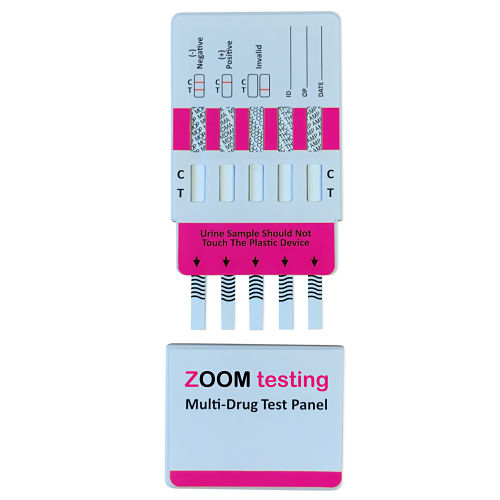
Multi Drug Dip Cards – Fast, reliable urine drug testing for employers and occupational health professionals
What Customers Say
★★★★★ Kayleigh R
“I bought these to test my PCV Drivers and they worked very good. Delivery was very fast and they were very quick at replying to any queries when e-mailed. Will be using them again in the future if needed and are highly recommended.”
★★★★★ Joe S
“These cocaine surface wipes are effective in highlighting scale of usage due to the immediate change in colouration. They have proven instrumental as part of a multi-stage collaborative strategy of deterrence and prevention with positive results. Always reliable and easy-to-use, I have a regular order from Zoom when my stock runs low.”
★★★★★ Tina
“I’ve never taken drugs or used a drug test before so it was a bit intimidating at first but I contacted Zoom Testing and they were very helpful. The test was simple to use and I now have peace of mind. Good deterrent too—he knows he can be tested at any time.”
The Bottom Line: This is a pivotal moment in UK drug policy and workplace safety. The challenges are real and evolving—but so too are the solutions. If you’re serious about creating a safer, healthier workplace, now’s the time to review your testing protocols, update your understanding of emerging threats, and partner with experts who can help you navigate this rapidly changing landscape.
Note: This article reflects current UK drug policy, testing standards, and workplace compliance best practices as of November 2025. Always consult ACAS guidance, HSE standards, and your legal advisers before implementing any drug testing policy. Testing protocols should comply with UK employment law, data protection regulations, and reasonable adjustments for protected characteristics.
Sources: BBC News, The Guardian, WIRED, National Crime Agency, UK Parliament Justice Committee, Society for the Study of Addiction, Medical Xpress, NatCen, JAMA Network Open, Recovery Research Institute, Addiction journals, UNODC, and UK Government publications.
About the Author
Anthony Cunningham – Drug Testing Expert & Editor
Anthony Cunningham, BA (Hons), MA, is a UK-based drug testing expert and editor with over 20 years’ experience running Zoom Testing, a trusted source for accurate drug testing kits and testing guidance. He creates clear, evidence-based articles using UK legislation, workplace compliance standards, and harm reduction best practices. Where possible, content is reviewed by testing specialists and compliance professionals to enhance accuracy and reliability, helping readers make informed testing decisions.
Originally published: 7 November 2025 | Last updated: 14 November 2025