Published: 11 April 2026 | Last Updated: 11 April 2026 | By Anthony Cunningham
This week’s drug testing industry roundup covers a landmark sentencing in the Matthew Perry ketamine case, the spread of a new synthetic opioid far more potent than fentanyl, and fresh moves on vaping enforcement in the UK. With nearly 20 years of experience in professional drug testing, we’ve analysed the week’s most important stories to help UK employers stay informed and compliant.
‘Ketamine Queen’ Jailed: What the Matthew Perry Case Tells Employers
The sentencing this week of Jasveen Sangha – dubbed the “Ketamine Queen” by US prosecutors – to 15 years in prison brings one of the most high-profile drug-related cases of recent years to a close. Sangha pleaded guilty last year to selling the Friends actor a fatal dose of ketamine, and her sentence reflects the severity with which US courts are now treating ketamine supply.
Ketamine’s profile has changed dramatically in recent years. Once primarily associated with veterinary use and clubbing scenes, it has moved into mainstream recreational use – and that shift has implications for workplaces, particularly in sectors where alertness and coordination are safety-critical. If you are managing a workforce and want to understand the drug’s effects and detection windows, our guide on what ketamine is and how long ketamine stays in your system are worth bookmarking.
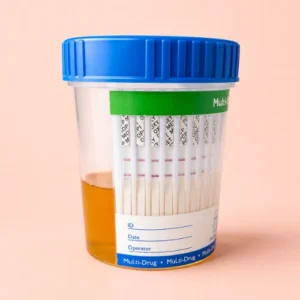
The case is a reminder that ketamine is not a niche concern. For employers conducting workplace drug testing, an 18-panel test that includes ketamine is increasingly the sensible choice rather than an extravagance.
New Synthetic Opioid 10 Times Stronger Than Fentanyl Spreading Across US
A worrying story from across the Atlantic: a new drug described as ten times more potent than fentanyl has been linked to dozens of deaths in Tennessee and is spreading through American communities. The drug belongs to a class of synthetic opioids known as “orphines” that first emerged on the recreational market in 2020.
UK drug professionals will be monitoring this closely. Fentanyl has already caused enormous harm in North America, and novel synthetic opioids tend to follow established trafficking routes. The deadly combination of fentanyl and cocaine is already a documented risk, and any new opioid entering the supply chain amplifies those dangers. For now this remains primarily a US story, but the trajectory of fentanyl in North America should serve as a clear warning for UK policymakers and employers alike.
Understanding what opioids are and how they interact with the body is increasingly important context for HR teams and safety officers, not just healthcare workers.
Vape Crackdowns: Laced Devices and Local Fines
Two vaping stories dominated UK drug news this week, and together they paint an unsettling picture for anyone responsible for young people or public spaces.
First, a teenager was arrested after a vape laced with harmful substances left a boy unwell in Weston-super-Mare. A community response officer intervened while the child waited for an ambulance – a reminder that laced vapes are not a theoretical risk but an active one appearing in UK schools and communities.
Second, City of York Council is proposing fines of up to £200 for traders selling illegal single-use vapes, with formal caution or prosecution for businesses found with more than 20 illegal devices. This kind of local enforcement action reflects growing frustration at the gap between national legislation and on-the-ground reality.
Parents should be aware that monitoring vaping is genuinely difficult – our piece on why parents are often unaware when kids vape explains some of the reasons why detection is so challenging.
Edinburgh Consults on Safer Drug Consumption Facility
The Edinburgh Health and Social Care Partnership (EHSCP) launched a consultation this week on whether to open a safer drug consumption facility (SDCF) in the city’s Old Town. The consultation is seeking views from those most directly affected – people who use drugs, their families, and residents and businesses near the proposed locations.
Scotland has long led the UK in harm reduction innovation, and the Edinburgh consultation reflects a pragmatic approach to a public health crisis. While the policy debate around SDCFs tends to be politically charged, the underlying aim – reducing drug-related deaths and blood-borne virus transmission – has broad public health support. The ACAS guidance on drug and alcohol testing at work remains a useful reference for employers operating in Scotland who are navigating these issues.
Cannabis Farm Found in Welsh Stately Home
North Wales Police executed a Misuse of Drugs Act warrant at a Grade I listed manor house near Caernarfon this week, discovering a cannabis farm on the premises of a property that had once hosted the King. It is a colourful story, but it also illustrates a broader point: cannabis cultivation in the UK takes place in settings far removed from the stereotyped images.
For employers, the key takeaway is that cannabis remains by far the most commonly detected substance in UK workplace drug testing. Understanding how long cannabis stays in your system is essential context for any drug testing programme.
Practical Takeaways for UK Employers This Week
Three things stand out from this week’s news for employers with drug testing responsibilities:
Ketamine is now a mainstream concern. The Matthew Perry sentencing has brought the drug back into public consciousness, but its use was already growing in the UK well before the celebrity dimension arrived. If your current test panel does not include ketamine, it may be time to review.
Novel synthetic opioids are on the horizon. The spread of cychlorphine in the US should prompt UK safety officers to think ahead. Substances not currently on standard panels can and do appear in the UK drug supply. Comprehensive multi-panel testing provides the widest possible net.
Vaping is a growing safeguarding challenge. For employers in education, youth work, or settings with young people, laced vapes represent a genuine and growing risk. Knowing what to look for – and having testing options available – matters more than ever.
If you are reviewing your testing approach, our comparison of 12 vs 18 panel drug test kits is a good starting point.
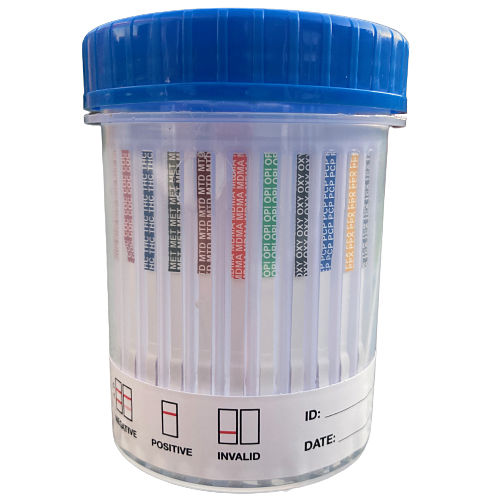
Take Action: Professional 18-Panel Drug Testing
Screen for 18 substances including ecstasy and ketamine with our 18 Panel Drug Test with Integrated Cup. Fast, accurate results with no separate collection equipment needed.
What Customers Say
“Great value for money and received next day.”
– Louie
“I was really pleased to find this as I needed a comprehensive drug test kit and this is the biggest one that I could find. Price was very reasonable and the test arrived quickly. I found it to be an easy to use product with clear instructions. Results were quick and simple to interpret.”
– Jason
“These Ketamine tests gave me great peace of mind at a difficult time in my family situation. The drug tests arrived quickly in plain packaging and with easy to understand instructions. Results were clear. I was very happy with the service I received from Zoom Testing.”
– Lloyd
About the Author
Anthony Cunningham – Drug Testing Expert & Editor
Anthony Cunningham, BA (Hons), MA, is a UK-based drug testing expert and editor with over 20 years’ experience running Zoom Testing, a trusted source for accurate drug testing kits and testing guidance. He creates clear, evidence-based articles using UK legislation, workplace compliance standards, and harm reduction best practices. Where possible, content is reviewed by testing specialists and compliance professionals to enhance accuracy and reliability, helping readers make informed testing decisions.
You May Also Like: