About This Article: Zoom Testing has supplied drug testing kits to UK customers for nearly 20 years. This weekly roundup draws on our experience helping thousands of employers, parents, and individuals understand emerging drug trends, workplace compliance, and substance safety. Always follow current UK legislation regarding drug testing and employment law.
In This Article
- The Ketamine Crisis: Eight Times More People in Treatment
- Dangerous Substitutes: THC Vapes and Synthetic Cannabinoids
- Prison Drugs: The Visible Workplace Safety Crisis
- Fake Medicines and Nitazenes: A Critical Overdose Risk
- Workforce Stress and Alcohol-Related Violence
- Roadside Drug Testing: Enforcement Getting Tougher
- Research Insights: Understanding the Gaps
- What This Means for Your Workplace
As we head into the final stretch of October, this week’s drug testing landscape reveals troubling trends that should concern employers across the UK. From escalating substance use in secure facilities to dangerous synthetic cannabinoids being sold to young people, the week has served up several critical reminders of why workplace vigilance matters.
The Ketamine Crisis: Eight Times More People in Treatment
The most significant story this week comes from the UK’s Office of Health Improvement and Dispensaries, which has issued fresh guidance highlighting a staggering increase in ketamine use. There are now eight times more people entering drug treatment for ketamine use than there were a decade ago.
What’s particularly concerning for workplace safety is that people aged 18–24 have the highest rates of use. This demographic likely makes up a significant portion of your younger workforce, making ketamine detection a priority.
The harms are both immediate and long-term. Sustained ketamine use causes painful bladder and urinary tract damage, with some complications proving irreversible. Urologists across the country are increasingly seeing these presentations. For employers, this translates to potential productivity losses, increased sick leave, and the risk of impaired workers in safety-sensitive roles.
Understanding how long ketamine stays detectable in your system is essential for workplace testing protocols. The guidance materials have been released to educational settings and public health teams, signalling this is now considered a mainstream public health concern.
Dangerous Substitutes: THC Vapes and Synthetic Cannabinoids
Another critical alert this week concerns counterfeit THC vapes being illegally marketed to young people. These products, often available through social media, frequently contain synthetic cannabinoids like Spice rather than the advertised THC. The effects are far more unpredictable and potentially dangerous than cannabis alone, with documented overdoses and deaths.
For employers with younger staff members, this is a significant risk. Employees obtaining these products through social media are likely unaware of what they actually contain. A Virginia Commonwealth University study uncovered multiple dangerous chemicals in vapes and cannabis products used by over a million school-age children annually.
If your workplace includes younger staff, testing for synthetic cannabinoids should be part of your drug screening strategy alongside standard cannabis tests.
Prison Drugs: The Visible Workplace Safety Crisis
This week brought reports of escalating drug problems within the UK’s prison system, with one inspection finding a 43% increase in positive drug tests. The frequent smell of cannabis on prison wings illustrates how even in supposedly controlled environments, substance availability remains a significant challenge.
Whilst this might seem removed from most workplaces, it underscores the reality that drug supply networks are sophisticated and pervasive. More directly relevant to employers is the concurrent story about Five Wells prison in Northamptonshire, where the Independent Monitoring Board expressed continued concern about the number and range of illicit items entering the facility.
For companies operating in corrections, security, or other regulated sectors, this reinforces the importance of rigorous workplace drug testing protocols.
Fake Medicines and Nitazenes: A Critical Overdose Risk
Perhaps the most alarming alert of the week concerns fake medicines containing nitazenes. Nitazenes are synthetic opioids often more potent than fentanyl, and they’re appearing in counterfeit pain-relief and other medications being sold through illicit online retailers. People purchasing these medicines are entirely unaware they’re obtaining highly dangerous substances.
This has significant implications for workplace drug testing. An employee obtaining prescription medications from illegitimate sources could test positive for opioids through no fault of their own regarding workplace safety, yet the underlying risk of overdose or impairment is very real.
Employers need to be aware that not all positive opioid tests represent workplace misbehaviour – some may indicate vulnerable employees seeking medications through dangerous channels. A supportive approach to positive results, combined with employee assistance programmes, can save lives.
Workforce Stress and Alcohol-Related Violence
This week highlighted a growing concern that extends beyond illegal drugs into alcohol’s workplace impact. New research from the University of Stirling found that ambulance staff are frequently subjected to violence during alcohol-related callouts, with anxiety and frustration widespread amongst first responders.
One paramedic recalled questioning whether he’d “make it home tonight” – a stark reminder that alcohol-fuelled incidents don’t just affect the individual consuming alcohol but create wider public safety risks. For employers in hospitality, emergency services, or any customer-facing role, this research underscores the importance of robust alcohol policies and management.
Roadside Drug Testing: Enforcement Getting Tougher
On the enforcement front, police in Scotland have begun rolling out quick-fire roadside drug test kits in an expanded pilot programme. These rapid-response saliva drug tests represent a shift towards more immediate detection of drug-impaired driving. Companies with vehicle fleets or employees who drive as part of their role should take note – the legal environment around drug-driving enforcement is becoming increasingly sophisticated.
This week also saw a stark warning in the form of a cocaine driver jailed for six years after killing a woman in a crash. Christopher Lynn, driving under the influence on the A7 in the Scottish Borders, caused a collision that forced another vehicle into an oncoming car. It’s a sobering reminder of the consequences when substance impairment meets road safety.
Research Insights: Understanding the Gaps
Several research pieces this week highlighted knowledge gaps that matter for workplace safety. Americans’ widespread misbelief about alcohol’s link to cancer risk suggests people generally underestimate the harms of substance use. Meanwhile, research into the effectiveness of digital versus face-to-face cognitive behavioural therapy for alcohol use disorder found computerised interventions perform comparably to in-person treatment – potentially useful information for employers considering employee assistance programmes.
Perhaps most concerning for safety-critical sectors, studies show methamphetamine use is growing amongst fentanyl users, with speedballing (combining opioids and stimulants) becoming routine. Nearly a third of all overdose deaths now involve methamphetamine, with most also involving opioids. This suggests increasingly unpredictable and dangerous substance combinations circulating through supply networks.
What This Means for Your Workplace
This week’s intelligence points to several key takeaways for employers:
- Substance use patterns are evolving rapidly. The dramatic increase in ketamine treatment admissions and the shift towards synthetic cannabinoid vapes being sold as legitimate products means your employees may be at risk from substances that weren’t significant workplace concerns just years ago.
- The fake medication problem shows that substance issues aren’t always about deliberate workplace misconduct. They can reflect vulnerable individuals making dangerous decisions.
- Alcohol continues to generate significant workplace and public safety risks, from ambulance staff assaults to fatal road crashes.
Your drug testing programme needs to remain current with emerging substances and evolving risks. Regular drug screening protocols provide the evidence base for informed conversations with your workforce about substance risks.
Equally important is ensuring your policies balance deterrence with support – knowing that some positive results may indicate an employee in crisis rather than simple misbehaviour.
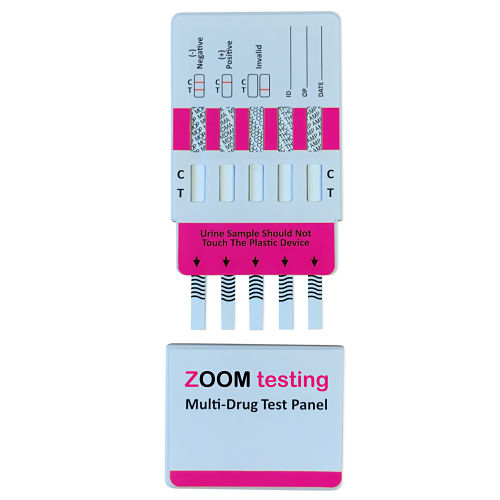
Explore Reliable Testing Solutions Our multi-drug dip cards offer fast, accurate results for workplace screening. Available in multiple panel options to match your testing needs.
What Customers Say
Employers and individuals across the UK trust Zoom Testing for accurate, discreet drug screening:
“I bought these to test my PCV Drivers and they worked very good. Delivery was very fast and they were very quick at replying to any queries when e-mailed. Will be using them again in the future if needed and are highly recommended.”
— Kayleigh R | 5/5 Stars
“I’m really pleased with these tests they are very accurate.”
— Vicki R | 5/5 Stars
“With a drug test coming up at work, I took a month off from smoking. I bought this cannabis test to see if my system was clear of the drug. As it turned out, the test was negative, which was a huge relief to me. The lab test which I then had to do at work also came up negative. I guess that shows that these cannabis tests are fairly reliable. The test was shipped quickly to my home address in a plain jiffy bag, so nobody knew what was inside. I did appreciate this.”
— Wayne R | 5/5 Stars
Expert Support for Your Workplace
At Zoom Testing, we work with UK employers to maintain safe, fair drug testing programmes that reflect current risks whilst supporting employee welfare. This week’s intelligence reinforces that substance safety is an evolving landscape – your testing strategy needs to adapt with it.
If this week’s drug trends have raised questions about your current approach to substance safety in the workplace, we’re here to help you navigate the challenge with expert guidance and professional testing services.
Need Expert Advice? For questions about workplace drug testing, substance safety policies, and the implications of current drug trends for your organisation, contact the Zoom Testing team today.
About the Author
Anthony Cunningham – Drug Testing Expert & Editor
Anthony Cunningham, BA (Hons), MA, is a UK-based drug testing expert and editor with over 20 years’ experience running Zoom Testing, a trusted source for accurate drug testing kits and testing guidance. He creates clear, evidence-based articles using UK legislation, workplace compliance standards, and harm reduction best practices. Where possible, content is reviewed by testing specialists and compliance professionals to enhance accuracy and reliability, helping readers make informed testing decisions.
Originally published: October 31, 2025 | Last updated: November 14, 2025