
About This Article
Zoom Testing has supplied drug testing kits to UK customers for nearly 20 years. This weekly digest draws on our experience helping thousands of employers, parents, and individuals understand emerging drug threats and workplace testing requirements. Always follow current UK legislation regarding drug testing.
Published: 28 November 2025 | Last Updated: 28 November 2025 | By Anthony Cunningham
Welcome to this week’s digest of drug testing news from across the UK and beyond. Each week, we monitor developments in substance use, contamination alerts, policy changes and testing innovations that matter to employers, parents and testing professionals. This week’s roundup includes urgent warnings about synthetic opioids flooding UK drug markets, important research findings on MDMA tablet content, and regional data highlighting cocaine prevalence across the Thames catchment. Here’s what you need to know.
Nitazenes Crisis Deepens Across England
The synthetic opioid crisis continues to escalate, with West Yorkshire Police issuing urgent warnings about nitazenes flooding local drug markets. These substances are up to 500 times more potent than heroin, making them extraordinarily dangerous even in minute quantities. The police highlighted that users often don’t know they’re consuming nitazenes, as dealers mix them into heroin and counterfeit tablets.
This pattern is playing out nationwide. Public Health Scotland data reveals nitazenes were detected in 46% of drug-related deaths analysed during the first half of 2024. Most worryingly, only one in seven of those who died had intentionally used synthetic opioids. The remainder had unknowingly consumed nitazenes that had been mixed into their usual substances.
Critical Statistic
46% of drug-related deaths in Scotland during the first half of 2024 involved nitazenes, with 6 out of 7 victims unknowingly consuming these synthetic opioids mixed into other substances.
For employers, this presents a genuine challenge. Traditional opiates testing may not detect these novel synthetic compounds. Anyone working in sectors where opioid use is a concern should be aware that standard testing protocols might miss these extremely dangerous substances. Workers who appear intoxicated or impaired may be under the influence of nitazenes even if conventional tests come back negative.
Learn More: Want to understand how opiates testing works and what standard panels can and cannot detect? Our comprehensive guide explains detection methods, cutoff levels, and emerging synthetic opioid challenges. Read the opiates testing guide →
MDMA Research Offers Workplace Insights
Interesting findings emerged this week about MDMA use patterns. Research published in Addiction examined over 125,000 ecstasy tablets seized across nine countries between 2001 and 2021. The study found that whilst average MDMA content per tablet increased by 15.1%, this was driven by tablets becoming physically larger rather than more potent. The concentration of MDMA per gram actually decreased by 11.6% over the study period.
This matters for workplace testing because it suggests users may be consuming more pills to achieve desired effects, potentially leading to longer detection windows. MDMA typically remains detectable in urine for 2-4 days, but heavier consumption patterns could extend this timeframe. The research also noted significant regional variations in tablet content, which UK employers should bear in mind when assessing risk profiles across different locations.
Northern Ireland Cannabis Operation Highlights Market Shifts
Police in Northern Ireland uncovered a sophisticated cannabis factory worth £900,000 this week, with 634 plants at various growth stages. The operation’s industrial scale reflects broader changes in UK cannabis markets, where commercial growing operations have largely displaced traditional import routes.
Modern cannabis cultivation techniques produce significantly higher THC concentrations than cannabis from previous decades. This means workplace impairment risks have increased even as consumption patterns may appear stable. As we’ve discussed in our guide on high-strength cannabis and its effects, these higher-potency products present new challenges for workplace safety. Cannabis testing remains crucial for safety-critical roles, particularly as these higher-potency products enter the market.
Detection windows for THC can extend to 30 days or more for regular users, making pre-employment and random testing valuable tools for maintaining workplace safety. For more details, see our comprehensive guide on how long cannabis stays in your system.
Learn More: Confused about cannabis detection windows and why THC lingers so long? Our detailed guide explains the science behind fat-soluble storage, factors affecting detection times, and what employers need to know about testing timeframes. Read the full detection guide →
Cocaine Prevalence in Thames Water System
Analysis of wastewater in the Thames catchment area identified cocaine as the most frequently detected illicit substance. The drug was found in 79% of samples during winter and spring periods. This aligns with broader trends showing cocaine use remains widespread across the UK, particularly in urban and suburban areas.
For employers in London and the South East, this data underscores why cocaine testing should be a standard component of workplace drug screening programmes. The drug’s prevalence across such a wide geographical area suggests usage cuts across demographic and occupational boundaries. Detection windows for cocaine in urine typically range from 2-4 days, though metabolites can remain detectable for longer periods with chronic use.
Learn More: Need to understand cocaine testing protocols for your workplace? Our employer’s guide covers detection methods, testing schedules, legal considerations, and best practices for implementing cocaine screening programmes. Read the cocaine testing guide →
Practical Implications for Employers
This week’s developments highlight several key considerations for workplace drug testing programmes:
Key Takeaways for Employers
- Update testing panels: The emergence of nitazenes and other synthetic opioids means traditional testing panels may need updating. If your workforce includes roles where opioid impairment poses safety risks, discuss expanded testing options with your provider.
- Consider regional variations: What’s prevalent in one area may be less common elsewhere, so tailor your testing approach to your specific locations and workforce demographics.
- Account for increased potency: Cannabis potency continues increasing. Even if consumption rates remain stable, impairment risks may be rising. Regular review of your testing protocols ensures they remain fit for purpose.
Learn More: Setting up a workplace drug testing programme or reviewing your current policy? Our comprehensive workplace testing guide covers legal requirements, testing methods, policy development, and employee rights. Read the workplace testing guide →
What Customers Say About Our Multi-Drug Testing Kits
“I bought these to test my PCV Drivers and they worked very good. Delivery was very fast and they were very quick at replying to any queries when e-mailed. Will be using them again in the future if needed and are highly recommended.”
— Kayleigh R., Verified Buyer
“I wanted to test for a number of drugs at the same time. Being rather bewildered by the wide choice of tests available, I went for this one. Glad I did – very simple to use and results were quick and clear. Recommend.”
— Joseph, Verified Buyer
“Top quality kits delivered in a timely manner. Also upgraded my order from 7 panel to 10 panel at no extra cost. Highly recommended very professional company.”
— Glynis, Verified Buyer
Take Action: Protect Your Workplace
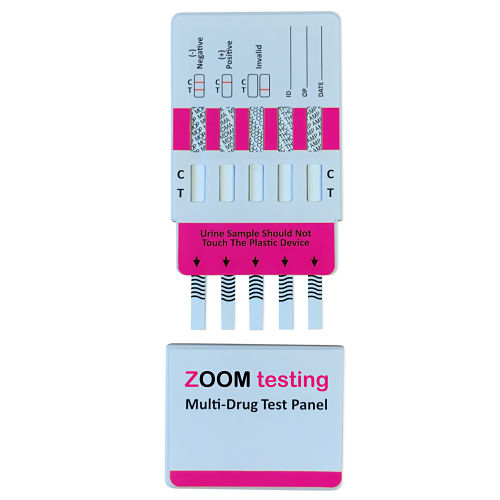
At Zoom Testing, we understand the evolving challenges facing UK employers. Whether you need urine drug testing kits for comprehensive screening or saliva drug tests for rapid on-site detection, we provide reliable solutions backed by expert guidance. Our UK-based team can help you develop testing strategies that address both traditional substances and emerging threats.
About the Author
Anthony Cunningham – Drug Testing Expert & Editor
Anthony Cunningham, BA (Hons), MA, is a UK-based drug testing expert and editor with over 20 years’ experience running Zoom Testing, a trusted source for accurate drug testing kits and testing guidance. He creates clear, evidence-based articles using UK legislation, workplace compliance standards, and harm reduction best practices. Where possible, content is reviewed by testing specialists and compliance professionals to enhance accuracy and reliability, helping readers make informed testing decisions.