About This Article
Published: 6 February 2026 | Last Updated: 6 February 2026 | By Anthony Cunningham
This weekly roundup draws from DrugWise Daily newsletters and trusted UK and international sources to keep employers and HR professionals informed about workplace drug testing trends, emerging substances, and relevant policy developments.
This week brought a stark reminder that the substances circulating through UK communities continue to shift in dangerous directions. Health authorities across Scotland issued urgent warnings about new benzodiazepines appearing in the illicit drug supply, whilst prisons struggle with synthetic drug use affecting half the prison population. Meanwhile, the ketamine debate continues to generate heat without producing meaningful reclassification, and emerging research challenges some long-held assumptions about alcohol recovery and cannabis use.
For employers, these developments underscore the importance of maintaining vigilant workplace testing programmes that can detect both traditional substances and emerging threats.
New Benzodiazepines Raise Alarm in Scotland
Public Health Scotland issued a formal health alert this week after detecting new illicit benzodiazepines in the drug supply. Between 2022 and 2024, bromazolam emerged as the most commonly detected “street benzo” – substances produced illegally or unavailable as prescribed medicines in the UK. The BBC reports that these dangerous sedatives are increasing potential risks to users across Scotland.
What makes this development particularly concerning for workplace safety is that many standard multi-panel drug tests may not detect these newer synthetic benzodiazepines. The evolving nature of designer drugs means testing strategies need regular review to ensure comprehensive coverage.
Prison Drug Problem Reaches Crisis Point
New data published by the Office for Health Improvement and Disparities reveals that approximately 40,000 people in English and Welsh prisons – representing 50% of the prison population – have an identified drug problem. The misuse of illicit drugs creates significant health risks and exacerbates existing vulnerabilities.
WithYou responded to a National Audit Office report highlighting the devastating cost of failing to address drug harm properly in custodial settings. The scale of synthetic drug use, particularly substances like spice, presents unique challenges that traditional testing methods struggle to address.
A particularly alarming case emerged when a Lancashire prison officer was jailed for smuggling spice, cannabis resin, buprenorphine and ketamine into jail by hiding drugs in food tins. This underscores how even secure environments remain vulnerable to drug infiltration.
Ketamine Reclassification Debate Continues
The government’s decision not to reclassify ketamine as a Class A substance has drawn criticism from law enforcement and public health officials. The Association of Police and Crime Commissioners expressed disappointment, stating the decision fails to reflect the clear and escalating harm ketamine is causing in communities, particularly among young people.
A new weekly ketamine support group launched in Wrexham to help people worried about their drug use, responding to a sharp rise in ketamine-related harm across North Wales. Employers in regions experiencing elevated ketamine use should consider whether their testing protocols adequately screen for this substance.
The complexity of ketamine policy was further highlighted when the BBC reported on a British woman who spent time in a Japanese prison for ketamine possession, illustrating how different jurisdictions take vastly different approaches to the drug.
Veterinary Sedative Xylazine Detected in UK Heroin Supply
The Forward Trust issued a drug alert after the Surrey Substance User Partnership confirmed that recent testing of heroin samples in Slough detected both xylazine and fentanyl in the local supply. Xylazine is a non-opioid tranquilliser used as a painkiller and sedative in veterinary medicine.
The presence of veterinary sedatives in the drug supply represents a particularly troubling development. These central nervous system depressants can cause severe complications when combined with opioids, and many standard drug tests won’t detect them. This highlights the ongoing challenge of adulterants appearing in street drugs.
A Southampton mother issued a warning about super-strength nitazenes which killed her 21-year-old son, Dylan Rocha, who believed he was taking heroin. She expressed being “astounded” that hardly anyone knows about these synthetic opioids that are far more potent than traditional heroin.
Former Army Chief Backs MDMA Therapy for Veterans
In an unexpected development, former British Army chief Nick Carter called on ministers to back MDMA-assisted therapy for veterans with PTSD. He argues that easing controls on MDMA would allow the drug to be used as an alternative treatment for those with post-traumatic stress disorder.
This intervention from a senior military figure adds weight to the growing conversation around therapeutic use of currently controlled substances. However, for workplace testing purposes, MDMA remains an illegal Class A drug in the UK, and employees in safety-critical roles would still face disciplinary action for its use regardless of therapeutic claims.
Alcohol Policy Shifts Across the UK
Members of Senedd Cymru voted to keep minimum unit pricing for alcohol and increase it from 50p to 65p per unit from October. Meanwhile, research from the University of Stirling revealed that young people aged 11 to 17 cannot distinguish between non-alcoholic products and traditional alcoholic beverages when promoted through sports sponsorship.
The Institute of Alcohol Studies published FOI documents exposing how alcohol industry lobbying influenced government policy, with leaked correspondence showing industry representatives asking officials to “ensure these restrictions are not enforced.”
Research on alcohol recovery also produced interesting findings. A study found that peer-support groups were associated with ongoing abstinence among Japanese men following treatment for alcohol dependence, though smoking and consuming non-alcoholic beer were linked to higher relapse rates.
International Drug Testing and Treatment News
The EU took action to control three harmful new drugs as legal measures entered force this month. The substances – all new synthetic cathinones – are 2-methylmethcathinone (2-MMC), 4-bromomethcathinone (4-BMC) and N-ethylnorpentedrone (NEP). These are now classified as controlled drugs under EU law.
In the United States, fatal overdoses fell 26% in 2024, representing the largest decrease ever recorded. The CDC report showed deaths falling across all census demographics and drug types, with particularly large decreases among young people, Black people and deaths involving fentanyl.
Innovative research from UC San Diego explored using smartwatches to track triggers for opioid misuse before crisis strikes, potentially offering a life-saving early warning system for those in recovery.
Research Challenges Conventional Wisdom
Several studies published this week challenged established assumptions. Research at CU Anschutz found that cannabis usage in middle-aged and older adults was linked to larger brain volume and better cognitive function, focusing on population-level impacts rather than the adolescent-focused research that typically dominates this field.
The NHS Addictions Provider Alliance highlighted research showing that contrary to common assumptions, the majority of overdose deaths occurred in people with high BMI, often alongside co-morbidities such as COPD, diabetes, cardiovascular disease and sleep apnoea. Low BMI was more associated with deaths from infections or chronic conditions.
A University of California San Diego placebo-controlled clinical trial demonstrated for the first time that cannabis is effective for treating acute migraine, adding to the growing body of evidence around therapeutic cannabis applications.
What This Means for Workplace Testing
This week’s developments underscore several key points for employers maintaining workplace testing programmes. First, the drug landscape continues to evolve rapidly with new synthetic substances appearing regularly. Testing protocols that were comprehensive two years ago may now miss significant threats.
Second, substances like xylazine and novel benzodiazepines demonstrate that adulterants pose as much risk as the primary drugs themselves. This makes education and awareness programmes critical companions to testing regimes.
Finally, whilst therapeutic uses for controlled substances continue to emerge in research, this doesn’t change their legal status or the legitimate safety concerns they present in workplace contexts. Clear policies aligned with ACAS guidance on drug and alcohol testing at work remain essential.
For organisations operating in safety-critical sectors, regular review of testing panels with suppliers ensures coverage remains appropriate for current substance trends. The emergence of new designer drugs and veterinary sedatives in the drug supply makes this an ongoing conversation rather than a one-time decision.
Take Action: Comprehensive Drug Testing Solutions
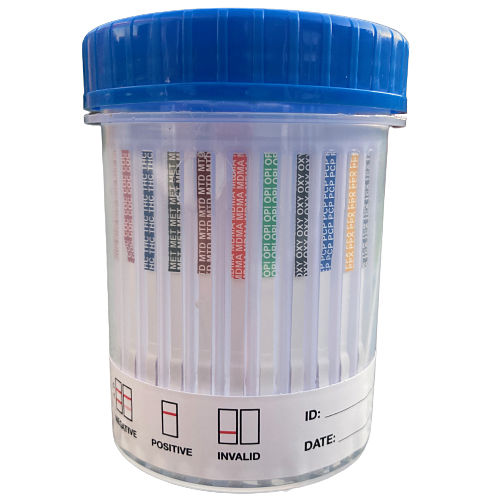
Detect 18 Different Substances Including Ecstasy & Ketamine
With emerging threats like novel benzodiazepines and adulterants appearing in the drug supply, comprehensive testing has never been more important. Our 18 Panel Drug Test with Integrated Cup provides broad-spectrum detection in a single, easy-to-use format.
- Tests for 18 different drug types including MDMA (Ecstasy) and Ketamine
- Integrated cup design for convenient, hygienic testing
- Results in minutes with clear, easy-to-read indicators
- Suitable for workplace testing programmes
- Manufactured to high quality standards
Trusted by employers across the UK for reliable, comprehensive drug testing
What Our Customers Say
“Good product. Fast delivery. Used in my workplace when we suspect staff are using drugs or alcohol. Very handy to have on site.”
– Richard
“Easy to use and very effective. Would definitely recommend.”
– Susan
“Excellent product and service. Quick delivery and easy to use. Highly recommend.”
– Mark
About the Author
Anthony Cunningham – Drug Testing Expert & Editor
Anthony Cunningham, BA (Hons), MA, is a UK-based drug testing expert and editor with over 20 years’ experience running Zoom Testing, a trusted source for accurate drug testing kits and testing guidance. He creates clear, evidence-based articles using UK legislation, workplace compliance standards, and harm reduction best practices. Where possible, content is reviewed by testing specialists and compliance professionals to enhance accuracy and reliability, helping readers make informed testing decisions.