

About This Article
Zoom Testing has been supplying professional drug testing kits to UK businesses, organisations, and families for over 20 years. This weekly news roundup is compiled by our team of drug testing specialists to help employers, HR professionals, and safety officers stay informed about the latest developments in substance misuse, legislation, and workplace drug testing.
Published: 20 February 2026 | Last Updated: 20 February 2026 | By Anthony Cunningham
This week’s drug and alcohol news brought a particularly urgent story about ketamine addiction, with clinicians warning it is causing severe, irreversible bladder damage in teenagers. Alongside that, the synthetic opioid crisis continued to develop, a £20 million government technology fund was announced, and new research confirmed some perhaps surprising findings about ketamine‘s role in treating alcohol dependency. Here is what you need to know from the week of 16-20 February 2026.
Ketamine Crisis: Teenagers and Bladder Damage
The week’s most alarming story came from Liverpool, where the UK’s first dedicated ketamine clinic reported that addiction is making teenagers wet the bed and causing devastating, often irreversible, bladder problems. Medics said intervention is urgently needed to prevent young people from enduring “a miserable life” of chronic pain and incontinence. That same week, a vicar in Lancashire told ITV that the drug is “wiping out young people” across the county.
There was, however, a counterintuitive scientific finding also in the news this week. University of Exeter researchers published a study showing that the psychedelic ‘high’ that recreational users seek from ketamine has no bearing on its therapeutic benefits for people being treated for alcohol use disorder. It is the drug’s action on the brain – not the subjective experience – that drives clinical outcomes. This distinction matters because it undermines the justification many recreational users make for taking it.
An earlier story from the Independent also resonated: Izabel Rose’s account of her ketamine addiction leading to five months’ detention in Japan was a stark reminder that this is far from “an innocent party drug.” For employers – particularly those in safety-critical industries – the rising availability of ketamine and the severe physical consequences of its use make a compelling case for including it in routine workplace drug testing programmes.
Synthetic Opioids: A Growing Workplace Risk
ITV ran a troubling feature this week on why synthetic opioids are on the rise, following one individual whose addiction began after being prescribed pain killers for a health condition and then “manipulating” the health system to obtain stronger drugs. Synthetic opioids – which can be many times more potent than heroin – represent one of the fastest-growing concerns in workplace drug testing.
This connects directly to a separate story from Ireland, where prisoners surrendered hundreds of nitazene tablets following a fatal overdose. Nitazenes are a class of synthetic opioid significantly more powerful than fentanyl. Their appearance in Europe is of serious concern to harm reduction agencies and, increasingly, to employers whose staff may unknowingly come into contact with these substances through adulterated drug supplies.
Standard multi-panel opiate drug tests detect morphine, codeine, and heroin. If your business operates in high-risk sectors, it is worth reviewing whether your testing covers the full range of opioids your workforce may potentially be exposed to.
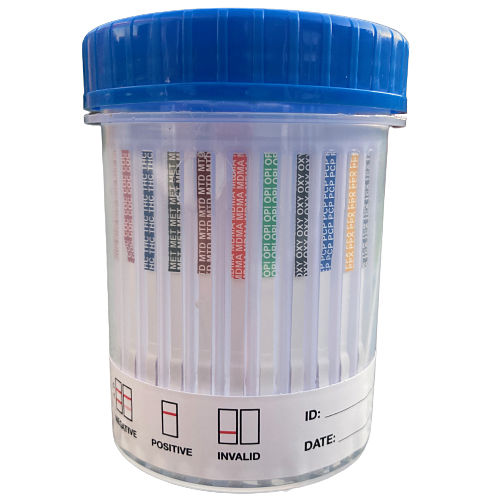
Take Action: Test for Ketamine and Ecstasy
Given this week’s news about rising ketamine and ecstasy use among young people, our 18 Panel Drug Test with Integrated Cup offers comprehensive screening – including both of these substances – in a single, easy-to-use device.
£20 Million Government Fund for Addiction Technology
The government announced this week that innovators across the UK are being offered £20 million in grants to develop technology designed to reduce harm and death from drug and alcohol addiction. The fund, launched by the Department of Health and Social Care’s Addiction Healthcare Goals programme, signals a clear commitment from government to tackling the issue using evidence-based approaches. For employers, this is an encouraging development – greater investment in addiction treatment infrastructure will eventually mean better support pathways for employees who are struggling.
County Lines Violence: New Research for HR Teams
A major open-access study published this week in the International Journal of Drug Policy documents in detail the violence associated with County Lines drug market policing. Researchers interviewed police officers across the UK and observed policing operations, documenting the threats and violence that characterise organised drug dealing. The research is valuable for any organisation operating in communities where County Lines networks are active – particularly those in logistics, transport, construction, or retail where workers may interact with at-risk individuals or be targeted for recruitment.
MDMA and Psychedelics in the News
Two psychedelic research stories caught attention this week. Researchers published promising findings showing that a single dose of DMT combined with psychotherapy significantly reduced depression in a clinical trial. Meanwhile, the Enhanced Games – an event deliberately allowing performance-enhancing drug use – is scheduled to launch in May 2026, raising wider questions about societal attitudes towards drug use in competitive contexts.
While therapeutic research into psychedelics continues to generate headlines, it is worth remembering that MDMA (ecstasy) remains a controlled substance in the UK, illegal to possess or supply. For workplace drug testing purposes, ecstasy is one of the substances commonly screened, particularly in industries where employees work with machinery, at heights, or in safety-sensitive roles.
Alcohol Policy: Northern Ireland Under Pressure
The debate over alcohol minimum unit pricing in Northern Ireland continued to dominate the week’s alcohol policy headlines. The BBC reported the health minister saying time is “quite rapidly” running out for Northern Ireland to introduce the measure, which Scotland, Wales, and the Republic of Ireland have already adopted. Northern Ireland meanwhile registered 397 alcohol-specific deaths in 2024 – accounting for 2.2% of all registered deaths – making the urgency of the debate clear.
Separately, a mid-air brawl caught on video reignited calls for limits on alcohol for air passengers. For employers in the aviation and transport sector, incidents like this serve as a reminder of the reputational and safety risks posed by alcohol consumption in the workplace.
Cannabis: Large-Scale Operations and New Research
Courts handed down significant sentences this week for two major cannabis production cases. An Albanian organised crime gang in Essex was jailed for over 11 years after making more than £500,000 in profit between 2023 and 2025. A separate case saw seven men sentenced for producing over 1,000 plants alongside £1.5m of cocaine.
On the research front, a new Canadian study examined patterns of low-risk cannabis use four to five years after legalisation, identifying the profiles of people least likely to develop cannabis use disorder. The research offers some useful insights for occupational health teams interested in understanding the risk factors for problematic cannabis use among employees.
Cocaine: From Nantucket to the UK
An eye-catching international story showed that wastewater testing in Nantucket, Massachusetts revealed cocaine levels up to three times the national average. While this is a US story, it illustrates the value of population-level drug monitoring – something the UK has also adopted in several cities. Closer to home, two men were jailed for wholesale cocaine supply after police recovered drugs alongside an illegal firearm and a zombie knife – a reminder of the violence that characterises the trade.
Cocaine remains the second most commonly detected substance in UK workplace drug tests. If your testing policy was last reviewed more than two years ago, it may be worth refreshing it in light of the current landscape.
What Employers Should Take Away This Week
Three themes stand out from the week’s news. First, ketamine is no longer a niche concern – it is affecting teenagers, causing devastating physical harm, and appearing prominently enough in community settings that employers, particularly those with younger workforces, should ensure it is included in their drug testing panel.
Second, synthetic opioids continue to evolve and spread. The presence of nitazenes in Irish prisons signals that ultra-potent synthetic opioids are firmly established in the supply chain on these islands. This is a long-term challenge for occupational health and drug testing policy alike.
Third, the government’s £20 million investment in addiction technology is a positive signal that the policy environment remains supportive of evidence-based responses. For employers, this reinforces the value of aligning workplace drug policies with the wider public health framework rather than treating drug testing as a purely punitive measure.
What Customers Say About Our Multi-Panel Drug Tests
“I was worried about my son who had been smoking cannabis. The test was simple to use and I now have peace of mind knowing that he is no longer using the drug. Also allowed me to confirm that he was not using anything else. Good deterrent too, as he knows that he can be tested at any time.”
— Tina | Verified Buyer | Multi-Panel Drug Test
“Top quality kits delivered in a timely manner. Also upgraded my order from 7 panel to 10 panel at no extra cost. Highly recommended – very professional company.”
— Glynis | Verified Buyer | Multi-Panel Drug Test
“Very simple and straightforward test to use – just follow the instructions that come with it and you will soon see a clear positive or negative result. Great service from Zoom Testing – quick delivery and very discreet packaging. Thanks guys!”
— Julian R. | Verified Buyer | Drug Test Kit
You May Also Like
- Ketamine Drug Testing – What You Need to Know
- MDMA and Ecstasy Drug Testing
- Opiate and Synthetic Opioid Testing
- Cocaine Drug Testing
- Cannabis Drug Testing
- Drug Test Near Me – UK Next Day Delivery
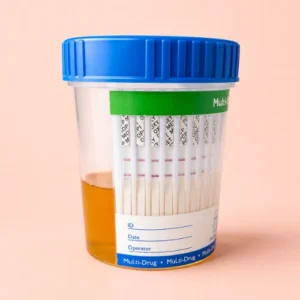



Photo by Anthony Cunningham for Zoom Testing
Zoom Testing is a leading UK drug testing company and supplier of Drug Test Kits. We are also the UK’s leading supplier of Home Health Tests.