About This Article
Zoom Testing has supplied drug testing kits to UK customers for nearly 20 years, helping people understand drug testing and screening results. This guide explains how cannabis detection windows vary between urine, saliva, blood and hair testing, and why no single detection time applies to everyone.
Published: 25 October 2025 | Last Updated: 20 August 2026 | By: Anthony Cunningham
One of the most frequent questions we are asked at Zoom Testing is: how long does cannabis stay in your system?
People may want to know how long cannabis remains detectable for many reasons, including workplace drug testing or concerns about drug driving. The answer depends on the type of test, how frequently cannabis has been used, how much has been used and individual differences in how the body processes THC.
There is no single detection time that applies to everyone. Drug tests also have different detection windows because urine, saliva, blood and hair tests look for cannabis or its metabolites in different ways.
Important: Detection windows are approximate. A person may test positive for a shorter or longer period than the general ranges described in this guide.
Contents
- What Makes Cannabis Different?
- Key Factors Affecting Detection Time
- Detection Times by Test Type
- Common Myths About Beating Cannabis Tests
- Cannabis Oil, CBD and Drug Testing
- Short Notice Drug Tests
- Cannabis Tolerance and Detection
- Frequently Asked Questions
What Makes Cannabis Different?
Cannabis behaves differently from many other commonly tested drugs. The main psychoactive chemical in cannabis is tetrahydrocannabinol, usually known as THC. After cannabis is used, the body breaks THC down into metabolites, including THC-COOH.
THC and its metabolites are fat-soluble, which means they can persist in the body for longer than some other drugs. This is one reason cannabis may remain detectable after its noticeable effects have worn off.
You can read more about what THC is and how it affects the body.
Key Factors Affecting Detection Time
The detection time for cannabis varies considerably. Another important factor is how much cannabis was used and how frequently it was used before testing.
The four main types of testing used to detect cannabis are urine, saliva, blood and hair testing. Each has a different purpose and detection window.
Factors That Can Influence Detection
- Frequency of use: Regular or heavy users can remain positive for longer than occasional users.
- Amount used: Larger amounts can increase the time cannabinoids and their metabolites remain detectable.
- Test type: Urine, saliva, blood and hair tests detect cannabis over different periods.
- Test sensitivity: Different tests use different cut-off concentrations.
- Individual variation: Metabolism and body composition can influence how quickly cannabis and its metabolites are eliminated.
Because these factors vary from person to person, detection times should always be treated as approximate rather than guaranteed.
Detection Times by Test Type
Blood Testing
Blood testing is generally associated with relatively recent cannabis use, although the exact detection period varies according to the substance being measured, the sensitivity of the test and the person’s pattern of cannabis use.
A blood test for cannabis may be used as an evidential test when drug driving is suspected. In Great Britain, police can use an approved roadside saliva test to screen for cannabis and cocaine. A positive roadside result may then be followed by an evidential blood sample.
Blood testing should therefore not be confused with urine testing, which is more commonly used when the aim is to identify previous cannabis use over a longer period.
Saliva Testing
Saliva testing is mainly used to identify relatively recent cannabis use. The detection window varies according to the test, its cut-off level, the amount used and how frequently cannabis is used, so it is not accurate to assume that THC will always disappear from saliva after only a few hours.
Oral-fluid tests generally target THC rather than relying on the longer-lasting urinary metabolite THC-COOH. Their useful detection period is therefore usually shorter than that of urine testing.
Urine Testing
Urine is one of the most commonly used sample types for cannabis drug testing. Most urine cannabis tests detect THC-COOH, a metabolite produced as the body processes THC.
How long THC metabolites remain detectable in urine depends particularly on frequency of use. Someone who has used cannabis once will generally have a much shorter detection period than someone who has used it regularly over weeks or months.
Approximate Urine Detection Windows
Urine detection times vary considerably according to frequency of use, dose, individual metabolism, hydration and, importantly, the cut-off used by the test. Occasional use may be detectable for several days, while frequent or heavy use can remain detectable for weeks. Exceptionally long detection periods have been reported in chronic heavy users, so any figures should be treated as general guidance rather than guarantees.
| Pattern of Use | General Guidance |
|---|---|
| Single or occasional use | Often detectable for several days |
| Regular use | May remain detectable for considerably longer, potentially weeks |
| Heavy or chronic use | Detection can persist for several weeks and, in some cases, longer |
These are broad ranges rather than a timetable for when an individual will test negative. A laboratory test and a home screening test may also use different cut-off levels.
If you want to understand how screening tests work, see our guide to how accurate cannabis drug tests are.
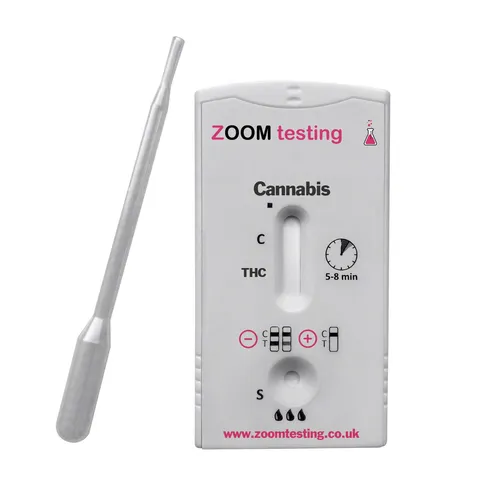
Featured Product: Cannabis Drug Test (THC)
If you need to screen a urine sample for cannabis, the Zoom Testing Cannabis Drug Test (THC) detects the THC metabolite in urine at a 50 ng/mL cut-off. It is a screening test, so its result should be interpreted according to the supplied instructions and the relevant testing procedure.
Hair Testing
Hair testing can provide information about drug use over a substantially longer period than urine, saliva or blood testing. Drugs and their metabolites can become incorporated into growing hair.
Head hair grows at approximately 1cm per month on average, so laboratories commonly analyse a defined length of hair to assess drug exposure over a specified period. A 3cm sample taken close to the scalp, for example, is often used to represent approximately three months of hair growth.
Hair testing is normally laboratory-based and may be used in workplace, private or legal testing programmes. The precise period assessed depends on the sample collected and the laboratory procedure used.
Common Myths About Beating Cannabis Tests
There are many claims online about methods that supposedly remove cannabis from the body or guarantee a negative test. These should be treated with caution.
Myth 1: Drinking Large Amounts of Water Clears THC
Drinking water does not rapidly remove THC metabolites from the body. Excessive fluid intake may dilute a urine sample, but laboratories and some screening procedures can identify samples that appear unusually dilute.
Myth 2: Detox Drinks or Herbal Products Guarantee a Negative Result
Products marketed as cannabis cleanses or detox products cannot reliably guarantee that a drug test will be negative. THC metabolites are eliminated naturally over time, and there is no dependable shortcut that applies to every person.
Myth 3: Adding Something to the Sample Will Beat the Test
Attempting to alter a urine sample using household substances or commercial adulterants can invalidate the sample and may itself be detected during specimen validity testing.
Important: The only reliable way to avoid a positive cannabis test caused by cannabis use is not to use cannabis. There is no guaranteed method for making THC metabolites disappear from the body on demand.
Cannabis Oil, CBD and Drug Testing
With the widespread use of CBD products, people often ask whether CBD oil can cause a positive cannabis drug test.
CBD itself is not normally what standard drug tests look for. However, some CBD products can contain small amounts of THC or other controlled cannabinoids, so using a CBD product cannot guarantee that a THC drug test will be negative.
The amount of THC present can vary between products, and labelling does not always provide an absolute guarantee that a product contains no detectable THC.
Our article on whether cannabis oil can result in a positive drug test explains the issue in more detail.
Short Notice Drug Tests
Workplace drug testing may form part of an employer’s drug and alcohol policy, particularly in safety-critical roles. Testing arrangements vary between employers and industries.
If cannabis has been used recently and a urine test is required at short notice, there is a possibility of a positive result. The likelihood and length of the detection period generally increase with more frequent or heavier use.
Workplace drug-testing policies vary between employers, so employees should check the policy that applies to their workplace rather than assuming that cannabis use will be treated in a particular way.
If cannabis is being used alongside alcohol, you may also find our article about mixing cannabis and alcohol useful.
Cannabis Tolerance and Detection
People who use cannabis regularly can develop tolerance, meaning that a larger amount may be needed to produce the same subjective effects experienced previously. This is separate from the question of how long cannabis remains detectable in a drug test.
Tolerance and drug-test detection are different things. A period without cannabis may reduce tolerance to its effects, but it does not provide a reliable timetable for when a urine, saliva, blood or hair test will become negative.
You can read more about changes in cannabis potency in our article on how strong cannabis is nowadays.
Frequently Asked Questions
How long does cannabis stay in your system?
There is no single answer. Cannabis may be detectable for a relatively short period in blood or saliva, while urine tests can remain positive for days or weeks depending particularly on frequency of use. Hair testing can cover a much longer historical period.
Can cannabis be detected in a drug test?
Yes. Cannabis can be detected using urine, saliva, blood and hair testing. The appropriate test depends on whether the aim is to identify relatively recent use or drug exposure over a longer period.
Does the way cannabis is consumed affect detection time?
The route of administration can affect how quickly THC enters the body and how its effects are experienced. However, drug-test detection time is also influenced by the amount used, frequency of use, test type and test cut-off. It is therefore not possible to predict a negative result simply from whether cannabis was smoked, vaped or eaten.
Can exercise or drinking water flush cannabis out of your system?
No reliable evidence shows that drinking large amounts of water or exercising will quickly eliminate THC metabolites and guarantee a negative drug test. Hydration can affect urine concentration, but it does not provide a dependable way to accelerate clearance of THC from the body.
How long do the effects of cannabis last?
The effects of cannabis do not last for the same length of time as its drug-test detection window. Effects can begin within minutes when cannabis is smoked or vaped, while edible cannabis generally takes longer to have an effect. Duration varies according to dose, potency, method of use and the individual.
Why do some people test positive for longer than others?
The biggest influences include how often cannabis is used, the amount used, how recently it was used and the type and sensitivity of the drug test. Individual differences in metabolism and body composition can also contribute. This is why a detection window should never be treated as an exact countdown to a negative result.
Key Points
- There is no exact cannabis detection time that applies to everyone.
- Urine tests generally have a longer detection window than saliva or blood tests.
- Frequent and heavy cannabis use can substantially extend urine detection times.
- Hair testing can provide information about drug exposure over a period of months.
- CBD products may sometimes contain enough THC to create a risk of a positive THC test.
- Drinking water, detox products and other supposed cleansing methods cannot guarantee a negative test.
- A drug-test detection window is not the same as the length of time cannabis produces noticeable effects or impairment.
About the Author
Anthony Cunningham, BA (Hons), MA, is a UK-based drug testing expert and editor with over 20 years’ experience running Zoom Testing, a trusted source for accurate drug testing kits and testing guidance. He creates clear, evidence-based articles using UK legislation, workplace compliance standards, and harm reduction best practices. Where possible, content is reviewed by testing specialists and compliance professionals to enhance accuracy and reliability, helping readers make informed testing decisions.