
Published: 26 June 2026 | Last Updated: 26 June 2026 | By Anthony Cunningham
This week’s drug testing industry roundup looks at the stories most relevant to UK employers, families and testing professionals. With nearly 20 years of experience in professional drug testing, Zoom Testing reviews the week’s developments and explains what they may mean in practice.
The final week of June brought together several stories that highlight how rapidly the landscape around drugs, alcohol and workplace health continues to evolve. From growing concern over nitrous oxide misuse in public spaces to new evidence on addiction treatment and harm reduction, the common thread is the need for evidence-based responses rather than reactive policies.
For UK employers, occupational health teams and workplace drug testing providers, these developments reinforce an important message. Drug testing remains a valuable part of a wider safety strategy, but it works best when supported by clear policies, education, employee wellbeing initiatives and proportionate interventions. This week’s stories also demonstrate that substance use trends continue to change, requiring organisations to review policies regularly rather than relying on outdated assumptions.
Public safety concerns continue to evolve
One of the week’s most striking UK stories came from Bournemouth, where police reported increasing disorder linked to recreational nitrous oxide use on the seafront. Officers confiscated large numbers of canisters as they dealt with anti-social behaviour during the busy summer period. Since 2023, recreational possession of nitrous oxide has been a Class C offence in England and Wales, but enforcement alone is unlikely to remove demand. Read more: Nitrous oxide use on Bournemouth beach fuelling disorder.
For employers, the significance extends beyond seaside policing. Nitrous oxide remains one of several substances that can impair judgement, coordination and reaction times, even though it is sometimes incorrectly viewed as relatively harmless. Organisations operating safety-critical roles should ensure their substance misuse policies reflect current patterns of recreational drug use rather than focusing solely on traditional illicit drugs.
A separate BBC report from an ongoing murder trial also highlighted the continuing role of child criminal exploitation in county lines drug activity. Evidence presented to the court suggested a schoolboy may have been drawn into drug dealing through exploitation rather than simple criminal intent. Read the report: Schoolboy ‘possibly exploited’ into drug dealing, murder trial told.
While this is not a workplace story in itself, it illustrates the wider social environment from which many future employees emerge. Employers increasingly recognise that safeguarding, wellbeing and early intervention are important alongside disciplinary processes when substance misuse issues arise.
Businesses reviewing their own programmes may also find our guide to Workplace Drug Testing useful when assessing whether existing policies remain fit for purpose.
Harm reduction continues to dominate the conversation
Internationally, 26 June marked the annual Support. Don’t Punish Global Day of Action, with organisations around the world promoting health-led approaches to drug policy rather than criminalisation alone. More information is available here: Support. Don’t Punish – Global Day of Action 2026.
The theme was reinforced by several newly published research papers.
A comprehensive systematic review examining naltrexone treatment for opioid use disorder found that patient retention remains one of the biggest challenges. While long-acting injectable formulations generally perform better than oral medication, many patients discontinue treatment within the first month, underlining the complexity of maintaining long-term recovery. See the study: Factors associated with the percentage of individuals who initiate and discontinue naltrexone as a relapse prevention pharmacotherapy in opioid use disorder.
Another paper argued for more targeted harm reduction efforts aimed specifically at people who are new to injecting drug use, when the opportunity to reduce long-term health harms may be greatest. Read: Time for tailored harm reduction focus on new initiates to injecting drug use.
For employers, these studies are a reminder that drug dependency is rarely resolved through a single intervention. Testing programmes can identify safety risks, but organisations also benefit from having clear referral pathways into occupational health, employee assistance programmes or specialist treatment services where appropriate.
This balanced approach is explored further in our article on Alcohol and Drug Testing in the Professional Workplace.
Alcohol remains firmly on the public health agenda
Alcohol featured prominently this week through two very different stories.
In France, authorities introduced restrictions on alcohol sales and public drinking in parts of Paris as exceptional heat placed additional pressure on emergency services. The temporary measures demonstrate how alcohol policy can intersect with wider public health planning during periods of extreme weather. Read the BBC report: Paris restricts alcohol consumption and sales as Europe’s heatwave shifts east.
Meanwhile, The Guardian examined Britain’s continuing enthusiasm for ready-to-drink canned cocktails, charting the remarkable growth of a market that has become a familiar feature of supermarkets and convenience stores. See: The great tinification: how Britain fell in love with canned cocktails.
Neither story suggests an immediate workplace crisis, but together they highlight how changing consumer habits continue to influence patterns of alcohol use. For employers, particularly those operating safety-critical environments or managing large numbers of remote workers, alcohol policies deserve the same regular review as drug testing procedures.
Understanding when and how to use different testing methods is often just as important as having a policy in place. Our guide to The 5 Common Ways To Test For Drugs And Alcohol explains the strengths of each approach.
Practical takeaway for UK employers
This week’s stories point towards one clear conclusion: substance misuse is becoming more diverse rather than more predictable.
New nicotine products, changing recreational drug trends, evolving harm reduction strategies and shifting alcohol consumption patterns all require organisations to think beyond outdated assumptions. A workplace policy written five or ten years ago may no longer reflect the risks employers actually face today.
The strongest workplace drug and alcohol programmes combine proportionate testing with education, manager training, clear reporting procedures and access to appropriate support when employees need help. They also recognise that different sectors face different risks. Construction, manufacturing, transport, logistics and healthcare organisations will naturally require different levels of testing and monitoring than office-based businesses.
Finally, regular policy reviews remain essential. As this week’s news demonstrates, legislation, public health guidance and patterns of substance use continue to evolve. Employers who keep their policies current will be better placed to protect both workplace safety and employee wellbeing over the months ahead.
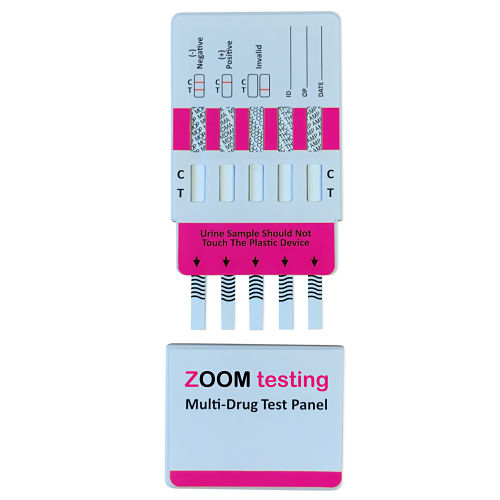
Take Action: Multi Drug Dip Cards
For clear, practical testing at home or in the workplace, our Multi Drug Dip Cards provides fast and simple THC screening when you need a reliable answer.
What Customers Say
★★★★☆
“Easy to use test that arrived very quickly. From a urine sample I was able to test for cannabis and synthetic cannabis. The results were negative. As a parent this was a great relief!”
– Andy B · 19 Jul 2015 · Verified review
★★★★★
“I needed to take a drug test at work although I had given up smoking cannabis,I bought the kit to make sure it had all left my body. The test worked and it was confirmed when I took the test at work. Small price to pay for peace of mind!”
– michael m · 8 Jan 2015 · Verified review
★★★★★
“I’ve never taken drugs or used a drug test before so it was a bit intimidating at first but I contacted Zoom Testing and they were very helpful in pointing me in the right direction. I was worried about my son who had been smoking cannabis. The test was simple to use and I now have peace of mind knowing that he is no longer using the drug. Also allowed me to confirm that he was not using anything else. Good deterrent too, as he knows that he can be tested at any time.”
– Tina · 12 Apr 2015 · Verified review
About the Author
Anthony Cunningham – Drug Testing Expert & Editor
Anthony Cunningham, BA (Hons), MA, is a UK-based drug testing expert and editor with over 20 years’ experience running Zoom Testing, a trusted source for accurate drug testing kits and testing guidance. He creates clear, evidence-based articles using UK legislation, workplace compliance standards and harm reduction best practices. Where possible, content is reviewed by testing specialists and compliance professionals to enhance accuracy and reliability, helping readers make informed testing decisions.