About This Article
Zoom Testing has supplied drug testing kits to UK customers for nearly 20 years. This guide draws on our experience helping thousands of people understand drug testing, workplace compliance, and cocaine detection in urine samples. Always follow current UK legislation regarding drug testing.
Published: 27 September 2025 | Last Updated: 17 October 2026 | By: Anthony Cunningham
Contents
After cannabis, cocaine is among the most widely used illegal drugs in the UK. Some employers include cocaine in their drug screening programmes, particularly for safety-critical roles. Urine testing is one commonly used method of workplace drug screening.
Detection Window for Cocaine in Urine
A urine drug test may detect cocaine use for several days afterwards, commonly around 2 to 5 days, although the detection window varies. A negative result outside this period cannot be guaranteed, and the timing depends on the individual, the pattern of use and the test cut-off.
The detection window varies based on usage patterns. Occasional use may be detectable for around 2 to 3 days, while repeated or heavy use can produce positive results for longer, sometimes a week or more. These are approximate ranges, not reliable deadlines.
Key Fact: Urine tests don’t detect cocaine itself but rather benzoylecgonine, the primary metabolite that remains in your system longer than the parent drug.
Factors Affecting Detection Time
Several factors can influence how long cocaine remains detectable in urine, such as:
- Dose: Higher doses tend to stay in the system longer.
- Frequency of use: Chronic, heavy users may have detectable levels for a more extended period.
- Metabolism: Individual differences in metabolism can affect the time metabolites remain detectable, but cannot predict a precise result.
- Body mass: Body composition alone is not a reliable way to estimate how long benzoylecgonine will be detectable in urine.
- Hydration: Fluid intake can change urine concentration and may dilute a sample, but drinking extra water does not reliably shorten the biological detection window.
It’s important to note that these are general guidelines, and individual results may vary. For the most accurate assessment, consider factors like usage patterns and physiology.
Age and Health Considerations
Age and overall health may influence detection times, particularly where liver or kidney function is affected. However, it is not possible to predict an individual’s detection window reliably from age or general health alone.
How Cocaine Drug Tests Work
Urine tests look for cocaine breakdown products in your system. When you use cocaine, your body breaks it down into benzoylecgonine. This substance stays in urine longer than cocaine itself. Most cocaine urine test strips detect this metabolite. On a typical competitive lateral-flow strip, a control line alone indicates a preliminary positive result, while both control and test lines indicate a negative result. If the control line does not appear, the test is invalid. Always follow the instructions supplied with your particular kit.
The test is generally simple to use. You collect a urine sample in a clean cup and dip the strip to the marked level for the time stated in the instructions. Read the result within the manufacturer’s specified time window; this varies by product.
Understanding Cut-Off Levels
Urine drug tests use specific cut-off levels for cocaine to determine screening results. A 300 nanograms per millilitre (ng/mL) benzoylecgonine cut-off is used by some rapid urine tests, but it is not a universal standard. Other screening and laboratory testing programmes may use different thresholds.
For a kit with a 300 ng/mL cut-off, a result at or above that threshold may produce a preliminary positive screening result. A concentration below the cut-off generally produces a negative result. Check the stated threshold for the specific test and confirm consequential results in a laboratory.
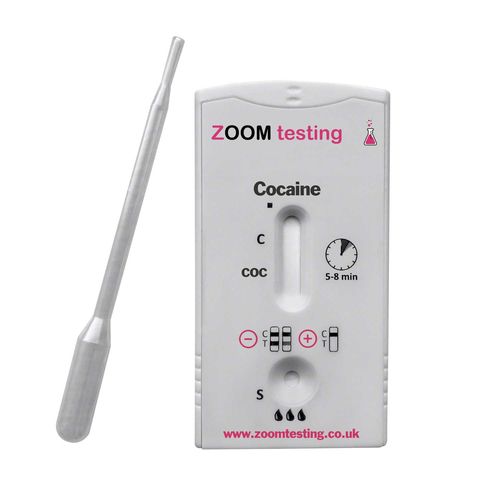
Featured Product: Cocaine Urine Drug Tests
For home or workplace screening, browse Zoom Testing cocaine urine drug tests. Check the cut-off and instructions for the specific kit before use.
When Employers Test for Cocaine
UK employers conduct cocaine drug testing in several workplace situations. Understanding when testing occurs helps employees and employers navigate the process properly.
Pre-Employment Testing
Many companies now include drug screening as part of the recruitment process, particularly in safety-critical industries like transportation, construction, and healthcare. Pre-employment testing typically occurs after a conditional job offer has been made. Candidates are usually notified in advance that drug testing forms part of the hiring process.
Random Testing
Some employers conduct random drug tests throughout the year. This approach is most common in safety-sensitive roles where impairment could pose significant risks. As outlined in ACAS guidance on drug and alcohol misuse at work, employers must have clear policies in place and employees must be aware that random testing may occur.
Post-Incident Testing
Following workplace accidents or incidents, employers may request drug testing as part of an investigation. Testing should follow the organisation’s lawful policy and appropriate procedures. A positive urine result indicates exposure within a detection window; it does not establish impairment at the time of an incident.
For-Cause Testing
When an employer has reasonable suspicion that an employee is under the influence of drugs at work, they may request immediate testing. This could be based on observed behaviour, performance issues, or other concerning signs.
UK Legal Context for Workplace Testing
In the UK, workplace drug testing must comply with employment law, data protection regulations, and human rights legislation. Employers cannot test employees without consent and must have legitimate business reasons for testing. The UK Government provides guidance on drug testing and workplace policies. Companies should consult with ACAS and legal advisors to ensure their drug testing policies are lawful and fair.
Interpreting Cocaine Drug Test Results
When analysing cocaine drug test results, it’s crucial to understand what the outcomes mean:
- Positive: A positive result indicates the presence of cocaine or its metabolites at or above the cut-off level. However, false positives can occur due to certain medications or substances.
- Negative: A negative result suggests cocaine is either not present or falls below the cut-off threshold. Keep in mind that very recent use may not yet be detectable.
- Invalid: An invalid test result signals an issue with the testing procedure or sample. In this case, re-testing with a new sample and kit is necessary.
Understanding Faint Lines
One common question concerns faint test lines. Any visible line in the test region, regardless of how faint, indicates a negative result. The intensity of the line does not correlate with the amount of drug in the system. A very faint line is just as negative as a dark line.
Confirmation Testing
Non-negative urine screening results should be confirmed by an accredited laboratory when they may affect employment, legal or medical decisions. Methods such as gas chromatography-mass spectrometry (GC-MS) or liquid chromatography-tandem mass spectrometry (LC-MS/MS) can identify the substance more specifically and help resolve screening false positives. Confirmation does not, by itself, prove impairment at a particular time.
If you have questions about your results, consult with a medical professional or the drug test manufacturer for guidance. They can help you interpret the findings accurately and determine the next steps.
Testing Tip: Always follow the manufacturer’s instructions for sample collection, storage and result-reading times. Avoid over-diluting the sample, which may affect the test result. There is no universal rule that first-morning urine should be avoided.
What Customers Say
Our customers have successfully used cocaine drug tests for pre-employment screening, workplace compliance, and peace of mind. Here’s what they’ve shared:
Michelle M. – Verified Buyer
“Spot on, result came before the wait time, was value for money.”
Julie M. – Verified Buyer
“Very speedy discreet service. An excellent company to buy from. Thank you once again.”
Buying Cocaine Drug Testing Kits
Drug Testing Kits for cocaine can be bought online from Zoom Testing. We offer a completely private and discreet service and we are suppliers of drug testing kits to the NHS. Urine Drug Testing kits can be bought as single drug test kits for cocaine, as well as part of a multi-panel drug test kit that will detect cocaine amongst a number of other drugs.
Check each product listing for the test’s intended use, cut-off level, regulatory markings and instructions. Delivery times and packaging arrangements are shown at checkout.
Related Reading
Why not read some of our other articles about cocaine and cocaine drug testing kits:
About the Author
Anthony Cunningham – Drug Testing Expert & Editor
Anthony Cunningham, BA (Hons), MA, is a UK-based drug testing expert and editor with over 20 years’ experience running Zoom Testing, a trusted source for accurate drug testing kits and testing guidance. He creates clear, evidence-based articles using UK legislation, workplace compliance standards, and harm reduction best practices. Where possible, content is reviewed by testing specialists and compliance professionals to enhance accuracy and reliability, helping readers make informed testing decisions.
Drug Testing Disclaimer
This article is for general information only. Drug test cut-off levels, detection times and results can vary according to the test, specimen type and testing standard being used. A screening result should not be used on its own to make medical, legal or employment decisions. Where a test result has significant consequences, appropriate confirmation testing and professional advice should be considered.