About This Article
Zoom Testing has supplied drug testing kits to UK customers for nearly 20 years. This weekly roundup draws on our experience helping thousands of employers understand workplace drug testing, compliance requirements, and emerging substance use trends. Always follow current UK legislation regarding drug testing in the workplace.
Published: 19 December 2025 | Last Updated: 19 December 2025 | By Anthony Cunningham
As we head into the final stretch before Christmas, this week’s drug news makes sobering reading for anyone responsible for workplace safety. Whilst most businesses are focused on festive parties and year-end deadlines, the data coming through from police forces, health services and treatment centres tells a different story – one of rising impairment on our roads, record addiction admissions, and a drug market more unpredictable than ever. For employers, the message is clear: the risks haven’t taken a holiday break.
This week’s headlines paint a troubling picture for UK employers heading into the festive season. Essex Police report they’re facing a “drug-driving pandemic,” with arrests jumping from 971 in 2024 to over 1,700 in 2025 – and similar patterns are emerging across the country. In Ireland, drug-driving offences rose 27% in the first nine months of 2025 compared to all of last year, whilst over 200 arrests were made across the West of England in just the first two weeks of December.
What’s particularly concerning for workplace safety is the mix of substances involved. A new Irish study examining polydrug use in suspected impaired drivers found complex patterns of multiple substances, creating unpredictable impairment effects that standard testing approaches might miss.
Ketamine Surge Reaches “Record-Breaking Highs”
Perhaps the most alarming development for employers is the sharp rise in ketamine use. A Surrey rehab centre reports that nearly a third of their residents are now being admitted for ketamine addiction – what they’re calling “record-breaking highs” in admissions. This isn’t just a recreational drug issue anymore; ketamine’s increasing workplace presence demands attention from HR teams and safety managers.
The dissociative effects of ketamine make it particularly dangerous in any work environment requiring concentration, coordination or operation of machinery. Unlike some substances that might wear off predictably, ketamine can cause lingering cognitive impairment that affects judgment and reaction times well after initial use.
Cannabis: The Hidden Dependence Crisis
Whilst cannabis use has remained stable across England and Wales, NHS data reveals that dependence rates have nearly doubled. In 2024, 6.7% of people aged 16-64 showed signs of drug dependence, up from just 3.8% in 2014 – and this rise is mainly driven by cannabis dependence.
What makes this particularly relevant for employers is that many still view cannabis as relatively benign. The reality is quite different. Regular use affects memory, motivation and decision-making – precisely the functions essential for workplace safety and productivity. And with treatment services struggling to keep pace with rising demand, many dependent users are continuing to work whilst impaired. Understanding how long cannabis stays in the system is crucial for implementing effective testing policies.
The MDMA Market: A Testing Nightmare
Ireland’s HSE drug-checking service has issued an urgent warning that MDMA products now range from 0mg to over 300mg, showing just how unpredictable the market has become as we enter the Christmas party season. This variation creates significant challenges for workplace drug testing – someone who used what they thought was a low dose might actually have consumed a dangerous amount of MDMA, affecting them for longer than expected.
Meanwhile, Ireland’s Health Research Board reports that cocaine is now the second most common drug implicated in poisoning deaths, with Irish authorities reporting that cocaine is “pouring into Ireland” to supply the Christmas market.
Young People in the Crosshairs
New research reveals that one in nine teenagers are being approached to sell drugs – and a quarter of those approached go through with it. For employers with younger staff or apprentices, this highlights the vulnerability of this age group to criminal exploitation. Gang involvement doesn’t just affect the individual; it can compromise workplace security and bring criminal activity into your premises.
The targeting is particularly sophisticated. As one tragic case highlighted, a 13-year-old girl died copying a social media trend involving solvent abuse. Her mother is now calling for better education about solvent abuse dangers – a reminder that drug-related risks now include substances many wouldn’t traditionally consider.
Scotland’s Stark Warning
Scottish Government data shows suspected drug deaths increased 8% in the first nine months of 2025, with opioids continuing to drive the majority of drug misuse deaths according to Public Health Wales. This matters for employers because opioid users often maintain employment whilst dependent, gradually deteriorating in performance before the problem becomes obvious.
On a more positive note, Scotland also released data showing that drug and alcohol treatment waiting times are being monitored more closely, with 11,444 referrals made during the quarter ending September 2025. For employers, this suggests improved pathways for supporting staff who need help.
Nicotine’s Expanding Footprint
The nicotine market continues to evolve in ways that complicate workplace health policies. UCL research shows that one in 13 men aged 16-24 now use nicotine pouches, whilst a major study published in Addiction examined changing patterns of nicotine use in England between 2014 and 2024. The Guardian also reports that Gen Z is behind the jump in use of oral nicotine pouches across Great Britain, with over half a million people now consuming these products.
Bath University has developed a portable vape testing kit that police are now trialling to detect dangerous psychoactive substances in vapes. This technology could prove valuable for employers concerned about employees using spiked or adulterated vaping products on premises.
International Developments with UK Impact
Donald Trump’s executive order reclassifying marijuana as a less dangerous drug represents one of America’s biggest drug policy shifts in years. Whilst this is US-focused, it will influence international attitudes and potentially UK policy discussions around cannabis regulation – something employers should watch as it may affect testing standards and legal frameworks.
On a more concerning note, Trump also branded fentanyl a “weapon of mass destruction,” classifying the opioid as a potential chemical weapon. The US military even carried out strikes on three boats accused of trafficking drugs in the Pacific Ocean. Whilst fentanyl hasn’t reached UK prevalence levels seen in North America, this highlights the continuing global threat.
Positive Developments in Treatment and Testing
Not all news was grim. Blackburn with Darwen Council received a £2.2 million Whitehall grant to boost substance misuse services, whilst Via’s drug and alcohol service in Cheshire West & Chester achieved Hepatitis C micro-elimination across all three local hubs – a significant public health milestone.
The University of Birmingham secured £1.46 million from NIHR to lead a landmark study exploring Lived Experience Recovery Organisations, whilst research published in Addiction examined 5-MeO-DMT for alcohol use disorder, showing continued innovation in treatment approaches.
What This Means for Your Workplace
The convergence of rising drug-driving, record ketamine use, increasing cannabis dependence, and unpredictable drug purity creates a perfect storm of workplace safety challenges heading into 2026. The traditional approach of testing for a fixed panel of substances may no longer be sufficient when the drug market is this volatile and polydrug use is this common.
For employers, the priority should be ensuring your drug testing programme reflects current threats. This means considering:
Regular policy reviews – Are you testing for the substances that pose the greatest risk in your specific workplace? Ketamine, for instance, may now warrant inclusion in standard panels for safety-critical roles.
Education over punishment – With one in nine young people being approached to sell drugs, and dependence rising faster than treatment capacity, purely punitive approaches won’t work. Staff need to understand both the risks and the support available.
Testing method selection – Understanding the different ways to test for drugs and alcohol matters more when polydrug use is common and detection windows vary significantly between substances.
Seasonal awareness – The Christmas period brings particular risks, with increased social use coinciding with year-end work pressures. Consider whether additional testing or awareness campaigns are appropriate.
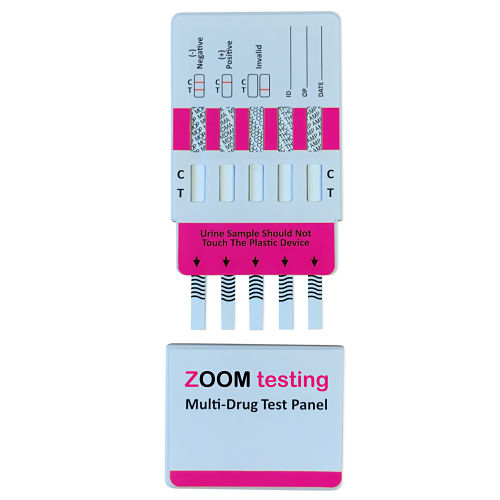
Take Action: Protect your workplace with comprehensive multi-drug testing kits that detect the substances creating the biggest workplace safety risks. Our Multi Drug Dip Cards test for multiple substances in one simple test, giving you the confidence to maintain a safe working environment.
If you’re concerned about updating your workplace drug testing approach, ZoomTesting can help you design a programme that addresses current threats whilst remaining proportionate and legally compliant. Our expertise in UK employment law and testing standards ensures your programme protects both your workforce and your organisation.
What Customers Say
“I bought these to test my PCV Drivers and they worked very good. Delivery was very fast and they were very quick at replying to any queries when e-mailed. Will be using them again in the future if needed and are highly recommended.”
— Kayleigh R., Verified Buyer
“Top quality kits delivered in a timely manner. Also upgraded my order from 7 panel to 10 panel at no extra cost. Highly recommended very professional company.”
— Glynis, Verified Buyer
“I’ve never taken drugs or used a drug test before so it was a bit intimidating at first but I contacted Zoom Testing and they were very helpful in pointing me in the right direction. The test was simple to use and I now have peace of mind. Good deterrent too, as he knows that he can be tested at any time.”
— Tina, Verified Buyer
Contact ZoomTesting today to discuss how our drug testing solutions can help you navigate the changing substance use landscape and keep your workplace safe in 2026.
About the Author
Anthony Cunningham – Drug Testing Expert & Editor
Anthony Cunningham, BA (Hons), MA, is a UK-based drug testing expert and editor with over 20 years’ experience running Zoom Testing, a trusted source for accurate drug testing kits and testing guidance. He creates clear, evidence-based articles using UK legislation, workplace compliance standards, and harm reduction best practices. Where possible, content is reviewed by testing specialists and compliance professionals to enhance accuracy and reliability, helping readers make informed testing decisions.