Published: 20 March 2026 | Last Updated: 20 March 2026 | By Anthony Cunningham
This week’s drug testing industry roundup covers a deeply troubling rise in drug-related deaths, an alarming surge in ketamine use across Europe, the latest conviction involving a prominent political figure, and fresh evidence on the growing threat posed by synthetic opioids. With nearly 20 years of experience in professional drug testing, we have analysed the week’s most important stories to help UK employers and families stay informed and prepared.
Synthetic Opioids: The Nitazene Threat Is Getting Harder to Ignore
The National Crime Agency’s Director General, Graeme Biggar, issued a blunt warning this week: synthetic opioids are now the most significant threat in the battle against illegal drugs. Nitazenes specifically have been linked to 1,000 deaths across the UK in just two and a half years. That is not a trend – that is a crisis developing in real time.
What makes nitazenes particularly dangerous from a workplace perspective is that standard drug testing panels do not detect them. These are not substances that show up on a multi-panel drug test. They are often mixed into heroin or other street opioids without the user knowing, which is precisely what makes them so lethal. Employers in high-risk sectors – logistics, construction, manufacturing – should be having conversations with their occupational health providers about whether their testing protocols cover the breadth of risks their workers may face.
Read the full story: Synthetic opioid linked to 1,000 deaths across the UK in just two-and-a-half years (Independent)
Scotland’s Drug Death Toll Rises Again
Scotland’s drug death figures make grim reading. There were 1,146 suspected drug deaths in 2025 – an 8% increase on the 1,065 recorded in 2024. After a brief downward trend, the rolling 12-month total has been climbing steadily throughout 2025.
Adding to the urgency, health officials issued a specific alert this week following a surge in suspected drug-related deaths in Dumfries and Galloway. Twelve people died since the end of December, nine of them in Wigtownshire alone. While the causes are still being investigated, this kind of cluster is the sort of indicator that tends to precede a wider supply-chain contamination event. Employers with operations in Scotland should be particularly vigilant.
The National Mission on Drug Deaths evaluation this week also looked at lived experience feedback from people with drug use experience, and a separate study examined changes in family support provision since 2021. Frontline staff perspectives were captured in a new survey comparing 2023 and 2025 responses.
Sources: Suspected drug deaths in Scotland: October to December 2025 (Scottish Government) | Alert issued over surge in suspected drug-related deaths (BBC)
Ketamine and Cocaine on the Rise Across Europe’s Cities
Wastewater analysis from across Europe – one of the most reliable methods for tracking actual drug use at a population level – reveals a striking pattern: MDMA (ecstasy) use has fallen sharply, while ketamine and cocaine are climbing strongly. The data comes from the EU Drugs Agency’s (EUDA) largest-ever wastewater monitoring project, covering cities across the continent.
This shift matters for UK employers. Ketamine, once associated mainly with nightlife, is now showing up in broader demographics and appearing more frequently in workplace drug testing programmes. If your current testing panel does not include ketamine detection, the European data suggests it may be time to reconsider. The BBC also ran a compelling personal account this week from Finley Worthington, who described becoming a daily ketamine user within six months of first trying it at 18 – a stark illustration of how quickly dependency can develop.
Source: Europe’s wastewater tells a new story: sharp drop in MDMA, but ketamine and cocaine climb (EUDA)
Former Conservative MP Charged with Drug Offences
Former Conservative MP Crispin Blunt, who represented Reigate for over 25 years and previously served as a justice minister, has been charged with four drug offences – one count of possessing a Class A drug and three counts of possessing a Class B drug. Blunt is 65 years old.
The case is a reminder that drug use cuts across demographics, backgrounds, and professional status. It also raises the perennial question for HR and compliance professionals: how do you manage drug testing in professional workplace environments where seniority sometimes creates blind spots in policy enforcement? According to ACAS guidance on drug and alcohol testing at work, any policy must be applied consistently regardless of seniority or role.
Source: Former Tory MP charged with possession of class A drugs (Independent)
Vaping at Work: A £22,000 Warning for Employers
An employment tribunal ruling this week will be required reading for any employer managing substance-use policies in the workplace. A factory worker denied vaping in the toilets – an incident which caused a full evacuation and shut down production temporarily – and was dismissed after bosses concluded he was lying. The tribunal awarded him over £22,000.
The case highlights how poorly evidenced decisions can be extraordinarily costly. Whether the issue is vaping, drugs, or alcohol, the lesson is the same: if you are going to take disciplinary action, your evidence needs to be solid. Robust testing protocols, documented clearly and applied fairly, are your best protection. This is one area where objective test results – rather than observation or suspicion – make a real difference to the defensibility of any outcome.
Source: Worker accused of vaping in toilets wins £22k payout (BBC)
Fentanyl Patch Deaths: Coroners Raise Repeated Concerns
A new open-access study published in the British Journal of Clinical Pharmacology analysed coroner reports following fentanyl patch fatalities in England, Wales and Northern Ireland between 1997 and 2024. The findings are striking: safety concerns involving poor adherence, usage errors, and administration mistakes were repeatedly flagged by coroners, most often in males aged 35 to 49. The researchers argue that information from coroners should be systematically monitored to inform prescribing safety and patient education.
For employers, this is a reminder that prescribed opioid medications represent a genuine safety risk in safety-critical roles, even when they are being used legitimately. Knowing what your workers are taking – and whether it affects their ability to carry out their duties safely – is part of responsible workplace health and safety management.
Source: Safety concerns reported by coroners following fentanyl patch fatalities in England, Wales and Northern Ireland between 1997 and 2024 (BJCP)
Probation and Addiction: New Government Follow-Up Study
The Department of Health and Social Care published follow-up analysis this week examining pathways between probation and addiction treatment. The study focuses on people sentenced to community orders with an Alcohol Treatment Requirement or Drug Rehabilitation Requirement, looking at how engagement with treatment relates to reconviction outcomes.
The research is relevant to employers who take on staff with criminal records, particularly those with histories of substance use. Understanding the support landscape – and knowing that structured treatment engagement does correlate with better outcomes – helps employers make more informed decisions about rehabilitation and workforce reintegration. The full report is available on GOV.UK.
£75 Million Cocaine Haul Seized at Southampton Docks
Two men have been charged after a massive cocaine seizure at Southampton Docks, with the drugs concealed among pallets of bananas. This is one of the larger port seizures in recent memory, and it illustrates that high-volume supply chains remain the primary route for bulk cocaine importation into the UK.
For employers in ports, dockside logistics, and supply chain roles, this kind of story is a reminder that large quantities of cocaine flowing through the supply chain keeps street prices lower and availability higher – which in turn affects the pattern of use you might encounter in your workforce.
Source: Two charged as £75m of cocaine found in banana boxes (BBC)
Vaping Regulation Tightens – Scotland Leads the Way
Following the Union Street fire in Glasgow – thought to have started in a vape shop – Edinburgh Council is seeking powers from the Scottish Government to regulate vape shops directly. Separately, Jersey has confirmed that a new excise duty on vape liquid will come into force on 11 May. Meanwhile, a BBC report confirmed that a number of vape shops in one borough are under “active investigation” over concerns about illegal activity.
The direction of travel is clear: the regulatory environment around vaping is tightening, and the industry is facing increasing scrutiny both in terms of product safety and youth-targeted marketing. Leeds pharmacists will also be able to supply smoking cessation medications varenicline and cytisinicline under a Patient Group Direction from Community Pharmacy West Yorkshire, according to the Pharmaceutical Journal – a move aimed at improving access where GP-based services are stretched.
Sources: Council to ask Scottish Government for vape shop regulations (Edinburgh Reporter) | Jersey sets date for new vape liquid excise duty (BBC) | Borough vape shops under ‘active investigation’ (BBC) | Leeds pharmacists to supply smoking cessation medication under PGD (Pharmaceutical Journal)
ADHD and Substance Use: Parliament Asks the Questions
A parliamentary question this week asked the Secretary of State for Health and Social Care what recent assessments have been made on the relationship between ADHD and Substance Use Disorders. It is a question that is increasingly relevant to occupational health. The evidence base linking ADHD with higher rates of substance use is well established, and as ADHD diagnoses continue to rise among adults, employers are likely to encounter this intersection more frequently in their workforce.
Source: ADHD: Addictions (parliamentary question) (They Work For You)
What Employers Should Take Away This Week
It has been a week that underscores why broad-spectrum testing matters. The ketamine story from Europe’s wastewater data, the BBC’s profile of a young man who became dependent within months, and the surge in cocaine supply all point in the same direction: the drug landscape in 2026 is broader and more complex than ever before. Standard 5 or 7 panel tests were designed for a different era.
Understanding what happens when an employee fails a drug test starts with having the right test in the first place. If you are responsible for workplace drug testing, the vaping tribunal case is also worth reading carefully – it is a powerful illustration of why procedural rigour matters just as much as the test itself. And as always, any policy should be designed in line with ACAS workplace guidance on drug and alcohol testing.
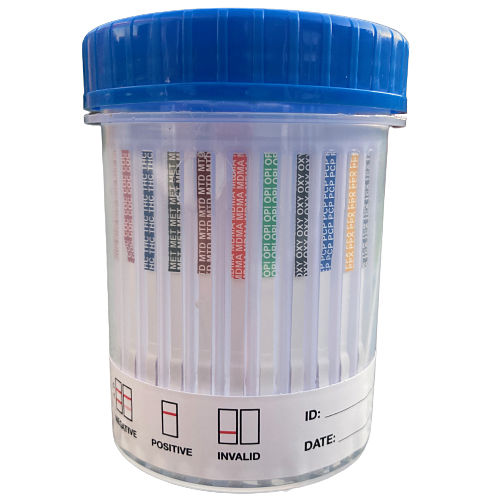
Take Action: Comprehensive 18-Panel Drug Testing
With ketamine and cocaine use rising across Europe and the drug landscape broader than ever, make sure your testing covers what matters. Our 18 Panel Drug Test with Integrated Cup screens for 18 substances including ecstasy and ketamine – giving you comprehensive, accurate results in one simple test.
What Customers Say
“I was really pleased to find this as I needed a comprehensive drug test kit and this is the biggest one that I could find. Price was very reasonable and the test arrived quickly. I found it to be an easy to use product, clear instructions. Results were quick and simple to interpret.”
– Jason
“These Ketamine tests gave me great piece of mind at a difficult time in my family situation. The drug tests arrived quickly in plain packaging and with easy to understand instructions. Results were clear. I was very happy with the service I received from Zoom Testing.”
– LLoyd
“Great value for money and received next day.”
– Louie
About the Author
Anthony Cunningham – Drug Testing Expert & Editor
Anthony Cunningham, BA (Hons), MA, is a UK-based drug testing expert and editor with over 20 years’ experience running Zoom Testing, a trusted source for accurate drug testing kits and testing guidance. He creates clear, evidence-based articles using UK legislation, workplace compliance standards, and harm reduction best practices. Where possible, content is reviewed by testing specialists and compliance professionals to enhance accuracy and reliability, helping readers make informed testing decisions.