About This Weekly Roundup: This article summarises key drug testing industry news from the week of 26-30 January 2026, compiled from trusted sources including government agencies, healthcare organisations, and established news outlets. Our weekly roundups help UK employers, HR professionals, and safety officers stay informed about regulatory changes, emerging substances, and workplace testing best practices.
Sources: Information is drawn from official sources including the Advisory Council on the Misuse of Drugs (ACMD), NHS England, Public Health Scotland, and reputable news organisations.
This week in drug testing brings important developments for UK employers: regulatory updates on ketamine classification, new data showing declining alcohol consumption, concerns over contaminated drug batches, and evolving workplace testing practices. Let’s explore the week’s key stories.
UK Regulatory Update: ACMD Announces Ketamine Classification Decision
The Advisory Council on the Misuse of Drugs (ACMD) published its updated harms assessment of ketamine this week, following a government commission in 2025. The comprehensive review examined current use patterns and associated harms, providing crucial guidance for workplace drug testing policies.
In response to growing concerns, Wales has rolled out a new scheme to help people access earlier support for ketamine-related health problems. This development is particularly relevant for employers, as ketamine use among young people has prompted increased police enforcement activity, with raids targeting distribution networks.
For workplace testing programmes, these regulatory developments underscore the importance of comprehensive multi-panel tests that include ketamine screening alongside traditional substances.
Declining Alcohol Consumption: What It Means for Workplace Testing
Major new data from the Health Survey for England 2024 reveals that 24% of adults haven’t drunk alcohol in the past year – a significant shift in UK drinking patterns. The survey also showed that current cigarette smoking among adults continued to decline.
Separate research questioned whether health concerns drive this change, with one study claiming that price is a more significant influence than health and wellbeing among consumers cutting back on alcohol. Whatever the motivation, these trends have implications for workplace testing strategies.
Interestingly, trials providing alcohol in stands at Women’s Super League games received positive feedback on fan safety, with no disruption reported. Meanwhile, pubs in England will receive a 15% discount on business rates bills from April, part of a support package following industry backlash.
Contaminated Drug Warnings: Lancashire Deaths Highlight Testing Importance
Lancashire Drug Alert Panel and Inspire Lancashire issued an urgent warning after three drug-related deaths in Lancaster and Morecambe from contaminated heroin. Police subsequently investigated three unexplained deaths, with authorities believing one man may have taken a contaminated batch.
This follows earlier reports of emergency services responding to four unresponsive people in Grimsby, believed to have overdosed, resulting in ten arrests. Such incidents demonstrate why workplace drug testing remains a critical safety measure.
In a separate development, police were asked by a coroner to investigate the illegal distribution of prescription drugs following a death, highlighting the expanding scope of substance-related workplace risks.
Workplace Testing Developments and Professional Standards
Some 270 pupils were suspended or excluded from Norfolk schools for taking drugs in the past year, whilst scores of children received treatment for drug and alcohol use. These statistics emphasise the importance of early intervention and education programmes.
In an unusual development, a Hertfordshire council leader will consider introducing random drug testing for councillors, following a written question from a Labour colleague. This reflects growing acceptance of testing in professional contexts.
The Royal Navy announced it will restrict sailors to 14 units of alcohol per week, with personnel required to fill in forms showing what drinks they have consumed. This represents a significant shift in military culture and demonstrates how organisations are adapting testing and monitoring approaches, aligning with ACAS workplace drug and alcohol testing guidance.
International Developments Worth Noting
Portuguese police seized a record 9 tonnes of cocaine from a ‘narco-sub’, intercepting a semi-submersible vessel bound for Europe and arresting four people. This major operation highlights the scale of international drug trafficking.
In North America, a landmark Canadian study found that alcohol causes more harm than any other drug. This was the first national study to assess overall harm across 16 substances, providing valuable comparative data for policy makers.
Research from RAND revealed insights from a probability-based, nationally representative US survey on psychedelic use and microdosing in 2025. The study identified the top five psychedelic substances used by US adults in the past year.
Cannabis Research and Policy Updates
New research published in EMJ raised concerns over cannabis smoking and lung health, with a cross-sectional study exploring clinical and airway epithelial consequences of use. The research revealed links between high exposure and impaired lung function, abnormal imaging findings, and altered immune responses.
Data from Wales showed that whilst the number of cannabis farms appears to be in decline, the size of individual operations is increasing dramatically. Freedom of Information requests revealed a 138% jump in the size of illegal cannabis growing operations across North Wales.
The European Court of Justice rebuked Hungary for breaching EU principles by voting against the bloc’s common position on cannabis classification at the United Nations.
Harm Reduction and Treatment Services
The Welsh public health NHS trust published an assessment concluding that providing safer inhalation devices to people who smoke crack “could reduce drug-related harms, improve engagement and provide a non-judgemental and inclusive point of access for individuals who are often excluded from traditional services.”
The New Start Drug and Alcohol Treatment Centre on Whitby Street in Hartlepool opened to replace a “not fit for purpose” facility that served some 1,400 people in 2025. A former addict welcomed the new service, which represents investment in improved treatment infrastructure.
Public Health Scotland released multiple publications this week, including the quarterly Rapid Action Drug Alerts and Response (RADAR) report, showing that drug-related harms remained high between September and November 2025, although naloxone administrations showed some positive trends.
Enforcement and Criminal Justice
Jamie Smith, 38, was sentenced to 20 years in prison for playing a leading role in the importation and selling of both cocaine and cannabis on an island, with authorities stating the community is now a “safer place” following his conviction.
In a remarkable case, lottery winner John Eric Spiby, 80, was jailed for being part of a gang running a counterfeit drugs operation worth up to £288m. He was one of four jailed for the sophisticated criminal enterprise.
The National Crime Agency reported that organised crime groups used a UK airport to collect Mexican cocaine, with criminals from two groups convicted over an elaborate plot to fly large amounts of drugs into the country.
Record numbers of offenders are being recalled to prison in England and Wales, with unions claiming some offenders are deliberately breaking probation terms in order to deal drugs whilst incarcerated.
Research Highlights
Several significant research papers were published this week:
A study on Dublin’s supervised injecting facility assessed its impact on discarded needles, providing valuable data on the effectiveness of medically supervised injecting facilities in reducing community harm.
Research on mobile telemedicine for treating chronic Hepatitis C among rural people who inject drugs showed promising results in a randomised clinical trial of 150 participants.
Analysis of 30 randomised trials suggested that combinations of aerobic and resistance training were most effective in reducing cravings among substance use disorder patients with drug dependence.
New research confirmed the link between smoking and depression, with a Central Institute of Mental Health study providing the first confirmation of this connection in a major research programme.
Looking Ahead
For UK employers, this week’s developments reinforce several key messages: comprehensive drug testing programmes remain essential for workplace safety, regulatory frameworks continue to evolve, and emerging substances like ketamine require ongoing attention.
The decline in alcohol consumption, whilst positive from a public health perspective, doesn’t diminish the importance of workplace testing. Contaminated drug warnings demonstrate why testing programmes must be maintained, whilst international enforcement successes show the ongoing battle against drug trafficking.
Smart employers will review their testing policies in light of the ACMD ketamine guidance, ensure their testing panels are comprehensive enough to detect emerging substances, and maintain robust random testing programmes as part of broader health and safety strategies.
Test for Multiple Substances with Confidence
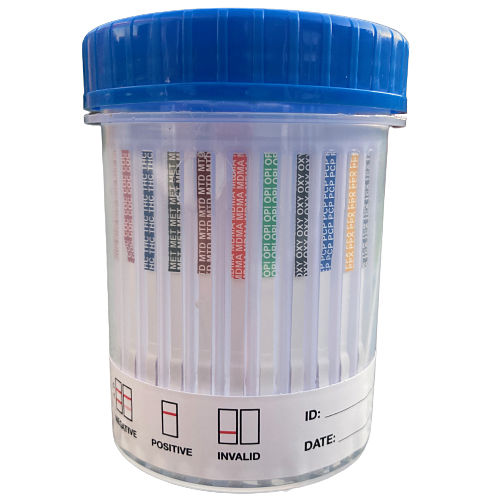
The 18 Panel Drug Test with Integrated Cup offers comprehensive screening including ecstasy and ketamine – perfect for employers who need to detect emerging substances alongside traditional drugs of abuse.
Key Benefits:
- Tests for 18 different substances in one convenient cup
- Includes ketamine and ecstasy (MDMA) detection
- Built-in temperature strip for sample validity
- Results in 3-5 minutes
- Ideal for comprehensive workplace testing programmes
What Our Customers Say
“Great value for money and received next day.”
– Louie
“I was really pleased to find this as I needed a comprehensive drug test kit and this is the biggest one that I could find. Price was very reasonable and the test arrived quickly. I found it to be an easy to use product with clear instructions. Results were quick and simple to interpret.”
– Jason
“Thank you to the team at Zoom Testing for advice before buying this drug test kit. I was looking for something that was easy to use and gave accurate results, in line with any workplace drug test. This kit did both and I was pleased to receive it within 24 hours of ordering. Using the test gave me great peace of mind, and I went from stressed to relaxed in just one day!”
– Jore
About the Author
Anthony Cunningham – Drug Testing Expert & Editor
Anthony Cunningham, BA (Hons), MA, is a UK-based drug testing expert and editor with over 20 years’ experience running Zoom Testing, a trusted source for accurate drug testing kits and testing guidance. He creates clear, evidence-based articles using UK legislation, workplace compliance standards, and harm reduction best practices. Where possible, content is reviewed by testing specialists and compliance professionals to enhance accuracy and reliability, helping readers make informed testing decisions.