About This Article
Zoom Testing has supplied drug testing kits to UK customers for nearly 20 years. This guide draws on our experience helping thousands of employers, HR professionals, and safety managers understand workplace drug and alcohol testing, policy compliance, and staff welfare. Always follow current UK legislation regarding drug testing in the workplace.
Published: January 1, 2018 | Last Updated: March 17, 2026 | By Anthony Cunningham
Drugs and alcohol in the workplace are a serious concern for employers across every sector in the UK. A person under the influence of substances poses a risk not only to themselves but to colleagues, customers, and the public. This includes both illegal drugs and legal substances such as prescription medications and alcohol, all of which can impair concentration, judgement, and physical coordination.
For employers, the challenge is striking the right balance: maintaining a safe working environment while treating employees with dignity and offering genuine support where substance issues exist. This guide covers the legal framework, how to build a robust workplace policy, and how workplace drug testing can play a practical role in keeping your workforce safe.
The Extent of Alcohol and Drug Abuse at Work
Substance abuse in the workplace is more widespread than many employers realise. Research by DrugScope and Alcohol Concern found that 27% of employers had identified drug problems among their workforce, while 60% had encountered alcohol-related issues. These figures reflect a broader societal challenge that inevitably crosses the workplace threshold.
Illegal drug use, while present, is often less prevalent in professional settings than popular perception suggests. British Crime Survey data has indicated that roughly 5.3% of the UK workforce used illegal drugs on a regular basis, with much of this consumption occurring socially at weekends rather than during working hours. That said, residual impairment from drugs used outside work hours can still affect performance and safety on the job.
Prescription drug misuse is a growing concern. It is estimated that over 1.5 million people in the UK are dependent on over-the-counter or prescription medications. Many of these drugs, including opioids, benzodiazepines, and sedating antihistamines, can significantly impair alertness and reaction times, making workers in safety-critical roles particularly vulnerable.
Key Workplace Statistics
- 60% of employers have identified alcohol problems in their workforce
- 27% of employers have found drug-related issues at work
- An estimated 3–5% of all workplace absences are linked to alcohol
- Over 1.5 million people in the UK are dependent on prescription or OTC medications
- NHS data has shown around 25% of men and 16% of women exceeded weekly alcohol guidelines on at least one day
Alcohol abuse or misuse remains the most common problem by some margin. NHS survey data has found that approximately 25% of men drank more than 8 units on at least one day during a given week, with 16% of women exceeding 6 units. It is estimated that alcohol-related issues account for 3–5% of all workplace absences, placing a significant burden on productivity and staffing. For roles involving machinery, driving, or public safety, the stakes are even higher.
The Law and Substance Abuse in the Workplace
There is no single piece of UK legislation that deals exclusively with drugs and alcohol in the workplace. However, several overlapping laws create clear obligations for employers.
The Misuse of Drugs Act 1971 makes it an offence to knowingly permit the supply, use, or production of controlled substances on business premises. Employers who turn a blind eye to drug use at work could find themselves in breach of this Act. The Medicines Act 1968 governs the supply of prescription drugs, meaning medications can only be used in line with a valid prescription.
For workers who drive or operate transport systems, the Road Traffic Act and Transport and Works Act impose strict prohibitions on working under the influence of alcohol or drugs. Tram, rail, and other transport operators carry a specific duty not to allow impaired workers to operate vehicles or systems. This is an area where HGV and fleet driver drug testing is particularly relevant.
Under the Health and Safety at Work Act 1974, employers have a legal duty to protect the health, safety, and welfare of their employees. This requires having a written health and safety policy in place and taking reasonable steps to reduce workplace risks, which includes managing the risks posed by substance impairment. The Health and Safety Executive (HSE) publishes guidance on workplace substance misuse that all employers should be familiar with.
Creating an Alcohol and Drugs Policy
A clear, written alcohol and drugs policy is the foundation of effective workplace substance management. Without one, employers face inconsistency, legal exposure, and a culture where problems are swept under the carpet rather than addressed.
ACAS guidance on drugs and alcohol at work recommends that any policy emphasises support and rehabilitation over pure punishment, while still being clear about the consequences of policy violations. The goal is to create an environment where employees feel safe coming forward for help, without fear that doing so will automatically lead to disciplinary action.
A well-constructed policy should cover the following areas:
What a Workplace Drugs and Alcohol Policy Should Include
- Scope: Who the policy applies to, including contractors and agency workers
- Prohibited conduct: Clear statement that drug use and alcohol misuse at work are not permitted
- Reporting obligations: How employees should report concerns about colleagues
- Testing procedures: When and how drug and alcohol testing will take place, and which methods will be used
- Support and rehabilitation: Details of employee assistance programmes (EAPs) and referral processes
- Disciplinary consequences: A transparent scale of action, from support and retraining through to dismissal for serious or repeated breaches
- Prescription medications: A process for employees to declare medications that may affect their work
The policy should be shared with all staff, ideally discussed in induction training and reviewed at regular intervals. Line managers play a crucial role and should receive specific training on how to identify signs of impairment, how to hold a supportive conversation, and when to escalate to HR.
If you are uncertain how to structure a policy, ACAS templates and guidance are freely available and provide a solid starting point tailored to UK employment law.
Drug and Alcohol Testing at Work
Workplace drug testing is one of the most effective deterrents available to employers. When employees know that testing is part of the working culture, the likelihood of substance misuse on or around work time is significantly reduced. Testing also provides objective evidence where concerns arise, protecting both the employer and the employee.
There are several situations in which testing is typically carried out:
- Pre-employment testing as part of a conditional job offer, particularly for safety-critical roles
- Random testing across all or specific employee groups to maintain deterrence
- For-cause testing where there is reasonable suspicion of impairment
- Post-incident testing following an accident or near-miss at work
- Return-to-work testing after an employee has undergone substance abuse treatment
For most workplace settings, saliva drug testing offers the most practical solution. Oral fluid tests are non-invasive, quick to administer, and can detect recent drug use across multiple substances in a single test. They are also harder to adulterate than urine tests, making them particularly reliable in a professional environment. You can read more about the advantages of saliva drug testing and how it compares to other methods.
For random drug testing programmes, it is essential that your policy clearly sets out the testing framework. Testing must be carried out consistently and fairly, with full respect for employee privacy rights under UK data protection law. Where possible, involve your HR team or legal advisers when designing a testing programme.
Our Recommended Workplace Testing Kit
For employers looking for a fast, reliable, and easy-to-use solution, our 10-in-1 Saliva Drug Testing Kit is designed specifically for workplace use. It screens for ten drugs simultaneously from a single oral fluid sample, with results in around five minutes. No specialist training is required.
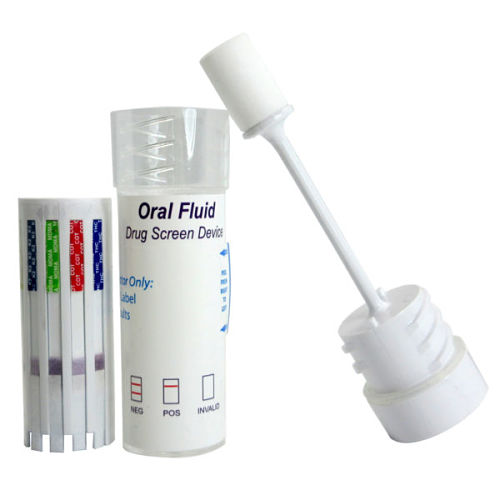
Ready to protect your workforce? Our 10-in-1 Saliva Workplace Drug Testing Kit gives you fast, accurate results across ten substances from a single oral swab. Ideal for pre-employment, random, and for-cause testing programmes.
What Customers Say
★★★★★ Kayleigh R – July 2015
“I bought these to test my PCV Drivers and they worked very good. Delivery was very fast and they were very quick at replying to any queries when e-mailed. Will be using them again in the future if needed and are highly recommended.”
★★★★★ Jore – September 2020
“Thank you to the team at Zoom Testing for advice before buying this drug test kit. I was looking for something that was easy to use and gave accurate results, in line with any workplace drug test. This kit did both and I was pleased to receive it within 24 hours of ordering. Using the test gave me great peace of mind, and I went from stressed to relaxed in just one day!”
★★★★★ Glynis – July 2023
“Top quality kits delivered in a timely manner. Also upgraded my order from 7 panel to 10 panel at no extra cost. Highly recommended, very professional company.”
Support for Employees
A testing and enforcement policy works best when it sits alongside genuine support for employees who are struggling. Many people with substance issues do not come forward because they fear losing their job. Employers who make clear that the first response to self-disclosure will be support, not discipline, are far more likely to catch problems early and help employees recover.
Employee Assistance Programmes (EAPs) offer confidential counselling and referral services that can make a real difference. Where an employee agrees to seek treatment, a phased return-to-work plan and ongoing monitoring, including testing, can be agreed between the employee, their line manager, and HR.
Several organisations provide specialist support and information for employees and employers dealing with substance issues:
- Talk to Frank – free, confidential drugs information and advice for anyone in the UK
- Drinkaware – independent charity offering guidance on alcohol and health
- ACAS – workplace guidance including templates for alcohol and drug policies
If you suspect a colleague is affected by substance abuse, the right approach is to speak to your line manager or HR department rather than confront the individual directly. Acting promptly and compassionately can make a significant difference to the outcome for everyone involved.
Understanding the specific substances involved can also help employers make informed decisions. Our guides to alcohol and drug testing in the professional workplace and the 10 benefits of drug testing at work provide further reading for employers looking to build a comprehensive programme.
About the Author
Anthony Cunningham – Drug Testing Expert & Editor
Anthony Cunningham, BA (Hons), MA, is a UK-based drug testing expert and editor with over 20 years’ experience running Zoom Testing, a trusted source for accurate drug testing kits and testing guidance. He creates clear, evidence-based articles using UK legislation, workplace compliance standards, and harm reduction best practices. Where possible, content is reviewed by testing specialists and compliance professionals to enhance accuracy and reliability, helping readers make informed testing decisions.