About This Article
Zoom Testing has supplied drug testing kits to UK customers for nearly 20 years. This guide draws on our experience helping thousands of people understand drug testing, workplace compliance, and phencyclidine (PCP). Always follow current UK legislation regarding drug testing.
Published: January 2013 | Last Updated: December 4, 2025 | By Anthony Cunningham
Contents
What is Phencyclidine (PCP)?
A highly hallucinogenic narcotic, PCP is an illegal (but extremely common) street drug commonly referred to as angel dust, rocket fuel, and peace pills. When taken, PCP can cause vivid hallucinations that affect sight, hearing, and even sense of touch leaving the user experiencing events that are not real while distorting their sense of time and reality.
PCP can leave users with dangerous side effects ranging from body numbness to extreme depression and can be fatal at doses in amounts around 1mg/kg in adults (and smaller quantities for children). Because PCP disrupts the natural balance of chemicals within the human mind and body, mood swings are common and can quickly turn violent—PCP users often hurt themselves and others around them during their hallucinations.
History and Background of PCP
Phencyclidine was originally developed in the 1950s as an intravenous anaesthetic called Sernyl. However, due to the severe and prolonged disorientation and delirium experienced by patients after surgery, PCP was withdrawn from the market and restricted. Despite being labelled as having no medical use, PCP gained popularity as a recreational drug in the 1960s and was placed under government control in the UK in 1977.
Although illegal, PCP recipes and instructions for synthesis were widely available, leading to widespread illicit manufacturing and distribution. Today, most of the PCP on the streets is illegally made in makeshift labs. Impurities and improper synthesis lead to variation in the potency and effects, making PCP consumption even more dangerous.
Mechanism of Action
PCP is classified as a dissociative hallucinogenic drug with anaesthetic properties. It works primarily as an NMDA receptor antagonist, blocking glutamate from binding to NMDA receptors. This leads to a disruption in the transmission of neural signals, causing dissociation from reality and visual and auditory hallucinations.
Additionally, PCP acts as a dopamine reuptake inhibitor, leading to increased dopamine levels and contributing to the detached, dreamlike mental state. It also has effects on opioid, nicotinic, and muscarinic receptors. The combined impact on multiple neurotransmitter systems leads to PCP’s mind-altering hallucinogenic properties.
Effects on the Brain and Body
The effects of PCP vary greatly depending on the dose. At low to moderate recreational doses, users experience euphoria, numbness, loss of coordination, and dissociative hallucinations. However, at high doses, PCP can cause more severe effects:
- Intense hallucinations – visual, auditory, and tactile
- Out of body experiences
- Severe disorientation
- Panic, agitation
- Dopamine-induced psychosis symptoms like delusions and paranoia
- Analgesia and numbness leading to self-harm
- Seizures, coma, or death due to respiratory depression
According to Talk to Frank, PCP is an anaesthetic that can stop people feeling pain but also causes hallucinations and can lead to severe psychotic states. The UK government resource emphasises that PCP can lead to violent behaviour and self-harm as users lose their sense of pain.
Chronic PCP abuse can also lead to memory issues, speech impairment, depression, and weight loss. Some effects may persist for up to a year after stopping usage due to long-term retention of PCP in the body.
Treating PCP Addiction
Currently, there are no specific medications to treat PCP addiction or overdose. Care is aimed at controlling behaviour and stabilising vitals. Sedatives like benzodiazepines may be used for agitation. Supportive psychosocial therapy focused on behavioural control is beneficial after detoxification.
Entering a comprehensive addiction treatment programme can help manage withdrawal symptoms and psychological issues. Programmes utilise counselling, cognitive behavioural therapy, peer support groups, medications, and other treatments to help individuals achieve sobriety from PCP. Ongoing aftercare and recovery groups are key to sustaining abstinence long-term.
Need Support?
If you or someone you know needs help with drug addiction, confidential support is available through Talk to Frank at 0300 123 6600 or visit their website for local treatment services.
What Does PCP Look Like?
The most common occurrence of PCP is in its crystalline-powder state, appearing completely white in colour. Because it is such a loose powder it can go unnoticed when sprinkled in small quantities which make it easy to lace on cannabis or within other pills such as ecstasy.
How is PCP Taken?
Because PCP is naturally a powder, taking the drug can be done in many ways by users. The most common way is to smoke the powder by mixing it with cannabis and smoking it like a regular joint. In its powdered form, PCP can be snorted or directly swallowed. PCP powder is highly dissolvable in alcohol and water which make it easy to for injecting directly into the blood stream.
What are the Short-Term Effects of PCP Use?
When first taken, a rapid distortion of reality takes place. Time and space will no longer appear as it normally does, and the user’s senses will start to change. Hallucinations can occur within seconds if a large dose of PCP is taken; smaller doses could take as much as 30 minutes before any noticeable effects are present.
What are the Long-Term Effects of PCP Use?
As users continue to take PCP, the effect begins to diminish without adding more drugs into the body. As a result, the constant trauma the user suffers causes their body to start breaking down. Psychological systems are typically present first—agitation, aggressive behaviour, and violent mood swings—and physical signs begin to appear over the years; these include kidney failure, liver damage, and heart disease.
Because PCP is stored long-term in fat cells, even after usage has stopped, when the body breaks down fat (such as during exercise), small amounts of PCP can enter the bloodstream and result in horrible flashbacks and recurring nightmares.
What Class of Drug is PCP?
Similar to cocaine, PCP is a class A drug which means if a user is caught in possession of the drug they will face a 7 year prison sentence and a very large fine; if a distributor or supplier of PCP is caught, they will face life imprisonment.
PCP has been illegal in the UK since 1979 under the Misuse of Drugs Act 1971, reflecting the serious risks it poses to public health and safety.
Workplace Testing Considerations
For UK employers, PCP presents significant safety concerns in the workplace. The drug’s effects—including impaired judgement, violent behaviour, and complete detachment from reality—make it particularly dangerous in safety-critical environments.
Under the Health and Safety at Work Act 1974, employers have a duty to ensure the health, safety, and welfare of all employees. This includes implementing appropriate workplace drug testing programmes where necessary. ACAS guidance emphasises that drug testing should be carried out fairly, with clear policies in place, and only where justified by the nature of the work.
PCP testing is particularly relevant for roles involving:
- Operating heavy machinery or vehicles
- Working at height or in confined spaces
- Handling dangerous substances
- Roles with public safety responsibilities
- Security and emergency services
Employers must obtain informed consent before testing and handle all results as sensitive personal data under UK GDPR regulations. For more information on what happens if an employee tests positive, see our guide on what happens if you fail a drug test at work.
PCP Drug Test Kits
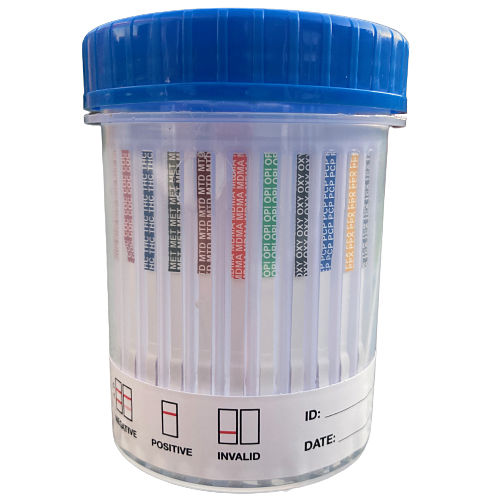
When it comes to UK drug testing requirements, PCP is normally detected by one of the larger urine or saliva drug test kits. For the most reliable screening for PCP we would always recommend one of our larger drug test cups. Our 13 panel drug test cup screens for PCP, as does the 16 panel drug test cup, and our largest test, the 18 panel drug test cup.
PCP detection is included in comprehensive multi-panel tests because, whilst less common than other substances in the UK, its severe effects make it important to screen for in workplace and professional testing scenarios. If you’re unsure which test is right for your needs, read our comparison guide: Comparing the 12 vs 18 Panel Drug Test Kits.
Recommended Product for PCP Testing
Our 18 Panel Drug Test with Integrated Cup screens for PCP alongside 17 other substances including ecstasy and ketamine. This comprehensive test provides reliable results in minutes and is trusted by employers, healthcare professionals, and individuals across the UK.
Understanding the 5 common ways to test for drugs and alcohol can help you choose the most appropriate testing method for your situation, whether for workplace compliance, personal use, or professional screening.
What Customers Say
Our multi-panel drug testing kits are trusted by employers, healthcare professionals, and individuals across the UK. Here’s what some of our customers have said:
“I bought these to test my PCV Drivers and they worked very good. Delivery was very fast and they were very quick at replying to any queries when e-mailed. Will be using them again in the future if needed and are highly recommended.”
— Kayleigh R, Verified Buyer
“I wanted to test for a number of drugs at the same time. Being rather bewildered by the wide choice of tests available, I went for this one. Glad I did – very simple to use and results were quick and clear. Recommend.”
— Joseph, Verified Buyer
“Top quality kits delivered in a timely manner. Also upgraded my order from 7 panel to 10 panel at no extra cost. Highly recommended very professional company.”
— Glynis, Verified Buyer
Photo by Zoom Testing
Zoom Testing is a leading UK drug testing company and a supplier of Drug Test Kits.
About the Author
Anthony Cunningham – Drug Testing Expert & Editor
Anthony Cunningham, BA (Hons), MA, is a UK-based drug testing expert and editor with over 20 years’ experience running Zoom Testing, a trusted source for accurate drug testing kits and testing guidance. He creates clear, evidence-based articles using UK legislation, workplace compliance standards, and harm reduction best practices. Where possible, content is reviewed by testing specialists and compliance professionals to enhance accuracy and reliability, helping readers make informed testing decisions.