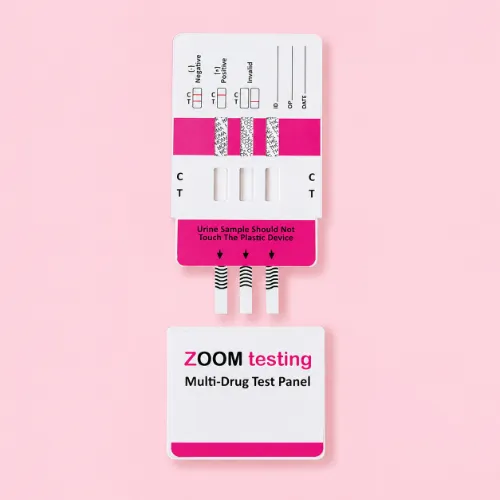
Published: 14 August 2026 | Last Updated: 14 August 2026 | By Anthony Cunningham
This week’s drug testing industry roundup looks at the stories most relevant to UK employers, families and testing professionals. With nearly 20 years of experience in professional drug testing, Zoom Testing reviews the week’s developments and explains what they may mean in practice.
This week’s news underlines a theme that keeps resurfacing for UK employers: drug supply and drug use are both moving, often faster than workplace policy catches up. New data on wastewater monitoring, a record ketamine seizure, and survey findings on rising vaping and cannabis use among young adults all point the same way. Meanwhile, a sobering study on alcohol-related liver disease mortality is a reminder that alcohol remains the substance most likely to affect any given workforce. None of this is abstract. It shapes who employers are testing, why, and what a positive result actually means once it is found.
Drug supply is shifting, and testing needs to keep pace
The clearest signal this week came from enforcement and monitoring data rather than opinion pieces. A Scottish Government FOI release set out the current state of wastewater monitoring for illicit drugs in Scotland, the method by which public health bodies estimate real-world drug consumption by testing sewage for drug metabolites. It is a useful corrective to assumptions built on seizure data or self-report surveys alone, both of which under-count use that never reaches police or health services.
Seizure figures from the same week reinforce the point that supply remains substantial. A man was charged after ketamine worth £2m was intercepted en route from the Netherlands to the UK, while separate operations saw four men charged following a £1m cocaine seizure and a near three-tonne consignment worth an estimated £232m intercepted at London Gateway Port. Ketamine in particular has moved from a niche club drug to a substance turning up more often in general workplace testing, and cut-off levels and detection windows are not always well understood by HR teams setting policy. Employers running or reviewing a workplace drug testing programme should treat rising ketamine availability as a reason to check that their panel actually screens for it, since not every standard multi-panel kit does. For teams wanting a primer, what is ketamine? and how long does ketamine stay in your system? are useful starting points, alongside general guidance on drug test cut-off levels for cocaine given the parallel rise in cocaine volumes reaching the UK.
The practical lesson is not that every workplace is suddenly awash with ketamine or cocaine. It is that supply-side data is a leading indicator, and testing panels chosen two or three years ago on the basis of then-current risk may already be out of date.
Alcohol harm is rising quietly, and it is an occupational health issue
A population-based study published in the Journal of Epidemiology and Community Health looked at temporal trends in alcohol-related liver disease mortality in England from 2004 to 2024, and found that deaths rose after the COVID-19 pandemic, with the research specifically examining prior inpatient care to understand the pathway to death rather than mortality figures alone.
This matters for employers because alcohol-related liver disease does not appear suddenly. It develops over years, often alongside patterns of absence, presenteeism, and gradually declining performance that occupational health teams may notice long before a formal diagnosis. Combined alcohol and drug testing programmes, run sensitively and as part of a wider wellbeing strategy rather than a punitive one, remain one of the few tools that can prompt an early, private conversation. For organisations building or refreshing their approach, alcohol and drug testing in the professional workplace sets out how testing sits alongside support, and the 5 common ways to test for drugs and alcohol is a good reference for HR teams weighing up methods.
Record vaping and cannabis use among young adults is a workforce issue too
A large US national survey covered this week found that vaping and cannabis use hit record highs among young adults in 2025. UK trends are not identical to US ones, but the direction of travel among the cohort now entering the workforce is broadly similar, and it is worth UK employers paying attention rather than assuming this is a US-only story.
For employers recruiting graduates, apprentices, or other younger staff, this has two practical implications. First, cannabis use that may have started recreationally at university does not necessarily stop once someone starts a safety-critical or regulated role, and cut-off levels matter more than ever for making fair, consistent decisions. Employers reviewing their approach may find it useful to look at drug test cut-off levels for cannabis and how long does cannabis stay in your system? when setting or explaining policy to new starters. Second, induction and onboarding is the natural point to explain a testing policy clearly, including what happens if you fail a drug test at work?, so that expectations are set before any issue arises rather than after.
Briefly this week
- A shopkeeper in the UK released CCTV images of staff being attacked to try to block a rival store’s alcohol licence, a reminder that licensing decisions and workplace safety are closely linked for retail and hospitality employers.
- Two people were jailed for 17 years after a fake sex worker and an accomplice fatally spiked two men’s drinks in Essex, a stark case that HR and security teams organising work social events or travel may want to be aware of when briefing staff on personal safety.
- WCRF’s Melissa Dando argued it is time to show alcohol and junk food sponsorship the red card in major sport, a debate with obvious relevance for any employer sponsoring events or running a workplace bar at company functions.
What UK employers should take from this week
Taken together, this week’s stories point to a simple but easily overlooked truth. Drug and alcohol testing policy is not a document to be written once and left alone. Supply patterns change, as this week’s ketamine and cocaine seizures show. Use patterns change too, particularly among younger workers entering the labour market with different exposure to vaping and cannabis than previous cohorts. And the health consequences of alcohol, in particular, build up slowly and are easy to miss until a crisis point is reached.
For UK employers, HR professionals, and Health & Safety managers, the practical response is not to react to any single headline. It is to review testing panels periodically against current drug trends rather than assuming last year’s kit still covers this year’s risk, to make sure managers understand cut-off levels well enough to have fair, informed conversations rather than guesswork, and to treat alcohol harm as an occupational health issue worth proactive attention rather than something only addressed after a formal incident.
None of this requires an overhaul. It requires periodic review, clear communication with staff from induction onwards, and testing methods matched to the substances actually circulating this year rather than several years ago. Employers wanting a broader refresher on options, from urine to saliva testing, may find it useful to revisit what is saliva drug testing? as part of that review, alongside what do 12 panel urine drug tests look for? when deciding whether current coverage is broad enough for the risks this week’s news has highlighted.
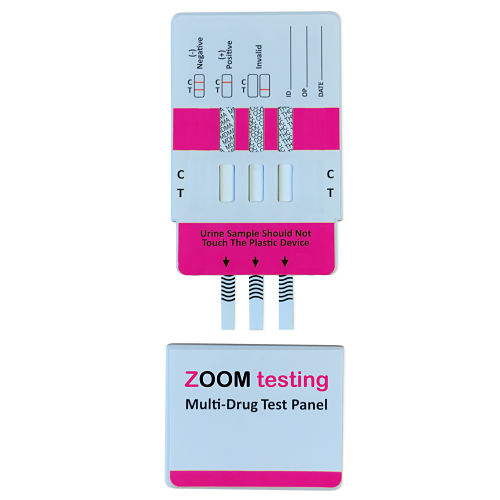
Take Action: 3 Panel Drug Test for Cannabis, Cocaine & Speed
For clear, practical testing at home or in the workplace, our 3 Panel Drug Test for Cannabis, Cocaine & Speed provides fast and simple THC screening when you need a reliable answer.
What Customers Say
★★★★★
“I needed to take a drug test at work although I had given up smoking cannabis,I bought the kit to make sure it had all left my body. The test worked and it was confirmed when I took the test at work. Small price to pay for peace of mind!”
– michael m · Verified review
★★★★★
“I’ve never taken drugs or used a drug test before so it was a bit intimidating at first but I contacted Zoom Testing and they were very helpful in pointing me in the right direction. I was worried about my son who had been smoking cannabis. The test was simple to use and I now have peace of mind knowing that he is no longer using the drug. Also allowed me to confirm that he was not using anything else. Good deterrent too, as he knows that he can be tested at any time.”
– Tina · Verified review
★★★★★
“Very simple and straightforward test to use, just follow the instructions that come with the cannabis test and you will soon see a clear positive or negative test result. Bought this kit as I am applying for jobs where I know that I will be tested for drugs as part of the selection process. My only vice is occasionally smoking weed, however I was certainly concerned that my usage would be enough for me to fail a drug test. The first test I took came back positive. I took this test maybe two and a…”
– Julian R · Verified review
About the Author
Anthony Cunningham – Drug Testing Expert & Editor
Anthony Cunningham, BA (Hons), MA, is a UK-based drug testing expert and editor with over 20 years’ experience running Zoom Testing, a trusted source for accurate drug testing kits and testing guidance. He creates clear, evidence-based articles using UK legislation, workplace compliance standards and harm reduction best practices. Where possible, content is reviewed by testing specialists and compliance professionals to enhance accuracy and reliability, helping readers make informed testing decisions.