
Published: 27 March 2026 | Last Updated: 27 March 2026 | By Anthony Cunningham
This week’s drug testing industry roundup covers a surging ketamine crisis targeting young people, a record cocaine seizure at a UK port, the closure of London’s only homeless detox clinic, synthetic cannabinoid deaths in prison, and a landmark social media addiction ruling. With nearly 20 years of experience in professional drug testing, we’ve analysed the week’s most important stories to help UK employers stay informed and compliant.
Ketamine’s Growing Grip – Now Reaching Children as Young as 10
The week opened with a deeply troubling Sky News investigation into how dealers are selling ketamine online with free perks that are attracting children as young as ten. The investigation found dealers operating through online networks in a cat-and-mouse game with investigators – offering incentives to recruit new users at an age when no child should be anywhere near a Class B drug.
This isn’t an abstract public health story. Ketamine is being taken in record numbers across the UK, and the consequences – particularly bladder damage associated with heavy, long-term use – are severe and often irreversible. The STV News this week carried the story of Ellie Wight, who began using ketamine recreationally during Covid and quickly developed a daily habit – and who is still living with the physical consequences.
For employers, ketamine’s rise as a recreational substance – no longer confined to nightlife – is a real concern in any safety-critical setting. Understanding how long ketamine stays in the system is important background when evaluating what testing regime makes sense for your workforce.
A Tonne of Cocaine at London Gateway – And What It Tells Us About Supply
Wednesday brought news of a major National Crime Agency operation: officers discovered approximately a tonne of cocaine in a container at London Gateway port near Thurrock, Essex, with a street value of around £80m. The NCA described it as a “fantastic seizure.”
Significant as that is, major seizures rarely indicate shrinking supply – they typically reflect scale. The Irish Examiner also reported this week on seven cocaine smugglers jailed by the Special Criminal Court following a €42m seizure, with the judge citing the need for a “significant deterrent” to international criminal networks using Ireland’s coastline as an import route.
Meanwhile, the AFL – Australian Rules Football’s governing body – is bracing itself for an increase in positive tests under its toughened drugs policy, openly naming cocaine and MDMA as the substances most likely to flag up more frequently. It’s a reminder that robust testing – not just enforcement at borders – is what keeps workplaces safe. For background on cocaine drug testing in the workplace, our guide walks through the key considerations.
Spice Deaths in Prison – A Coroner’s Warning
A Milton Keynes coroner this week raised serious concerns after investigating the death of Ronald Meikle at HMP Woodhill. He died from the effects of synthetic cannabinoids – commonly known as Spice – which the coroner found were “readily available” within the prison. HMP Woodhill subsequently recruited a dedicated drug strategy lead.
Synthetic cannabinoids remain a particularly dangerous testing challenge because their chemical formulas evolve rapidly, specifically to evade standard test panels. A broader panel test covering more substances gives organisations a much stronger baseline for detection – something increasingly relevant not just in custodial settings but in any high-risk workplace.
London’s Only Homeless Detox Clinic Closes – Rising Costs Cited
In a development that troubled many in the sector, St Thomas’ Hospital confirmed that London’s only dedicated drug and alcohol detox unit for homeless people is to close, with the Department of Health and Social Care citing “rising costs” and the unit being “no longer affordable within existing funding”. The clinic ran with a £1m shortfall over the past year.
The closure comes in the same week Scotland published figures estimating the country loses up to £6bn a year to drug harm – a figure from the Social Market Foundation’s economic modelling that should give pause to anyone arguing services are simply too expensive to run. The cost of not treating addiction is invariably higher.
A Million UK Adults Spiked in the Last Year
Researchers at Anglia Ruskin University, working with alcohol charity Drinkaware, have published data suggesting that approximately a million UK adults were spiked in the past year. The figures come from national YouGov surveys running since 2021, tracking prevalence of drink spiking.
Drink spiking sits at the intersection of personal safety and workplace wellbeing – employees who’ve been spiked can present with symptoms that look like intoxication, which has implications for how employers respond. Our guide on protecting yourself against drink spiking covers what to look out for.
County Lines: Young Girls Being Exploited to Carry Drugs
The Independent published a powerful investigation into how young girls are increasingly being exploited by county lines drug gangs, with one case involving a young woman named Georgina who had already experienced abusive relationships and neglect before being coerced into transporting drugs. The Wolverhampton area also saw BBC reporting on police raids seizing 6-7kg of Class A drugs alongside more than 750 MDMA tablets and a significant cannabis haul.
Awareness of county lines exploitation remains critical context for employers – particularly in logistics and transport sectors where the pressures on young workers can intersect with exploitation risks. ACAS guidance on drug and alcohol testing at work is a useful starting point for building a proportionate, legal workplace policy.
Social Media Ruled Addictive and Deliberately Engineered That Way
A landmark ruling in Los Angeles this week found that Instagram and YouTube are addictive and were deliberately engineered that way – and that their owners were negligent in safeguarding the children who used them. The BBC described it as a “game-changing moment for social media.”
This connects to a broader scientific question that came up in Monday’s newsletter too: a US study found that most of the genetic risk for developing a substance use disorder comes from genes that affect how our brains process rewards and regulate impulses – not from substance-specific genes. Addiction, whether to screens or substances, involves overlapping neurological pathways.
Vaping: Waste, School Bans, and an Unusual Wildlife Story
It was another busy week for vaping-related news. A new study found that more than 6 million vapes and pods are discarded weekly in the UK despite the single-use ban, though this is down 23% year on year. Scotland issued national guidance advising a complete ban on vapes in Scottish schools, including guidance on the safe disposal of lithium batteries – a practical consideration that often goes unmentioned.
In a strange footnote to the week, a London park squirrel was filmed apparently vaping – the RSPCA warning that animals may ingest nicotine from discarded sweet-smelling e-cigarettes mistaken for food. A reminder, if one were needed, that vape litter has consequences beyond the environment.
Alcohol Policy: Industry Influence, Minimum Pricing, and Scotland’s Pub Ban Anniversary
The Society for the Study of Addiction convened a policy roundtable at which experts called for a new national alcohol strategy that prioritises public health over commercial interests. This came the same week that Northern Ireland’s health minister confirmed that minimum unit pricing legislation is “no longer deliverable” before the next assembly election.
Scotland, meanwhile, marked the 20th anniversary of its smoking ban in enclosed public spaces – with Public Health Scotland noting that smoking rates have halved since the legislation came into force, and thousands of lives have been saved. A genuine public health success story – and one that keeps being cited as a template for future intervention.
Key Takeaways for UK Employers This Week
Three themes stand out from this week’s news for employers managing drug and alcohol risk. First, ketamine is no longer a fringe concern – its availability online, its growth in younger demographics, and the devastating health consequences of habitual use make it a substance any comprehensive workplace policy should address. Second, cocaine seizures at record scale indicate ongoing high supply, not scarcity. If your workforce is in a safety-critical role, workplace drug testing remains the most reliable tool available. Third, synthetic cannabinoids continue to cause deaths in custodial settings – suggesting that standard low-panel tests may not be sufficient where comprehensive detection is required.
For a wider view of what happens when an employee fails a drug test at work, our guidance sets out the key steps and obligations.
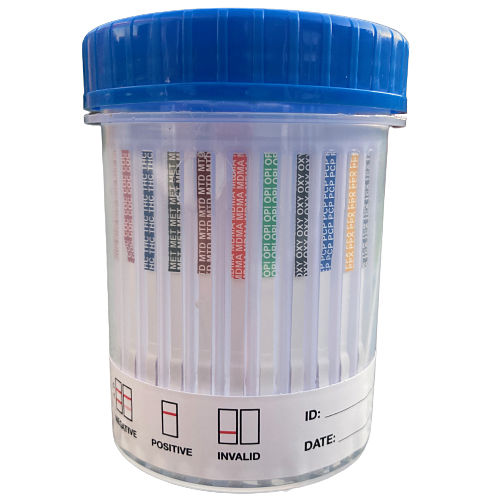
Take Action: Comprehensive 18-Panel Drug Testing
With ketamine and ecstasy (MDMA) in the news this week, ensure your workplace testing covers both. Our 18 Panel Drug Test with Integrated Cup screens for 18 substances including ketamine and ecstasy – fast, accurate results with no additional equipment needed.
What Customers Say
“I was really pleased to find this as I needed a comprehensive drug test kit and this is the biggest one that I could find. Price was very reasonable and the test arrived quickly. I found it to be an easy to use kit.”
– Jason
“These Ketamine tests gave me great piece of mind at a difficult time in my family situation. The drug tests arrived quickly in plain packaging and with easy to understand instructions. Results were clear. I was very happy with the service I received from Zoom Testing.”
– LLoyd
“Thank you to the team at Zoom Testing for advice before buying this drug test kit, I was looking for something that was easy to use and gave accurate results, in line with any workplace drug test. This kit did both and I was pleased to receive it within 24 hours of ordering.”
– Jore
About the Author
Anthony Cunningham – Drug Testing Expert & Editor
Anthony Cunningham, BA (Hons), MA, is a UK-based drug testing expert and editor with over 20 years’ experience running Zoom Testing, a trusted source for accurate drug testing kits and testing guidance. He creates clear, evidence-based articles using UK legislation, workplace compliance standards, and harm reduction best practices. Where possible, content is reviewed by testing specialists and compliance professionals to enhance accuracy and reliability, helping readers make informed testing decisions.