Published: 21 August 2026 | Last Updated: 21 August 2026 | By Anthony Cunningham
This week’s drug testing industry roundup looks at the stories most relevant to UK employers, families and testing professionals. With nearly 20 years of experience in professional drug testing, Zoom Testing reviews the week’s developments and explains what they may mean in practice.
Drug testing rarely produces a simple answer to a simple question. This week’s news is a useful reminder of why.
Reports of cannabis gummies containing powerful synthetic cannabinoids highlight the growing problem of people not necessarily knowing what they have consumed. Meanwhile, questions surrounding a reported positive cannabis test involving an Air India pilot demonstrate something equally important: detecting a drug or metabolite does not automatically establish when it was taken or whether somebody was impaired at a particular moment.
For UK employers, those two issues meet at the same point. Workplace testing needs to be based on clear policy, appropriate testing methods and careful interpretation of results. As the drug market changes, relying on assumptions about familiar substances is becoming increasingly risky.
Cannabis, synthetic cannabinoids and the problem of knowing what someone has taken
One of the most striking stories this week concerns “potent” spice-laced gummies sold through social media. Illegal cannabis gummies seized by Wiltshire Police were being examined by scientists at the University of Bath after synthetic cannabinoids were detected.
Professor Chris Pudney warned about extremely high concentrations and significant variation between gummies, including products from the same packet.
The story illustrates a growing difficulty for drug testing and harm reduction. A product sold as containing cannabis may contain something considerably different.
That concern was reinforced later in the week when Ireland’s HSE reported finding high-risk cannabinoids in vape products and other products including edibles. Some were being sold through shops as well as illicit markets.
Synthetic cannabinoids, often collectively referred to as “spice”, can produce effects that are substantially different from conventional cannabis. Zoom Testing’s guide to synthetic cannabinoids explains some of the differences.
This matters in the workplace because a standard cannabis test is designed to detect cannabis metabolites at specified cut-off levels. It should not be assumed that the same test will identify every new or synthetic cannabinoid that might appear in an unregulated product.
It also demonstrates why an employee’s account of what they consumed may be incomplete without being deliberately misleading. Someone who believes they used a THC vape or cannabis edible could potentially have consumed additional psychoactive substances without knowing it.
Employers therefore need to distinguish between what a test actually detects and assumptions about what an individual may have taken.
The wider health debate around cannabis also continues to develop. A new meta-analysis reported this week found that cannabis use was associated with an earlier onset of psychosis, with researchers reporting an average difference of around two and a half years between cannabis users and non-users who developed psychosis.
None of this means employers should attempt to diagnose drug use or health problems. It does underline the importance of treating cannabis as a genuine workplace health and safety issue rather than simply a disciplinary one.
A positive cannabis test does not tell you everything
The reported positive cannabis test involving an Air India pilot provides an unusually high-profile example of the limitations of drug testing.
The BBC examined what the reported cannabis result could and could not tell investigators. The distinction is particularly relevant in safety-critical employment.
Cannabis can be detectable after its intoxicating effects have passed. Detection windows also vary according to factors including frequency of use, the specimen being tested, metabolism and the sensitivity and cut-off level of the test.
This means a positive result may provide evidence of previous cannabis exposure without proving that a person was impaired at the time of an incident.
That distinction should be built into workplace drug and alcohol policies.
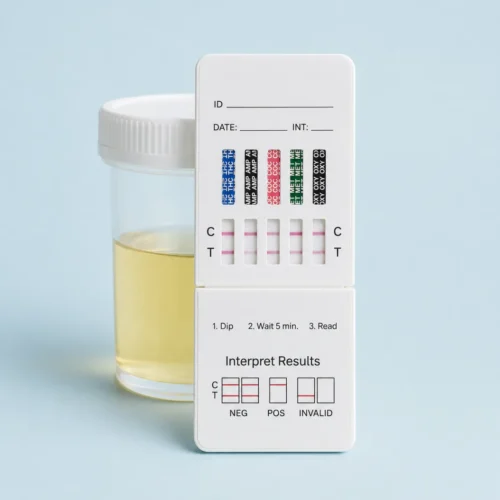
Urine, saliva, hair and blood testing each have different strengths and limitations. Our guide to the five common ways to test for drugs and alcohol explains how specimen choice affects what employers can learn from a test.
For example, urine testing is widely used to identify previous drug use, while oral fluid testing can offer a shorter detection window and may therefore be useful in circumstances where more recent consumption is relevant. Employers considering cannabis testing can also read our guide to saliva drug testing for cannabis.
The important point is not that one method is universally better. The test needs to match the question being asked.
If an organisation is operating a random testing programme, its requirements may be different from an investigation following a safety incident. Pre-employment screening presents another set of considerations.
A well-designed policy establishes those distinctions before a positive result occurs.
The drug market is moving beyond familiar substances
Another recurring theme this week was diversification.
Ireland’s Health Service Executive warned festival-goers about pink cocaine, unusually strong MDMA and a new ketamine formulation. Between 2021 and 2025, the HSE reportedly identified 57 substances that had not previously been detected in Ireland.
Separately, the BBC looked at evidence that some young adults are using prescription medicines and experimental substances instead of alcohol. Examples included pregabalin and propranolol, alongside growing interest in injectable peptides.
These stories point towards the same challenge.
The traditional picture of workplace substance misuse centred on a relatively familiar group of drugs: cannabis, cocaine, amphetamines, opiates and alcohol. Those substances remain important, but today’s drug landscape is broader.
That does not mean employers should continually expand testing panels in an attempt to detect every emerging compound. Such an approach would quickly become impractical.
Instead, organisations should periodically review the risks relevant to their workforce. A transport operator, construction company, office employer and healthcare organisation may reasonably arrive at different testing requirements.
Testing should form part of a wider risk-management system rather than becoming the system itself. Clear rules on prescribed medication, fitness for work, reporting concerns and post-incident procedures can be just as important as the number of substances included on a test panel.
Briefly This Week
- Researchers have developed a wearable smart patch that could detect fentanyl and automatically administer naloxone. The technology remains an emerging approach, but demonstrates how overdose prevention may increasingly combine detection with rapid intervention.
- A study of a Los Angeles County jail-release programme examined naloxone and fentanyl test-strip distribution through a vending machine. It is another example of harm-reduction services being placed at points where overdose risk may be particularly high.
- The changing demographics of drug use also deserve attention. An International Longevity Centre UK article asked whether cocaine has an age problem, arguing that although use remains concentrated among younger people, rates among older groups are increasing.
What UK employers should take from this week
The strongest lesson from this week’s stories is that workplace drug testing needs context.
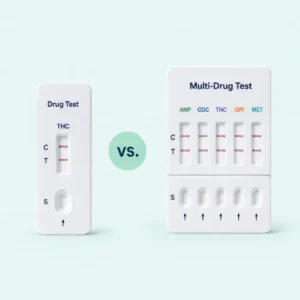
First, employers should know precisely what their chosen test detects. A multi-panel test does not detect every psychoactive substance, and a conventional cannabis test should not automatically be expected to identify synthetic cannabinoids.
Second, organisations should understand what a positive result means. Detection of a substance or metabolite and proof of impairment are not necessarily the same thing. This becomes particularly important when investigating workplace incidents or making employment decisions.
Third, drug policies need to keep pace with changing patterns of use. Prescription medicines, synthetic cannabinoids, ketamine, novel psychoactive substances and other emerging compounds complicate the traditional distinction between “illegal drugs” and everything else.
Finally, testing should sit within a clearly documented workplace process. Employees should understand when testing can occur, which substances may be tested for, how samples and results will be handled, and what happens following a non-negative result. Employers reviewing their arrangements can start with our guidance on workplace drug testing.
The technology used to detect drugs continues to improve, but interpretation remains a human responsibility. A test result is evidence. The quality of the decisions made from that evidence depends on the policy, testing method and procedures surrounding it.
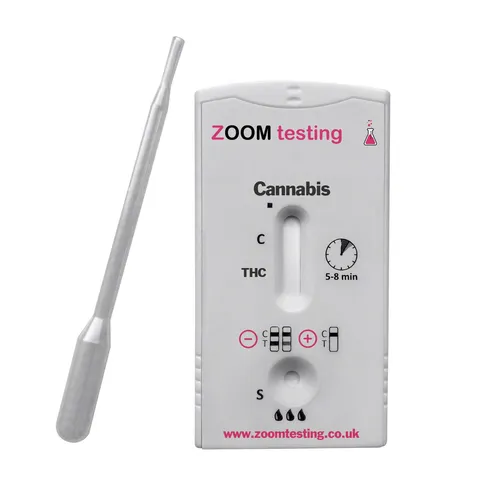
Take Action: Cannabis Drug Test (THC)
For clear, practical testing at home or in the workplace, our Cannabis Drug Test (THC) provides fast and simple THC screening when you need a reliable answer.
What Customers Say
★★★★★
“Very simple and straightforward test to use, just follow the instructions that come with the cannabis test and you will soon see a clear positive or negative test result. Bought this kit as I am applying for jobs where I know that I will be tested for drugs as part of the selection process. My only vice is occasionally smoking weed, however I was certainly concerned that my usage would be enough for me to fail a drug test. The first test I took came back positive. I took this test maybe two and a…”
– Julian R · Verified review
★★★★☆
“I used to smoke weed on and off. I was a recreational smoker, generally smoking with mates or whilst hanging out. I decided to give up as I was going through some personal changes, one of which was moving to a new town and a new job. Most of the stuff on the internet shows that it can take up to 30 days for your body to clear itself of all traces of cannabis. I knew that my new job might require me to have a drugs tests so I gave up smoking and started…”
– Kai S · Verified review
“Just need to know i have purchases other drug test before and as i smoke.cigarettes it was positive but was it the nicotine or the thc does this test only test for thc and not nicotine as this is what i require. The odd cig here and there isnt as bad as a weed addiction.”
– Chico
About the Author
Anthony Cunningham – Drug Testing Expert & Editor
Anthony Cunningham, BA (Hons), MA, is a UK-based drug testing expert and editor with over 20 years’ experience running Zoom Testing, a trusted source for accurate drug testing kits and testing guidance. He creates clear, evidence-based articles using UK legislation, workplace compliance standards and harm reduction best practices. Where possible, content is reviewed by testing specialists and compliance professionals to enhance accuracy and reliability, helping readers make informed testing decisions.