Published: 10 July 2026 | Last Updated: 10 July 2026 | By Anthony Cunningham
This week’s drug testing industry roundup looks at the stories most relevant to UK employers, families and testing professionals. With nearly 20 years of experience in professional drug testing, Zoom Testing reviews the week’s developments and explains what they may mean in practice.
This week’s news underlines a theme UK employers cannot ignore: the substances turning up in workplace drug tests are being shaped by forces well outside the workplace. Medical cannabis prescribing is under fresh scrutiny, cocaine supply through European ports remains industrial in scale, and cannabis traffickers are being hit with tougher penalties as volumes into the UK grow. Meanwhile Alcohol Awareness Week has put a spotlight on drink-related harm and road safety, with parliamentary questions probing how well enforcement is actually working.
None of this happens in isolation. Availability, prescribing practice and enforcement all feed into what HR and Health & Safety teams encounter on the ground. Here is what mattered this week, and what it means for workplace testing and policy.
Medical Cannabis and the Blurring Line for Employers
A recurring headache for UK employers is distinguishing between illicit cannabis use and legitimate medical cannabis prescriptions. That distinction was the focus of a podcast episode featuring senior psychiatrist and medical cannabis prescriber Dr Andy Barker, who discussed the regulatory pathway prescribers now follow and the wider question of whether medical cannabis is being over-prescribed.
This matters directly for workplace policy. As private prescribing grows, more employees may hold a legitimate medical explanation for a positive cannabis result, and a positive test result alone is no longer enough to establish misconduct or impairment. Employers need documented procedures for employees to disclose prescriptions confidentially, and HR teams should be prepared to distinguish between lawful medical use and use that still creates a safety risk in safety-critical roles. This is precisely why drug test cut-off levels for cannabis and clear escalation routes matter more than ever: a raised threshold and a documented conversation protect both the employer and the employee.
The debate also reinforces why testing programmes should sit inside a wider workplace drug testing policy rather than being treated as a standalone compliance exercise. Prescribing patterns will keep shifting, and policies written five years ago may already be out of step with how cannabis reaches employees today.
Supply Is Rising, Not Falling
Two stories this week show why cannabis and cocaine remain the substances most likely to appear in UK workplace panels. The National Crime Agency has warned that British “mules” smuggling cannabis from Thailand now face jail and a charge for every kilogram carried, following an investigation that uncovered gangs sending couriers from Bangkok to towns across the north of England. Tougher penalties are a response to volume, not a symptom of a shrinking problem.
At the same time, a detailed account of the cocaine trade through Antwerp and Rotterdam describes how Belgium and the Netherlands have become critical arteries for the global cocaine trade, despite both countries’ reputation for administrative order. The UK sits downstream of that route.
For employers, the practical read-across is simple: cannabis and cocaine are not niche risks confined to certain sectors or postcodes. Supply into the UK is resilient and adaptive, which is exactly why a broad-spectrum approach such as cocaine drug testing alongside cannabis screening remains the sensible baseline for most workplace policies, not an optional extra.
Alcohol Awareness Week and the Road Safety Question
This week is Alcohol Awareness Week in the UK, and a first-person account of recovery from alcoholism, told by a woman now working in the addiction clinic that helped her, is a reminder that alcohol dependency is common and often hidden in ordinary workplaces. Alongside this, occupational health teams have new prompts to act on: guidance reminding clinicians to routinely prescribe thiamine to people dependent on alcohol notes that only around 8% of people assessed for specialist alcohol treatment in Scotland reported being offered it, despite clear UK guidelines.
Separately, a parliamentary question has asked the Department for Transport what assessment it has made of the effectiveness of drink and drug driving enforcement campaigns. For any organisation with employees who drive for work, this is a direct prompt to review policy. A drink or drug driving conviction carries consequences well beyond the individual, from insurance and liability exposure to reputational risk, and it is one of the clearest cases where alcohol and drug testing in the professional workplace earns its place, particularly through pre-employment and random testing for driving roles.
Briefly This Week
- A parliamentary question has asked government what it has done to raise awareness of the health consequences of physique-enhancing drugs including anabolic steroids. Steroid misuse remains under-recognised in many workplace policies and is worth a specific line in risk assessments for physically demanding roles.
- Four vape shops in Nottingham have been closed as part of a crackdown on illegal tobacco and vape sales, following joint work between Trading Standards, the local public health team and police. It is a reminder that illicit product supply chains extend beyond controlled drugs.
- A separate parliamentary question has asked whether the Tobacco and Vapes Bill’s effect on hospitality and retail businesses has been assessed, relevant to employers in pubs, restaurants and independent retail planning ahead for regulatory change.
What UK Employers Should Take From This
The throughline this week is that the substances landscape employers are testing for is not static. Cannabis is arriving in the UK through organised trafficking routes at the same time as legitimate medical cannabis prescribing expands, meaning a positive result increasingly needs context rather than a simple pass or fail. Cocaine supply through European ports shows no sign of easing, reinforcing why broad-panel testing remains the sensible default rather than a cannabis-only approach.
Alcohol Awareness Week is a useful trigger for HR and Health & Safety teams to check that policies reflect current clinical guidance, particularly around thiamine prescribing and dependency support, and to revisit how well drink and drug driving risks are managed for employees who drive for work. None of this requires an overhaul. It requires policies that are reviewed regularly enough to keep pace with prescribing practice, supply trends and enforcement priorities, supported by testing that covers the substances most likely to appear, understood through resources such as what happens if you fail a drug test at work. The organisations best placed to respond are the ones treating this as an ongoing process, not a one-off compliance box to tick.
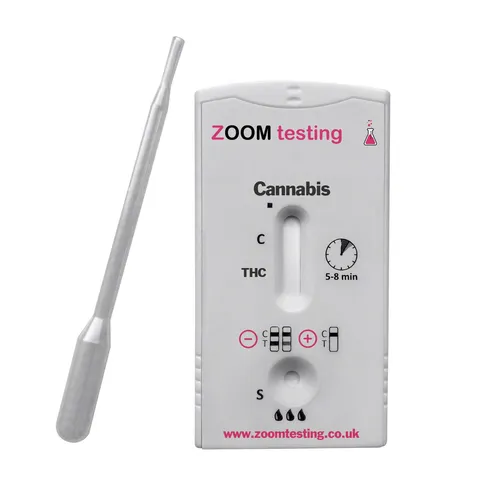
Take Action: Cannabis Drug Test (THC)
For clear, practical testing at home or in the workplace, our Cannabis Drug Test (THC) provides fast and simple THC screening when you need a reliable answer.
About the Author
Anthony Cunningham – Drug Testing Expert & Editor
Anthony Cunningham, BA (Hons), MA, is a UK-based drug testing expert and editor with over 20 years’ experience running Zoom Testing, a trusted source for accurate drug testing kits and testing guidance. He creates clear, evidence-based articles using UK legislation, workplace compliance standards and harm reduction best practices. Where possible, content is reviewed by testing specialists and compliance professionals to enhance accuracy and reliability, helping readers make informed testing decisions.