
Published: 3 April 2026 | Last Updated: 3 April 2026 | By Anthony Cunningham
This week’s drug testing industry roundup covers a shortened Easter week of developments – but there was no shortage of significant stories. From the alarming rise of ketamine use and its devastating health consequences, to fresh debates over vaping regulation and new research into meth addiction treatment, there is plenty for UK employers and safety professionals to take note of. With nearly 20 years of experience in professional drug testing, we’ve analysed the week’s most important stories to help UK employers stay informed and compliant.
Ketamine: The Crisis Employers Cannot Ignore
Two stories this week underline just how serious the UK’s ketamine problem has become. The Face ran a remarkable piece on why Barnsley has become the ketamine capital of Britain, exploring the local factors behind soaring ketamine health problems and noting that nobody – not local authorities, health services, or researchers – can fully explain it. That’s uncomfortable reading for anyone who thinks the drug landscape is well understood and well managed.
The BBC added further weight to this with a piece on ketamine addiction and bladder damage, following Hollee from Swindon, who developed severe “k cramps” and excruciating abdominal pain after prolonged use. Addiction services told the BBC they are now treating more ketamine users than ever before. This is not a niche problem – it is a mainstream one, and one with particularly serious physical consequences. Employers in sectors where safety is critical should be aware that ketamine can remain detectable in urine for up to 14 days.
Earlier in the week, a Liverpool man received what a judge described as a “deterrent” 22-month sentence for attempting to smuggle up to £25,000 of ketamine to the Isle of Man. The courts are taking supply seriously – but the demand side continues to grow.
Vaping: Regulation, Risk, and the Illicit Market
Vaping dominated several stories across the week, from multiple angles. The Guardian offered practical guidance on how to spot a fake or illegal vape, noting that millions of illicit devices are seized each year. Examining the packaging remains the key first step – something worth sharing with younger employees or parents of teenagers.
Meanwhile, Manchester’s Cheetham Hill has become the unofficial vape capital of Britain, with more than 50 specialist shops clustered in two backstreets. The Guardian’s investigation asks how long this can last, particularly as Glasgow City Council pushed for greater regulation of vape shops following a devastating fire on Union Street. The fire risk from improperly stored lithium-ion batteries has now become a regulatory prompt as much as a fire safety issue.
The New Nicotine Alliance launched a new campaign challenging the proposed ban on vaping in public places, arguing it risks undermining smoking cessation efforts. The APPG chair on responsible vaping echoed this, calling for a more evidence-led approach to vape legislation. It is a genuine tension: the public health case for vaping as a quit tool is strong, but the illicit market and underage access remain serious problems.
For HR professionals, the gateway question is relevant here. An analysis of the Gateway Theory published this week explored whether nicotine vaping among teens increases the likelihood of later cannabis use – a concern for anyone thinking about early substance use prevention. See also our article on parents often not aware when kids vape.
Alcohol Delivery Apps: A Growing Safeguarding Concern
Two separate stories this week focused on the risks created by alcohol delivery apps, and both make for difficult reading. ITV reported that a Lincoln woman is calling for tougher restrictions on delivery apps after her sister spent up to £1,500 a month getting alcohol delivered, ultimately contributing to her death. The Mirror followed a similar case involving former firefighter Glenn Perkins, who reportedly spent £60 a day on Uber Eats ordering cider and other drinks, with his family arguing that easy access accelerated his death. Uber has since stated that its drivers will not deliver alcohol to customers who appear drunk.
There is a clear employer angle here. If staff are struggling with alcohol dependency being fed by 24-hour delivery services, the ACAS guidance on drug and alcohol testing at work remains an important reference for HR teams developing or reviewing their policies. Buckinghamshire’s public health report, Buckinghamshire Uncovered: Alcohol Misuse in Our Community, also published this week, found that one in four adults in the county drink above government guidelines – a figure that will be representative of many workforces across England.
Drug Labs and Supply Chain Seizures
Two enforcement stories caught the eye this week. The BBC reported that six men have been charged after a suspected drug lab was found in a large industrial unit near Bitton, south Gloucestershire – with suspected cocaine and mephedrone being produced on site. And a third man was charged in connection with the cocaine haul found among banana shipments at Southampton Docks. These stories are reminders that the supply chain for street cocaine remains highly active and well-organised in the UK.
Etonitazene: A Synthetic Opioid Alert You Need to Read
One of the most serious stories of the week came from Forward Trust, which issued a drug alert after etonitazene was found in heroin in the Canterbury area, linked to one confirmed death and over ten overdose incidents in just two days in March. Etonitazene is a potent synthetic opioid – far more dangerous than standard heroin – and its presence in the street supply is deeply alarming. This is precisely the kind of emerging threat that The Loop’s upcoming Emerging Novel Synthetic Opioids training (7 April) is designed to address.
Separately, researchers at the NIH have identified a novel opioid with high pain-relieving properties but minimal addiction potential, published in Nature. It is early-stage animal research, but the direction of travel is encouraging for pain management without dependence risk.
A Potential Breakthrough in Meth Treatment
For the first time, there may be an approved medication route for people wanting to stop using methamphetamine. Researchers at the National Drug and Alcohol Research Center in Sydney found that a common antidepressant significantly helps people reduce or stop methamphetamine use. The Conversation covered this well for a general audience too, noting that an estimated 7.4 million people worldwide are dependent on meth. The UK’s own meth problem, while smaller than in many other countries, is real – see our article on Britain’s missing meth crisis for context.
Medicinal Cannabis: Regulation Under Pressure
The Guardian reported that private UK cannabis clinics are facing calls for tighter regulation following an inquest finding that Oliver Robinson’s prescription was an “obstacle” to proper care. Meanwhile, Germany’s cannabis legalisation – now two years in – remains politically and medically contested, with real disagreement between health experts about its impact on young people.
For employers, the driving question is particularly practical. The Conversation Australia tackled whether medicinal cannabis users can drive safely, an issue with direct workplace implications for anyone managing fleets or safety-critical roles. See our guidance on saliva drug testing for cannabis for employers navigating this.
Scotland: Opioid Dependency and Service Pressures
Public Health Scotland published two significant reports this week. The first estimated that 43,400 people in Scotland have opioid dependence – around 1.13% of the 15-69 age group. The second showed that referrals to specialist drug and alcohol treatment services fell by nearly 11% in the last quarter of 2025 compared to the previous quarter – partly explained by reduced service availability over the festive period, but a drop worth monitoring nonetheless.
Practical Takeaways for Employers This Week
A shorter week of news this Easter, but the themes are clear. Ketamine use is growing fast and its health consequences are severe – if your drug testing policy does not include ketamine as a standard panel, it is worth reviewing. The illicit vaping market continues to expand alongside the legitimate one, with real risks for younger workers. And the emergence of powerful synthetic opioids like etonitazene in street heroin is a stark reminder that the threat landscape is shifting constantly.
For employers who want to test for the widest range of substances in a single test, our guide comparing 12 vs 18 panel drug test kits is a good starting point. The ACAS drug and alcohol testing guidance remains the essential policy reference for UK employers.
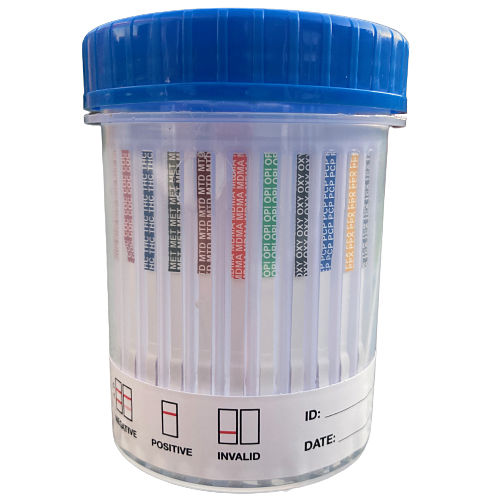
Take Action: Professional 18-Panel Drug Testing
With ketamine and ecstasy use rising sharply across the UK, our 18 Panel Drug Test with Integrated Cup delivers comprehensive screening in a single, self-contained device – including ketamine and ecstasy alongside 16 other substances. Accurate, fast, and simple to use on site.
What Customers Say
“I was really pleased to find this as I needed a comprehensive drug test kit and this is the biggest one that I could find. Price was very reasonable and the test arrived quickly. I found it to be an easy to use product – clear instructions. Results were quick and simple to interpret.”
– Jason
“Thank you to the team at Zoom Testing for advice before buying this drug test kit. I was looking for something that was easy to use and gave accurate results, in line with any workplace drug test. This kit did both and I was pleased to receive it within 24 hours of ordering. Using the test gave me great peace of mind.”
– Jore
“Great value for money and received next day.”
– Louie
About the Author
Anthony Cunningham – Drug Testing Expert & Editor
Anthony Cunningham, BA (Hons), MA, is a UK-based drug testing expert and editor with over 20 years’ experience running Zoom Testing, a trusted source for accurate drug testing kits and testing guidance. He creates clear, evidence-based articles using UK legislation, workplace compliance standards, and harm reduction best practices. Where possible, content is reviewed by testing specialists and compliance professionals to enhance accuracy and reliability, helping readers make informed testing decisions.