About This Article
Zoom Testing has supplied drug testing kits to UK customers for nearly 20 years. This guide draws on our experience helping thousands of people understand drug testing, workplace compliance, and synthetic cannabis testing in prisons and other settings. Always follow current UK legislation regarding drug testing.
Published: 2019 | Last Updated: November 23, 2025 | By Anthony Cunningham
Contents
Why Prisons Face a Spice Crisis
A growing drug trend in UK jails has recently been identified. Synthetic Cannabis, often called “Black Mamba” or “Spice” has become an increasing problem in the institutions, with more and more prisoners using the drug and then developing health problems, either physical or mental ones.
The rise in popularity of Spice amongst the prison population can be attributed to the fact that it is relatively easy to smuggle inside of the building, especially if prison staff are not carrying out random tests on products that enter the prison which could contain synthetic cannabis.
Often Spice is smuggled in with rolling tobacco. It has no smell so it is hard to detect, even when it is being smoked.
In May 2014, The Guardian reported that 28 prisons now had a recognised problem with synthetic cannabis.
The History of Spice
Cannabis of this type is, by its very name, synthetic. It is manufactured in a laboratory rather than grown. The drug has been around for a few years now and was one of the first legal highs of this century before being outlawed in most countries. As a drug it produces a similar experience for the user as traditional cannabis. However, the worry with the drug is that the long term health risks of using it are unknown. Short term it is also problematic with many health problems being documented.
Initially, Spice was a brand name, however, it has since become the generic term used for various synthetic forms of cannabis that began being produced in the 1980s. These drugs were made to imitate cannabis, but certain experts believe that they could now be as much as 100 times more powerful.
Why Standard Cannabis Tests Don’t Detect Spice
Standard cannabis drug tests look for THC metabolites, the natural compounds found in traditional cannabis. Synthetic cannabinoids like Spice are chemically different laboratory-created substances that don’t contain THC. This is why prisons and other organisations require specialised synthetic cannabinoid tests to detect these drugs effectively.
From Legal High to Banned Substance
Immediately following its creation, Spice was promoted as a way to get “legal highs” and its use spread rapidly as a recreational drug. The drug started to get a stranglehold in British prisons by 2012 and by 2015 it was widespread.
As per the Psychoactive Substances Act, in May 2016, Spice became illegal. The legislation made it an offence to produce, supply, offer to supply, possess with intent to supply, import or export psychoactive substances, including synthetic cannabinoids.
Although some inroads were made, the law wasn’t enough to stop the drug from infiltrating prisons. England and Wales experienced a 20% decline in the 6 months following the Spice ban, as per figures from the Ministry of Justice.
Case Study: HM Prison The Mount
The HM Prison, The Mount, for instance, is a Category C prison for men, located in Hertfordshire, England just outside Bovingdon village. Every single month between October 2015 and June 2017, Spice has been confiscated at The Mount.
The prison’s independent monitoring board stated in a report that the drug was delivered via drones nightly, taking full advantage of the lack of netting. Although the drone issue was addressed and the deliveries were falling as per a report last year, the drugs kept pouring in.
Of the 50 prisoners tested randomly in February this year, 24 tested positive for some sort of drug.
Spice is widespread among many prisons and it has a major negative impact on prison life.
Spice has been identified as the worst drug ever, according to a number of observers.
The Spice Epidemic in Prisons
The rapid spread of Spice in UK prisons has created a crisis for inmates and staff alike. Overcrowded facilities and understaffed wings make it challenging to control the influx of the drug.
Prisoners often turn to Spice to cope with boredom, stress, and mental health issues. The drug’s potency and unpredictable effects lead to violence, self-harm, and medical emergencies, straining prison resources.
Staff face the constant threat of exposure to Spice fumes, which can cause severe reactions. Addressing this epidemic requires a multi-faceted approach, including improved detection methods, better addiction treatment programmes, and strategies to reduce demand among the prison population.
Prison-Specific Testing Challenges
Prisons face unique challenges when implementing drug testing programmes:
- Scale: Testing hundreds or thousands of inmates requires cost-effective, rapid solutions
- Security: Sample collection and chain of custody must be carefully managed
- Evolving substances: New synthetic cannabinoid variants appear regularly, requiring updated testing methods
- Staff training: Prison officers need proper training on test administration and result interpretation
Effective workplace drug testing principles apply in prisons, but with additional security and logistical considerations.
The Effects of Spice
It is hard to comprehend the impact until you see an all-out Spice attack. The user appears very drunk, but their speech is coherent and it seems like they are almost fitting. Besides the horrific zombie-like “attacks”, Spice has been directly linked to suicides in the prisons.
From June 2013 to September 2016 in England and Wales, the Prison Ombudsman figures showed that 79 prisoners died. They were known synthetic cannabinoids users or were believed to have taken the drug prior to their death.
Following 42 completed inquests from this period, 27 of the deaths were determined to be suicide.
Outside of prisons, Spice is also becoming rife in many UK towns and cities.
Health Risks and Harm Reduction
According to harm reduction experts at DrugWise, synthetic cannabinoids can cause severe adverse effects including rapid heart rate, vomiting, violent behaviour, and suicidal thoughts. The unpredictable potency of these substances makes them particularly dangerous, as users cannot know the strength of any given batch.
Testing Methods for Spice in Prisons
Many prisons now have started to test using a presumptive test kit for synthetic cannabis. The leading drug test kit for synthetic cannabis is manufactured in Europe by MMC International and sold in the UK by Zoom Testing.
Presumptive Identification Tests
The spice test kit is simple to use. A small amount of the suspect material is added into a small glass ampoule that contains a liquid designed to identify the drug. Once, mixed, the liquid in the ampoule changes colour. A colour chart is supplied with the test kit and the correct synthetic cannabinoid can be identified, depending on the colour change. The test currently identifies 7 of the most popular types of synthetic cannabis.
Urine Drug Tests for Spice
Urine drugs tests for spice are also available. These tests detect synthetic cannabinoid metabolites in urine samples, making them ideal for routine screening programmes in prisons and other institutional settings.
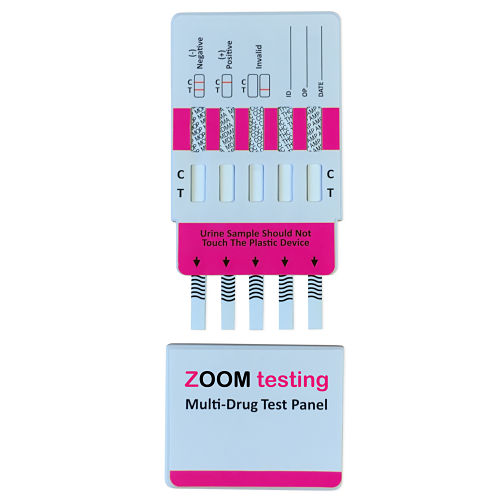
For organisations requiring comprehensive screening, multi-panel tests that include synthetic cannabis detection alongside other common drugs provide an efficient solution. These tests can screen for up to 10 different substances simultaneously, including Spice, cannabis, cocaine, opiates, and others.
Take Action: Comprehensive Drug Testing
The 10 Panel Drug Test with Spice and Nicotine is the only test on the market that screens for synthetic cannabis (K2 Spice), ketamine, and nicotine alongside eight other commonly abused substances. This comprehensive test provides fast, accurate results in just 5 minutes.
Detection Times and Testing Windows
Synthetic cannabinoids can typically be detected in urine for 2-3 days after use, though this can vary depending on frequency of use, individual metabolism, and the specific synthetic cannabinoid variant. Regular users may test positive for longer periods.
For prisons implementing random testing programmes, understanding these detection windows is crucial for effective monitoring. Testing too late after suspected use may result in false negatives, whilst understanding the typical detection period helps set appropriate testing schedules.
What Customers Say
Here’s what customers have said about using our multi-panel drug tests for comprehensive screening:
“Easy to use test that arrived very quickly. From a urine sample I was able to test for cannabis and synthetic cannabis. The results were negative. As a parent this was a great relief!”
— Andy B., Verified Customer
“Top quality kits delivered in a timely manner. Also upgraded my order from 7 panel to 10 panel at no extra cost. Highly recommended very professional company.”
— Glynis, Verified Customer
“I wanted to test for a number of drugs at the same time. Being rather bewildered by the wide choice of tests available, I went for this one. Glad I did – very simple to use and results were quick and clear. Recommend.”
— Joseph, Verified Customer
Synthetic Cannabis Tests for Prisons
Zoom Testing currently supplies synthetic cannabis tests to UK prisons. If your prison needs to test for synthetic cannabis, please contact us for special pricing and delivery terms.
Our testing solutions support prisons and other institutions in maintaining safe environments and helping individuals who may be struggling with substance use. For more information about testing consequences and support, see our guide on what happens if you fail a drug test.
Where to Buy Spice Drug Tests
For individuals, families, or organisations looking to purchase synthetic cannabis testing kits, visit our complete guide to buying Spice drug test kits. We offer fast, discreet delivery across the UK with expert support available if you need guidance on selecting the right test for your needs.
Zoom Testing is a leading UK drug testing company and a supplier of Drug Test Kits.
About the Author
Anthony Cunningham – Drug Testing Expert & Editor
Anthony Cunningham, BA (Hons), MA, is a UK-based drug testing expert and editor with over 20 years’ experience running Zoom Testing, a trusted source for accurate drug testing kits and testing guidance. He creates clear, evidence-based articles using UK legislation, workplace compliance standards, and harm reduction best practices. Where possible, content is reviewed by testing specialists and compliance professionals to enhance accuracy and reliability, helping readers make informed testing decisions.