About This Article
Zoom Testing has supplied alcohol and drug testing kits to UK customers for nearly 20 years. This guide draws on our experience helping thousands of people understand alcohol testing, UK drink-drive legislation, and road safety. Always follow current UK laws regarding drink-driving and use breathalysers responsibly as part of your personal safety checks.
Published: January 2022 | Last Updated: December 31, 2025 | By Anthony Cunningham
Contents
If you’re a responsible driver, you know that drinking and driving is a serious offence with heavy repercussions. It only takes one drink to put yourself and other road users at risk, so it’s important to have the right tools to stay safe. That’s why you should consider keeping a disposable breathalyser in your car.
Alcohol breathalysers are designed to detect alcohol in the breath, providing an accurate measure of blood alcohol content (BAC). This can help you make an informed decision about your driving ability before you turn the ignition. A disposable alcohol breathalyser is an easy and cost-effective way to keep yourself and your passengers safe on the road.
Understanding UK Drink-Drive Limits
Before we discuss why you should carry a breathalyser, it’s essential to understand the legal framework around drink-driving in the UK. The limits vary across different parts of the United Kingdom, and many drivers aren’t fully aware of how strict these regulations actually are.
England, Wales, and Northern Ireland
According to Gov.uk drink-drive legislation, the legal alcohol limit is:
- 35 microgrammes of alcohol per 100 millilitres of breath
- 80 milligrams of alcohol per 100 millilitres of blood
- 107 milligrams of alcohol per 100 millilitres of urine
Scotland’s Stricter Limit
Scotland introduced a lower drink-drive limit in December 2014. The Scottish limit is:
- 22 microgrammes of alcohol per 100 millilitres of breath
- 50 milligrams of alcohol per 100 millilitres of blood
- 67 milligrams of alcohol per 100 millilitres of urine
Important: It’s impossible to say exactly how many drinks will put you over the limit. This varies from person to person depending on weight, age, sex, metabolism, and whether you’ve eaten. The safest advice is always to avoid alcohol completely if you’re planning to drive.
Why You Can’t Calculate Units Reliably
Many drivers try to calculate how much they can drink based on alcohol units, but this approach is fundamentally flawed. Your body’s ability to process alcohol depends on numerous factors including your liver health, body composition, hydration levels, and even how tired you are. What puts one person over the limit might leave another person just under it, making personal breathalyser testing the only reliable way to check your own status.
Why Keep a Breathalyser in Your Car
Having a disposable breathalyser in your vehicle provides peace of mind and practical safety benefits. Here are the key reasons why this simple tool can make a significant difference to your safety and that of other road users:
1. Test Yourself Before Driving
Testing yourself before getting on the road removes the guesswork from whether you’re safe to drive. This is particularly valuable in situations where you’ve had a drink several hours earlier and aren’t sure if the alcohol has fully cleared your system. A quick breathalyser test takes just a few minutes and can prevent you from making a potentially catastrophic decision.
This becomes especially important if you’re responsible for passengers. You can also test passengers who might volunteer to drive, ensuring that whoever takes the wheel is genuinely fit to do so. This is invaluable for designated driver arrangements, where someone might have had “just one drink” hours earlier.
2. Avoid Legal Trouble and Criminal Records
Drink-driving is a criminal offence with severe penalties. According to the Metropolitan Police guidance on alcohol and drug driving, if you’re caught driving over the limit, you face:
- A mandatory driving ban of at least 12 months
- An unlimited fine
- Up to six months in prison
- A criminal record that can affect employment prospects
- Substantially increased car insurance premiums for years to come
Using a disposable breathalyser can help you stay on the right side of the law. The small investment in testing equipment is negligible compared to the financial and personal costs of a drink-driving conviction.
3. Save Money on Transport and Legal Costs
A disposable breathalyser costs just a few pounds, making it far more economical than the alternatives. Compare this to:
- The cost of a taxi or rideshare home
- The expense of retrieving your car the next day
- Legal fees if you’re charged with drink-driving
- Increased insurance premiums following a conviction
- Potential loss of employment if your job requires driving
More importantly, workplace alcohol testing is becoming increasingly common. If your employer implements random alcohol testing, arriving at work over the limit could result in dismissal, even if you never actually drove while impaired.
4. Protection Against the Morning After Problem
This is perhaps the most underestimated benefit of keeping a breathalyser in your car. Alcohol can remain in your system for many hours after drinking. You might feel completely sober the morning after a night out, yet still be over the legal limit.
This is so important that it deserves its own section, which we’ll cover in detail next.
The Morning After Problem
One of the most dangerous and common misconceptions about drink-driving is that a good night’s sleep will eliminate alcohol from your system. The reality is far more complex and concerning.
How Long Alcohol Really Stays in Your System
According to Drinkaware’s research, alcohol is removed from the body at an average rate of about one unit per hour. However, this varies significantly between individuals based on factors including weight, liver health, metabolism, and whether you’ve eaten.
Consider this realistic scenario: If you have four pints of beer (approximately 9-10 units) and finish drinking at midnight, the alcohol might not fully clear your system until 9am or 10am the following morning. If you need to drive to work at 7am, you could still be significantly over the limit, even though you feel completely fine.
The Statistics Are Alarming
Recent data shows that almost a fifth (17.8%) of drink-drive convictions involve “morning after” driving. The THINK! campaign reports that many normally responsible drivers unwittingly commit this offence whilst going about everyday activities like the school run, driving to work, or popping to the shops.
In 2022, there were 500 drink-drive collisions between 6am and 12pm, resulting in 30 fatalities and 130 serious injuries.
Why You Can’t Trust How You Feel
Feeling sober is not the same as being sober. Sleep does not accelerate alcohol elimination from your body. Neither does a cold shower, a coffee, a big breakfast, or any other supposed “sobering up” remedy. These might make you feel more alert, but they do nothing to remove alcohol from your bloodstream.
Your perception of your own sobriety is notoriously unreliable. Even small amounts of alcohol impair reaction times, concentration, and decision-making ability. You might feel perfectly capable of driving whilst still being legally and dangerously impaired.
When Morning Testing Is Essential
You should always consider testing yourself the morning after if you:
- Had more than two drinks the previous evening
- Were drinking late into the night (after 10pm)
- Need to drive early the next morning (before 9am)
- Are driving for work purposes (where you could lose your job)
- Have any doubt whatsoever about your sobriety
Many drivers who would never dream of drink-driving intentionally find themselves caught out by morning-after impairment. Don’t let this happen to you. If you’re concerned about whether it’s safe to drive the morning after drinking, a breathalyser gives you certainty rather than gambling with your licence and safety.
How to Use a Disposable Breathalyser
Disposable breathalysers are designed to be simple and user-friendly. Here’s how to get accurate results from your test:
Preparation
- Wait at least 15-20 minutes after your last drink before testing (to avoid mouth alcohol giving false readings)
- Don’t eat, drink, or smoke immediately before testing
- Read the instructions provided with your specific breathalyser kit
- Check the expiry date on the test
Taking the Test
- Open the sealed breathalyser package
- Remove the protective cap or seal
- Take a deep breath and blow steadily into the mouthpiece for the recommended time (usually 5-6 seconds)
- Wait for the specified time (typically 2-3 minutes) for the crystals to change colour
- Compare the colour change to the reference chart provided
Understanding Your Results
Disposable breathalysers typically use colour-changing crystals to indicate alcohol presence. The intensity and extent of the colour change corresponds to your blood alcohol level. Most UK breathalysers are calibrated to show:
- No colour change: No alcohol detected (safe to drive)
- Partial colour change: Alcohol present, possibly over the UK limit
- Full colour change: Definitely over the legal limit
Safety First: If you get ANY positive result showing alcohol presence, do not drive. Even if the reading appears borderline, it’s not worth the risk. Wait longer, test again, or arrange alternative transport. Your safety and that of other road users must always come first.
Get Your Disposable Breathalyser Today
Protect yourself and others with the Test & Drive Alcohol Breath Test. This convenient 2-pack gives you reliable, accurate testing whenever you need it. Each test is single-use, calibrated for UK legal limits, and simple to use.
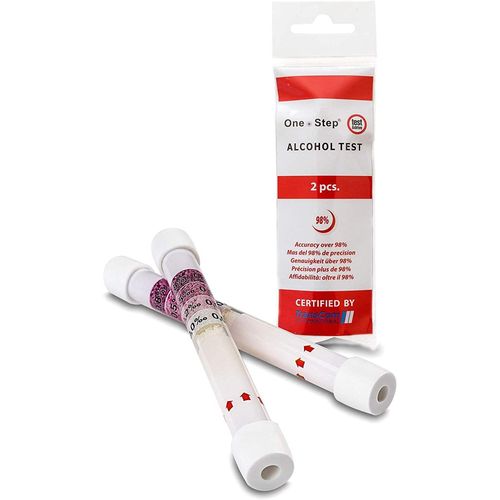
Quick, Reliable Testing – Know your status in minutes. Calibrated for UK legal limits. Perfect for keeping in your car or at home.
Legal and Financial Consequences of Drink-Driving
Understanding the full consequences of a drink-driving conviction helps put the value of breathalyser testing into perspective. A conviction doesn’t just mean a temporary driving ban; it can have far-reaching effects on your life for years to come.
Immediate Legal Penalties
If you’re caught driving over the legal limit, you face mandatory penalties including:
- Automatic 12-month driving ban (minimum)
- Extended 3-year ban if you’ve been convicted twice in 10 years
- Unlimited fine (often thousands of pounds)
- Up to 6 months imprisonment
- Up to 14 years imprisonment if you cause a death whilst over the limit
- Mandatory criminal record
Long-Term Financial Impact
The financial cost extends far beyond the initial fine. Consider:
- Insurance premiums: Your car insurance costs will increase substantially, often doubling or tripling for at least five years
- Legal fees: Solicitor costs for representation can run into thousands of pounds
- Employment impact: Many employers conduct driver licence checks, and a drink-driving conviction will be visible
- Lost income: If you lose your job due to being unable to drive, the financial impact can be devastating
- Travel restrictions: Countries including the USA and Canada may refuse entry to people with drink-driving convictions
Personal and Social Consequences
Beyond the legal and financial penalties, a drink-driving conviction affects your life in other ways:
- Difficulty finding employment in roles requiring driving
- Social stigma and damaged reputation
- Strain on family relationships and childcare arrangements
- Dependence on others for transport during your ban
- The psychological burden of knowing you could have hurt someone
The Human Cost
In 2022, an estimated 6,800 people were killed or injured in drink-driving accidents in Great Britain. Behind every statistic is a family torn apart, a life changed forever, or a future stolen. The legal penalties are severe, but they pale in comparison to the potential human cost of driving whilst impaired. A £5 breathalyser test could prevent an outcome that destroys lives.
Final Thoughts: A Small Investment in Safety
Keeping a disposable breathalyser in your car is one of the simplest and most effective safety measures you can take. For just a few pounds, you gain the ability to make informed, responsible decisions about when it’s safe to drive.
Whether you’re concerned about morning-after impairment, want to check designated drivers, or simply want peace of mind before starting your journey, a personal breathalyser removes the uncertainty. The alternative—guessing whether you’re safe to drive based on how you feel—is a gamble that’s simply not worth taking.
Remember: if you have any doubt about your sobriety, don’t drive. Use your breathalyser, and if it shows any alcohol presence, arrange alternative transport. Your safety, your licence, and potentially your freedom depend on making the right choice. Don’t take the risk of driving while impaired. Get your disposable breathalyser kit today and drive with confidence, knowing you’re staying within the law.
About the Author
Anthony Cunningham – Drug Testing Expert & Editor
Anthony Cunningham, BA (Hons), MA, is a UK-based drug testing expert and editor with over 20 years’ experience running Zoom Testing, a trusted source for accurate drug testing kits and testing guidance. He creates clear, evidence-based articles using UK legislation, workplace compliance standards, and harm reduction best practices. Where possible, content is reviewed by testing specialists and compliance professionals to enhance accuracy and reliability, helping readers make informed testing decisions.