
About This Article
Zoom Testing has supplied drug testing kits to UK customers for nearly 20 years. This guide draws on our experience helping thousands of people understand drug testing, workplace compliance, and the growing threat of high-potency cannabis in UK workplaces. Always follow current UK legislation regarding drug testing.
Published: March 1, 2024 | Last Updated: December 16, 2025 | By Anthony Cunningham
Table of Contents
- Why Cannabis Potency Matters in the Workplace
- Understanding High-Potency Cannabis (“Skunk”)
- The Business Case for Workplace Cannabis Testing
- Legal Framework for Drug Testing UK Employees
- How to Test for Cannabis in the Workplace
- Implementing a Cannabis Testing Programme
- Supporting Employees with Cannabis Issues
Why Cannabis Potency Matters in the Workplace
Cannabis in the UK has changed dramatically. It is much stronger than it used to be, with increasing evidence of its harmful mental health effects. Up to 40 years ago, most cannabis came from overseas. However, in the 1990s, advances in technology enabled the rapid growth of UK cannabis “farms”, mostly in people’s homes.
The old-fashioned “weed”, containing roughly equal amounts of THC (the psychoactive compound) and CBD (which moderates THC’s psychotic effects), is being replaced by a more potent version with almost 3 times more THC than CBD. Statistics back this up. In 2005, over 50% of seized cannabis was high-potency. By 2015, that figure had sharply risen to 94%. Hospitalisations for cannabis psychosis also increased 57% between 2013-2018.
This dramatic shift in cannabis potency has profound implications for workplace safety. The stronger the cannabis, the greater the impairment and the longer it remains detectable in the body. Understanding detection times is crucial for employers implementing effective drug testing policies.
Understanding High-Potency Cannabis (“Skunk”)
The Link Between Skunk and Psychosis
Worryingly, studies show regular high-potency “skunk” users are 5 times more likely to be diagnosed with psychosis than non-users. A psychotic episode means losing touch with reality through hallucinations or delusions, often triggering paranoia or suicidal thoughts. The person then likely turns to skunk again for relief, perpetuating the cycle.
For example, one case reported a man recorded on mobile phone brutally attacking and killing his girlfriend during a psychotic episode after eating a cannabis brownie. This horrific incident highlights skunk’s potential to trigger violence.
What Makes Modern Cannabis Different
Traditional cannabis varieties contained a natural balance of compounds. THC provided the psychoactive effects, whilst CBD acted as a moderating influence, reducing anxiety and psychotic symptoms. Modern high-potency cannabis disrupts this balance entirely. Selective breeding has created strains with THC levels exceeding 20%, sometimes reaching 30%, whilst CBD content has dropped to near zero.
According to research published in The Lancet Psychiatry, this biochemical imbalance fundamentally changes how cannabis affects the brain. Without CBD’s protective properties, users face significantly elevated risks of adverse mental health outcomes, particularly in workplace settings where concentration and judgement are essential.
The Business Case for Workplace Cannabis Testing
With cannabis being the UK’s most used illegal drug and 74% of substance users having full-time jobs, the workplace implications are serious. Although no employer believes their employee has a drug problem, last year 1 in 8 under 35s used cannabis and 1 in 14 employees overall did.
As employers or managers, you have legal, ethical and social duties to ensure impaired employees don’t endanger themselves or others at work. But do you know which employees use drugs? More importantly, if uncertain, are you doing enough to educate all employees about substance abuse risks?
The Hidden Costs of Cannabis Impairment
Cannabis impairment in the workplace extends far beyond immediate safety concerns. Cognitive effects include reduced reaction times, impaired decision-making, decreased concentration, and compromised short-term memory. These impairments can persist for hours or even days after use, particularly with high-potency varieties.
For safety-critical roles—including driving, operating machinery, or working at heights—even minor impairment poses unacceptable risks. The Health and Safety Executive (HSE) emphasises that employers must identify and control risks to health and safety, which includes addressing substance misuse. Failure to do so can result in serious incidents, legal liability, and reputational damage.
Legal Framework for Drug Testing UK Employees
UK employers have the right to implement drug testing, but must do so within clear legal boundaries. The key legislation governing workplace drug testing includes the Health and Safety at Work Act 1974, the Equality Act 2010, and the Data Protection Act 2018.
ACAS Guidelines and Best Practice
ACAS (Advisory, Conciliation and Arbitration Service) provides comprehensive guidance on drug and alcohol testing in the workplace. Testing must be justified, proportionate, and conducted with employee consent. Employers should have a clear written policy stating when and how testing will occur, what happens if someone tests positive, and how results will be stored and used.
Random testing is generally acceptable for safety-critical roles, but may be challenged in other positions. Pre-employment testing is widely accepted, whilst “for cause” testing (based on reasonable suspicion) offers a balanced approach for many organisations. Whatever method you choose, consistency and transparency are essential.
Employee Rights and Privacy Considerations
Employees have rights regarding privacy and data protection. Test results are sensitive personal data under GDPR and must be handled accordingly. This means secure storage, limited access, and clear retention policies. Employees should be informed about testing procedures, their right to refuse (though this may have employment consequences), and available support if they test positive.
Dismissal solely based on a positive drug test can be legally risky without proper procedures. Most successful workplace drug policies focus on rehabilitation and support rather than immediate termination. Understanding what happens if an employee fails a drug test helps employers prepare appropriate responses.
How to Test for Cannabis in the Workplace
Urine Testing: The Gold Standard
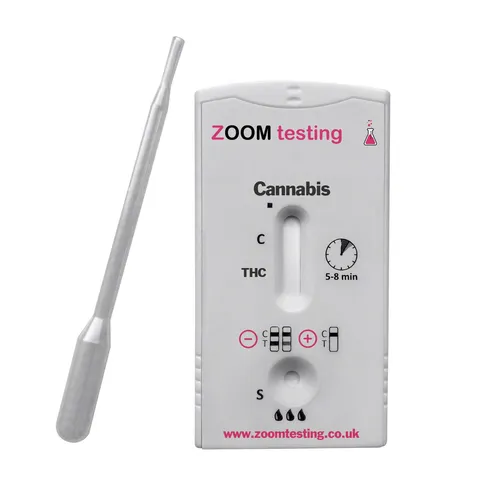
Urine testing remains the most common method for workplace cannabis detection. It identifies THC metabolites in urine, typically detecting use within the past 30 days for regular users, or 3-7 days for occasional users. The standard cut-off level for cannabis in UK workplace testing is 50 ng/mL, providing a clear threshold for positive results.
Urine tests are cost-effective, reliable, and provide a reasonable detection window for workplace purposes. They work well for pre-employment screening and random testing programmes where longer detection times are desirable.
Take Action Today
Protect your workplace with reliable cannabis testing. Our professional-grade urine tests provide accurate results in minutes, helping you maintain safety and compliance.
Saliva Testing: For Recent Use
Saliva drug tests detect cannabis use within the past 24-48 hours, making them ideal for post-incident testing or situations where you need to determine current impairment. Collection is non-invasive, can be observed directly, and results appear quickly.
Saliva testing works particularly well for roadside testing and situations where immediate results are needed. However, the shorter detection window means chronic users who haven’t used recently may test negative despite regular consumption patterns.
Understanding Detection Times
Detection times vary significantly based on usage patterns, metabolism, body composition, and cannabis potency. High-potency skunk varieties may be detectable longer than traditional cannabis due to their elevated THC content. Regular users can test positive for 30 days or more, whilst one-time users typically clear the drug within 3-7 days.
These extended detection windows make cannabis unique amongst commonly tested drugs. Whilst cocaine or amphetamines clear the system within days, cannabis metabolites persist in fatty tissue, releasing gradually over time.
What Customers Say About Our Cannabis Tests
Michael M. ⭐⭐⭐⭐⭐
“I needed to take a drug test at work although I had given up smoking cannabis. I bought the kit to make sure it had all left my body. The test worked and it was confirmed when I took the test at work. Small price to pay for peace of mind!”
Wayne R. ⭐⭐⭐⭐⭐
“With a drug test coming up at work, I took a month off from smoking. I bought this cannabis test to see if my system was clear of the drug. As it turned out, the test was negative, which was a huge relief to me. The lab test which I then had to do at work also came up negative. I guess that shows that these cannabis tests are fairly reliable. The test was shipped quickly to my home address in a plain jiffy bag, so nobody knew what was inside.”
Julian R. ⭐⭐⭐⭐⭐
“Bought this kit as I am applying for jobs where I know that I will be tested for drugs as part of the selection process. The first test I took came back positive maybe two and a half weeks after I had last smoked. I then tested every day. Finally, about a week later the test for THC came back as negative, which was a massive relief! Great service from Zoom Testing – quick delivery and very discreet service and packaging.”
Implementing a Cannabis Testing Programme
What Employers Can Do
Implementing tailored drug screening programmes is key to protection. Specialist providers like Zoom Testing can assist in seamlessly rolling out testing across diverse workforces, keeping businesses compliant and workers safe. With substance abuse awareness training also available, employers have both proactive and reactive options.
Developing a Comprehensive Policy
A robust drug testing policy should clearly state your organisation’s position on substance use, outline when testing will occur, explain the testing process, define consequences for positive results, and detail available support services. Consultation with employees or their representatives during policy development improves acceptance and effectiveness.
Your policy should address pre-employment testing, random testing schedules, post-incident testing protocols, and “for cause” testing based on reasonable suspicion. Clear criteria for each testing scenario reduce ambiguity and protect both employer and employee interests.
Training Managers and Supervisors
Frontline managers need training to recognise signs of impairment, understand testing procedures, handle situations sensitively, and apply policies consistently. They should know how to approach employees with concerns, conduct reasonable suspicion assessments, and maintain confidentiality throughout the process.
Training should cover the effects of high-potency cannabis, legal obligations under UK law, and available support resources. Well-trained managers become valuable assets in maintaining workplace safety whilst treating employees with dignity and respect.
Communicating With Employees
Transparent communication prevents misunderstandings and resistance. Explain why testing is necessary, how it protects everyone’s safety, what the process involves, and what support is available for those struggling with substance issues. Regular reminders about your policy keep it front of mind without creating an atmosphere of suspicion.
Consider awareness sessions covering the risks of high-potency cannabis, the science behind drug testing, and the reality of modern cannabis varieties. Education often proves more effective than enforcement alone in changing behaviour and attitudes.
Supporting Employees with Cannabis Issues
A positive drug test need not end an employment relationship. Progressive organisations view substance issues as health matters requiring support rather than purely disciplinary issues. This approach benefits both employer and employee whilst maintaining workplace safety.
Employee Assistance Programmes
Employee Assistance Programmes (EAPs) provide confidential counselling and support for staff facing various challenges, including substance use. Referring employees to EAP services demonstrates commitment to their wellbeing whilst addressing underlying issues that may affect work performance.
Many employees appreciate the opportunity to seek help without immediate employment consequences. This supportive approach often leads to better long-term outcomes than punitive measures alone.
Harm Reduction and Treatment Resources
Several UK organisations provide support for cannabis users seeking to reduce or stop their use. Talk to Frank offers confidential drugs information and advice, whilst Release provides specialist legal and drugs advice. The NHS also offers support through local drug and alcohol services.
Providing information about these resources as part of your workplace policy demonstrates that your organisation cares about employee health beyond simply policing behaviour. This balanced approach often yields better engagement and outcomes.
Return-to-Work Protocols
When an employee has addressed their cannabis use through treatment or behaviour change, clear return-to-work protocols help reintegrate them safely. This might include follow-up testing, graduated return to full duties, ongoing support check-ins, and clear expectations moving forward.
Successful reintegration benefits everyone. The employee retains employment and progresses in recovery, whilst the employer retains an experienced worker and demonstrates commitment to staff welfare.
Conclusion
In summary, high-potency cannabis poses an increasing threat, including psychosis risks. However, smart employers can mitigate risks through appropriate policies, testing programmes and education. Recognising this modern crisis, taking positive action and working with experts lays strong foundations for healthy workforces.
The dramatic increase in cannabis potency over the past two decades has created new challenges for UK workplaces. Understanding these changes, implementing appropriate testing programmes, and supporting affected employees creates safer work environments whilst treating staff with dignity and respect.
Photo: “Cannabis Leaf” by Anthony Cunningham for Zoom Testing
About the Author
Anthony Cunningham – Drug Testing Expert & Editor
Anthony Cunningham, BA (Hons), MA, is a UK-based drug testing expert and editor with over 20 years’ experience running Zoom Testing, a trusted source for accurate drug testing kits and testing guidance. He creates clear, evidence-based articles using UK legislation, workplace compliance standards, and harm reduction best practices. Where possible, content is reviewed by testing specialists and compliance professionals to enhance accuracy and reliability, helping readers make informed testing decisions.