About This Article
Zoom Testing has supplied drug testing kits to UK customers for nearly 20 years. This guide draws on our experience helping thousands of employers and employees understand workplace drug testing law, compliance requirements, and employment rights. Always follow current UK legislation regarding drug testing and employment procedures.
Published: May 27, 2019 | Last Updated: November 10, 2025 | By Anthony Cunningham
Contents
It’s quite commonplace today for employers to implement drug testing policies and related procedures in the workplace. In order to ensure a drug-free work environment, employees in certain industries are required to submit to a pre-employment drug test, then agree to participate in random drug screening during their employment with that company. In most cases, however, in order to subject an employee to drug testing, the employer should have some suspicion that drug-taking has actually taken place.
In industries like the energy and transport industries where a business’s operation depends on safety sensitive procedures, an employee’s Contract of Employment will often contain a clause stating that the employer has the right to perform alcohol and drug testing procedures on an employee.
In other industries, alcohol and drug testing is required by law. However, case law has shown that, whether testing is elective or mandatory, this process can be a tricky one. In fact, employees have been exonerated by employment tribunals who determined that these employees had been unfairly dismissed even though they tested positive to a drug test.
Is It Legal To Carry Out Drug Testing In The Workplace?
If employers want to subject their employees to drug testing, they must have consent. This will typically be when an employer has a full contractual safety and health policy included in their staff or contract handbook. The drug test must be random and limited to employees the employer believes should be tested. Unless justified by the specific nature of the employee’s job, employers must not single out specific employees for testing. While an employer may have grounds for testing, no one can force an employee to take a drug test; however, their refusal to subject themselves to a drug test could mean facing disciplinary action.
Employers do have the right to ensure the safety of their operations, while employees might argue that their private life should have no bearing on their employment. So how can an employer lawfully enforce a drug test on an employee suspected of drug-taking?
Drug testing is a lawful process in a work environment as long as it is an agreed-upon condition of employment and that the employer has explicitly informed the employee of their drug testing policy; backed up by clear warnings of the consequences should drug testing reveal a positive result. This information should be in the form of a formal Drug Testing Policy, clearly communicated to all personnel, explaining not only the reasons for drug monitoring, but also the potential consequences. Legal requirements are established through ACAS (Advisory, Conciliation and Arbitration Service) workplace guidance and the UK Employment Rights Act. The legal requirements are therefore consent from the employee, a clear drug policy, justification for implementing the policy, and clearly defining the consequences of failing a drug test.
Should Drug Testing In The Workplace Be Planned Or Random?
Planned drug testing would clearly give employees time to arrange their activities around specific dates so would therefore not be as effective as random testing; however, if drug testing is to be carried out randomly, this must be clearly set out in the business’s drug policy. The random process is usually computer-generated, whereby one or more individuals are selected from all employees under the workplace drug testing program. Because random testing, also known as ‘spot testing’, is done on an unannounced basis, it can be a very strong deterrent to drug users. Regardless of the frequency, in order to implement any type of drug testing in the workplace, a very robust practical procedure must be put in place with trained and qualified members of management implementing the testing process.
There are valid arguments for both planned and random drug testing in the workplace. Planned testing allows employees to prepare for the test, potentially resulting in a lower detection rate since individuals may abstain from drug use for a temporary period before the test. This method may not accurately reflect an employee’s regular drug use and can be seen as less effective in detecting drug use within the workforce.
On the other hand, random drug testing can create a strong deterrent effect by keeping employees on their toes, never knowing when they might be selected for testing. This uncertainty can significantly discourage drug use in the workplace, leading to a safer and more productive environment. Random testing also offers a more accurate representation of an employee’s drug use patterns since it can catch instances of infrequent or sporadic drug use that may go undetected in planned testing.
To implement random drug testing successfully, a clear drug policy must be established within the organisation. This policy should clearly outline the possibility of random testing, the procedures involved, and the consequences for a positive test result. Employees should be well-informed about the policy and understand the potential consequences of drug use in the workplace. Additionally, the random selection process should be computer-generated and unbiased, ensuring that all employees have an equal chance of being tested.
It is crucial to have a robust and practical testing procedure in place, with trained and qualified members of management overseeing the process. This includes properly handling and analysing the samples, maintaining the confidentiality and privacy of employees, and providing support and counselling services for those who may test positive for drugs. Guidance on proper procedures is available through HSE (Health and Safety Executive) workplace standards.
Ideally, a combination of both planned and random drug testing methods can be used to maximise effectiveness. Planned testing can be employed for specific situations, such as pre-employment screening or reasonable suspicion testing based on observations or incidents. Random testing can supplement this approach by providing ongoing monitoring to deter drug use and ensure a safer working environment.
Ultimately, the decision to use planned or random drug testing in the workplace should be based on the specific needs and goals of the organisation. Factors such as industry regulations, safety concerns, and the prevalence of drug use within the workforce should be carefully considered when designing an effective drug testing program.
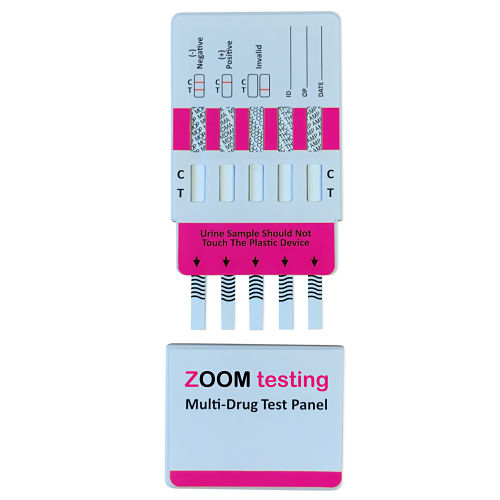
Need Workplace Drug Testing Kits? Zoom Testing supplies multi-drug dip cards tested by UK laboratories, compliant with workplace standards, and fast to administer.
What Happens If An Employee Refuses To Be Drug Tested?
Naturally, drug testing in the workplace is an intrusive process and can create conflict between the employer’s right of ensuring that the employee concerned is capable of safely fulfilling the job they’re being paid to do, and the employees right to privacy. Drug use in the workplace can cause health problems and increase the risk of accidents, and no business would welcome the use of drugs inside the workplace. So, what happens if an employee refuses to be drug tested?
Again, this all comes down to businesses having a formal drug testing policy. Should an employee refuse to be drug tested, the consequences of such a refusal should be clearly defined in the policy. While an employer might view the employee’s refusal to be drug tested as grounds for dismissal, the employer should take into consideration the employee’s reason for refusing the test and take time for careful consideration prior to taking action. If a drug testing policy is in place and an employee refuses to be tested for drugs, they would then be in breach of their employment contract and subject to some form of disciplinary action, which may not necessarily be dismissal. When determining any sanctions against an employee the usual principles of fairness still apply.
Drug Testing Tribunal Decisions
Employment tribunals have ruled on numerous drug testing cases, establishing important precedents. Here are key examples:
Fair Dismissal – Policy Compliance
An employee was dismissed for refusing to take a drugs test. Despite being confused with another person of the same name and having a clean disciplinary record, he was dismissed because he refused to comply with company policy. As a manager, the tribunal found this was a fair dismissal, noting that managers should set a positive example.
Unfair Dismissal – Conviction vs. Job Performance
A drama teacher was dismissed after conviction for cannabis cultivation and possession. However, there was no evidence that the conviction or use affected his work performance or employer reputation. The employment tribunal ruled this was unfair dismissal, a decision upheld by the Employment Appeals Tribunal.
Fair Dismissal – Public Confidence Role
An air traffic controller’s dismissal for off-duty cannabis use was deemed fair, despite no evidence of work impact. The employer justified dismissal based on maintaining public confidence in the service, a factor tribunals considered reasonable given the safety-critical role.
Unfair Dismissal – Defective Policy Wording
A logistics company dismissed an employee under a policy stating “intoxication at work” was a dismissible offence. The employee tested positive for cannabis but was not under the influence at work. The tribunal ruled this unfair dismissal because the employer couldn’t prove workplace intoxication.
Medical Evidence Supporting Test Results
A road construction company successfully defended an unfair dismissal claim using medical evidence to corroborate a positive cannabis test. The employee had claimed passive inhalation, but medical evidence supported the employer’s case.
Key lesson: These cases demonstrate that employers must follow proper procedures, have clear and specific policies, and consider all circumstances before taking disciplinary action. Testing positive does not automatically justify dismissal.
Striking The Right Balance
While ensuring workplace safety is paramount, employers must strike a careful balance between their interests and respecting employees’ privacy rights. Open communication and transparency are key when implementing drug testing policies. Employers should clearly explain the rationale behind such measures and involve employees in the policy development process. This collaborative approach fosters trust and minimizes potential conflicts. Additionally, providing resources like counselling services can support employees struggling with substance abuse issues.
What Customers Say
“I bought these to test my PCV Drivers and they worked very well. Delivery was very fast and they were very quick at replying to any queries when e-mailed. Will be using them again in the future if needed and are highly recommended.”
– Kayleigh R, Workplace Testing
“Top quality kits delivered in a timely manner. Also upgraded my order from 7 panel to 10 panel at no extra cost. Highly recommended—very professional company.”
– Glynis, Professional Service Provider
“Fast, accurate and great service.”
– Sarah W, Drug Testing Kits User
In Conclusion
While employers must be proactive in dealing with drug-related activities in the workplace, they must also follow their own drug policies. In addition, even if an employee has failed a drug test, the employer should listen to reasonable explanations as offered by the employee. Employers must also understand that being under the influence of drugs and failing a drugs test are two entirely separate matters. Should an employee fail to pass a drug test in the workplace, a fair and reasonable investigation conforming to existing policies must be undertaken prior to disciplinary proceedings being concluded.
When considering what happens if you fail a drug test at work, employers should ensure their procedures are defensible and fair.
Employer Best Practices
- Implement a drug testing policy that is carefully thought out; one that does not restrict the circumstances in which action can be taken.
- Properly train managers on: (a) the aims of the company’s drug policy; (b) how to recognise the effects of drug taking; and (c) how to implement a drug test.
- Ensure the business has a robust drug testing procedure, ensuring transparency, and using approved methods.
- Allow a drug tested employee to challenge the results of the test. Note that additional medical evidence may be required.
- Maintain clear documentation and follow due process in all cases.
About the Author
Anthony Cunningham – Drug Testing Expert & Editor
Anthony Cunningham, BA (Hons), MA, is a UK-based drug testing expert and editor with over 20 years’ experience running Zoom Testing, a trusted source for accurate drug testing kits and testing guidance. He creates clear, evidence-based articles using UK legislation, workplace compliance standards, and harm reduction best practices. Where possible, content is reviewed by testing specialists and compliance professionals to enhance accuracy and reliability, helping readers make informed testing decisions.