About This Article
Zoom Testing has more than 20 years’ experience providing drug testing kits and practical information about drug testing in the UK. This article looks at why synthetic cannabinoids such as Spice became a significant problem in UK prisons, the associated health risks and how prison drug testing has developed.
Published: 5 December 2014 | Last Updated: 27 August 2026 | By: Anthony Cunningham
The Growing Problem of Spice in UK Prisons
Synthetic cannabis, or Spice, is a drug that has grown in usage in the UK in recent years. Synthetic cannabinoids such as Spice remain a significant problem in UK prisons. But why should that be?
One reason for the popularity of Spice in UK prisons is that the drug has no distinctive smell and can therefore be difficult to identify when smoked. Blatant use of the drug, sometimes in front of prison staff, has also been reported. A 2014 Guardian investigation reported problems with Spice across at least 28 UK prisons.
Spice continues to be smuggled into UK prisons, leading to prisoners using the drug and health issues related to the use of this illegal Class B drug.
The drug is also smuggled into prisons in less obvious forms. Spice can be soaked into sheets of paper. This paper can then be torn into smaller pieces and smoked by prisoners.
In 2014, the annual Global Drug Survey (GDS), which collected data from thousands of drug users about their experiences, suggested that people who used Spice were seven times more likely to need hospital treatment after using the drug than those using natural cannabis only. In the USA, deaths have also been attributed to synthetic cannabinoids, which have commonly been sold as smoking mixtures made from dried plant material sprayed with synthetic chemicals.
Problems in UK prisons due to the use of Spice have been reported for many years. The same 2014 Guardian story reported that at HM Prison Ford in West Sussex, 85% of inmates were believed to be using or dealing in the drug. At a number of prisons, health issues caused by Spice have led to emergency situations, including seizures, heart problems and serious mental health effects.
Detecting synthetic cannabinoids remains challenging because the compounds and formulations continue to evolve. However, prison drug testing has developed considerably since this article was first published. HMPPS now operates mandatory drug testing alongside forensic testing and drug-trace detection measures designed to identify psychoactive substances entering prisons. The HMPPS Annual Digest for 2025 to 2026 provides the latest official information on drug testing within prisons.
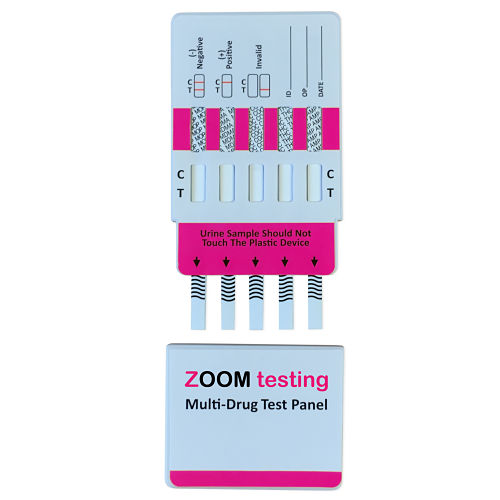
Featured Product: 10 Panel Drug Test with Spice and Nicotine
The 10 Panel Drug Test with Spice and Nicotine is a fast urine drug test that screens simultaneously for 10 commonly used drugs and drug groups, including synthetic cannabis (K2/Spice), cotinine from nicotine use, ketamine, cannabis, cocaine, amphetamines and other substances.
Results are available in around five minutes, making the test a convenient option where screening for Spice alongside a broader range of drugs is required.
About the Author
Anthony Cunningham, BA (Hons), MA, is a UK-based drug testing expert and editor with over 20 years’ experience running Zoom Testing, a trusted source for accurate drug testing kits and testing guidance. He creates clear, evidence-based articles using UK legislation, workplace compliance standards, and harm reduction best practices. Where possible, content is reviewed by testing specialists and compliance professionals to enhance accuracy and reliability, helping readers make informed testing decisions.