About This Article
Zoom Testing has over 20 years’ experience providing drug testing kits and practical drug testing guidance in the UK. This article looks at the history of methaqualone, commonly known by the former brand name Quaalude, its effects and the efforts made to control its misuse.
Published: 2017 | Last Updated: 27 August 2026 | By: Anthony Cunningham
Quaalude, or methaqualone, is a hypnotic, sedative drug that rose in popularity because of its properties as a barbiturate substitute. It was first marketed in the United States in 1965 as a sedative.
Quaaludes were initially manufactured as a sleep aid, but it wasn’t long before people, including college students and teenagers, began using them recreationally. This increase was partly attributed to the number of prescriptions being written for Quaaludes.
Today, methaqualone is a controlled drug in the UK. It is classified as a Class B drug under the Misuse of Drugs Act 1971 and is listed in Schedule 2 of the Misuse of Drugs Regulations 2001. You can check the current classification on the GOV.UK controlled drugs list.
Quaaludes’ Rise In Popularity
By the early 1970s, methaqualone had become one of the most widely abused sedative drugs in the US, even as authorities were trying to curb its misuse. One recreational practice, sometimes referred to as “luding out”, involved taking the drug with alcohol. Combining methaqualone with alcohol is particularly dangerous because both substances depress the central nervous system.
In David Bowie’s “Time”, he famously referenced “red wine and Quaaludes”, reflecting how strongly the drug had entered popular culture by the 1970s.
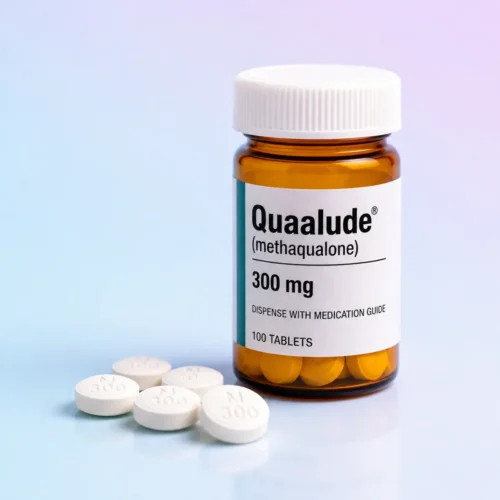
Quaaludes were commonly produced as 300 mg tablets. Their effects varied according to factors including the amount taken, the person’s tolerance and whether other substances had also been used. High doses could cause serious poisoning and overdose.
Methaqualone is a central nervous system depressant. It can cause relaxation and drowsiness, but it can also impair coordination, judgement and reaction times. Larger amounts can cause much more serious effects, including loss of consciousness and breathing problems.
Quaaludes’ effects can last for several hours. As a person continues using the drug, they can build up tolerance and may need larger amounts to achieve the same effect. This increases the risk of overdose, which can involve severe confusion, convulsions, coma, respiratory problems and, in severe cases, death.
Pills that had been legitimately manufactured for patients were diverted for recreational use and sold on the black market alongside counterfeit drugs manufactured in illegal laboratories.
DEA’s Investigation Of Quaaludes and How The Agency Combated It
In the early 1980s, the US Drug Enforcement Administration regarded methaqualone abuse as a serious problem. At the peak of the problem, the DEA estimated that around 85 percent of the methaqualone tablets being abused in the US were counterfeit Quaalude tablets coming from overseas sources.
The DEA responded by targeting sources of illegal methaqualone and working with the US Department of State and authorities in other countries to tighten controls over its manufacture and export. Investigations also targeted so-called “stress clinics” that were issuing large numbers of methaqualone prescriptions.
The DEA focused on disrupting the distribution networks supplying the black market. Agents working undercover were sent into criminal groups involved in the Quaalude trade to obtain information and develop cases against key participants.
The DEA was able to locate Quaalude distributors around the country using information gathered during its investigations. Warehouses and distribution locations were targeted as authorities attempted to disrupt the supply of illicit tablets.
The agency also worked with overseas counterparts to reduce the international supply of methaqualone. These efforts included tighter controls in countries that manufactured or exported the drug and improved interception of illegal shipments.
By the end of 1982, the DEA reported clear signs that these measures were working. In 1984, methaqualone was moved into Schedule I in the United States, effectively ending its domestic production and medical use.
By 1985, US emergency room mentions involving methaqualone had fallen by 83 percent compared with 1980 levels, according to the DEA. Quaaludes subsequently became much less common on the illicit US drug market.
The response to the Quaalude problem demonstrated how prescribing controls, law enforcement and international cooperation could substantially reduce the availability of a widely misused drug. More information on this period is available in the DEA’s history of the period 1980-1985.
About the Author
Anthony Cunningham, BA (Hons), MA, is a UK-based drug testing expert and editor with over 20 years’ experience running Zoom Testing, a trusted source for accurate drug testing kits and testing guidance. He creates clear, evidence-based articles using UK legislation, workplace compliance standards, and harm reduction best practices. Where possible, content is reviewed by testing specialists and compliance professionals to enhance accuracy and reliability, helping readers make informed testing decisions.