About This Article
Zoom Testing has over 20 years’ experience providing drug testing kits and practical drug testing guidance in the UK. This article explains what freebase cocaine is, how it differs from crack and powder cocaine, the associated risks, and the options available for cocaine testing.
Published: 5 June 2024 | Last Updated: 23 August 2026 | By: Anthony Cunningham
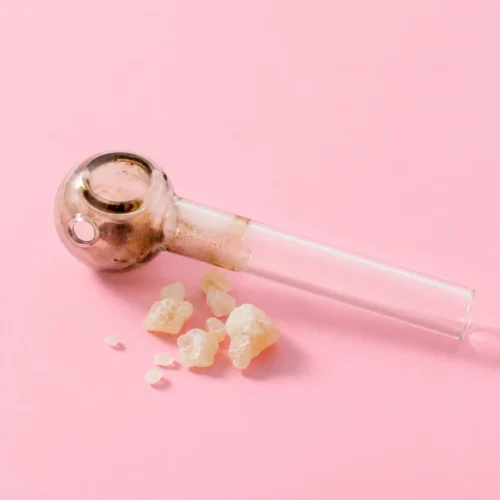
Freebase is a smokable form of cocaine that produces a rapid, short-lived stimulant effect. Although it is less commonly discussed than powder cocaine or crack cocaine, freebase played an important part in the development of smokable forms of cocaine.
Contents
- A Brief History of Freebase
- The Effects and Risks of Freebase
- Freebase vs Crack Cocaine
- Cocaine Base vs Cocaine Salts
- Legal Status in the UK
- Testing for Cocaine
- Getting Help and Support
- Conclusion
A Brief History of Freebase
Freebase became prominent in the United States during the 1970s, when cocaine use was becoming increasingly visible in some social and cultural circles.
The term refers to cocaine in its base form rather than cocaine hydrochloride, the salt form commonly found as cocaine powder. Because cocaine base can be smoked, some users sought it as a way of producing a faster and more intense effect than snorting powder cocaine.
Early freebasing methods also carried an additional danger because highly flammable solvents were sometimes involved. Fires and serious burns became associated with the practice, adding to the considerable health risks of cocaine itself.
The Effects and Risks of Freebase
When cocaine base is smoked, the drug is absorbed very rapidly through the lungs and its effects can be felt almost immediately. The intense high is relatively short-lived, which can encourage repeated use over a short period.
As with other forms of cocaine, freebase can increase heart rate and blood pressure and place significant strain on the cardiovascular system. Cocaine use is associated with serious risks including abnormal heart rhythms, heart attack, stroke, seizures, anxiety, paranoia and dependence.
Repeated use may also lead to strong cravings and compulsive patterns of use. The risks can increase further when cocaine is taken alongside alcohol or other drugs.
Freebase vs Crack Cocaine
Crack cocaine and freebase are both forms of cocaine base that can be smoked. They are produced differently and can vary considerably in purity and composition, but both allow cocaine to reach the bloodstream very quickly through the lungs.
Freebase became known before crack cocaine became widespread. Crack subsequently became a much more commonly recognised form of smokable cocaine during the 1980s.
The effects and risks of the two forms are broadly similar because the active drug in both is cocaine. Neither should be considered a safer form of cocaine, and the composition of illicit drugs can vary significantly from one sample to another.
Cocaine Base vs Cocaine Salts
Understanding the distinction between cocaine base and cocaine salts helps explain why different forms of cocaine are used in different ways.
- Cocaine base includes forms such as freebase and crack cocaine and can be smoked.
- Cocaine salts include cocaine hydrochloride, the form most commonly encountered as powder cocaine.
Cocaine hydrochloride is water-soluble, whereas cocaine base has different physical properties that allow it to be smoked. Smoking cocaine produces a particularly rapid onset of effects because the drug is absorbed through the lungs and quickly reaches the bloodstream.
Whatever the form or route of administration, cocaine carries significant short-term and long-term health risks and has the potential to cause dependence.
Legal Status in the UK
Cocaine and crack cocaine are controlled as Class A drugs in the UK under the Misuse of Drugs Act 1971. Possession, supply and production are criminal offences.
The maximum penalty for possession of a Class A drug is seven years in prison, an unlimited fine, or both. Supply and production can carry a maximum sentence of life imprisonment, an unlimited fine, or both. Current information on drug classifications and penalties is available from GOV.UK.
Testing for Cocaine
Drug tests do not normally distinguish between freebase, crack and powder cocaine. Instead, cocaine screening commonly looks for cocaine or its metabolites after the drug has been absorbed and processed by the body.
Urine drug tests are commonly used when a longer detection window is required, while saliva testing can be useful when screening for more recent drug use. The most appropriate method depends on the reason for testing, the required detection window and the testing environment.
For targeted urine screening, Zoom Testing offers a Cocaine Drug Test (COC). For situations where several drug groups need to be screened at the same time, multi-panel options such as the 18 Panel Drug Test with Integrated Cup are also available.
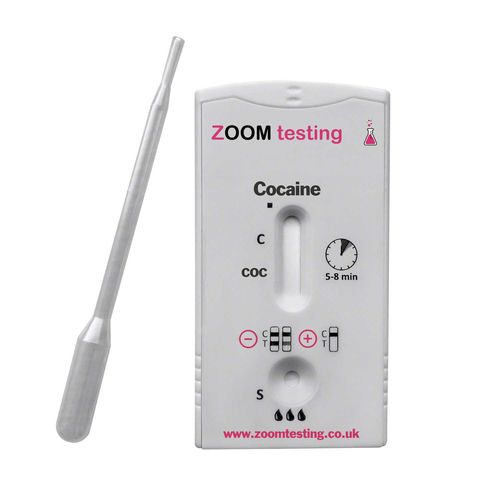
Featured Product: Cocaine Drug Test (COC)
For targeted cocaine screening, the Cocaine Drug Test (COC) is a single-use urine test designed to detect the cocaine metabolite benzoylecgonine. Detection times vary according to factors including the amount used, frequency of use and individual metabolism.
Getting Help and Support
Cocaine dependence can affect physical health, mental wellbeing, relationships and everyday life. Anyone concerned about their own cocaine use or somebody else’s can speak to a GP or local drug and alcohol service for confidential advice and support.
Talk to FRANK also provides confidential information and advice about cocaine and other drugs, including information about treatment and support services.
Conclusion
Freebase is one of several forms in which cocaine can occur. Its ability to be smoked means cocaine reaches the bloodstream extremely quickly, producing rapid effects but also carrying substantial risks.
Although freebase itself is less prominent than it once was, understanding the distinction between freebase, crack cocaine and cocaine hydrochloride remains useful when discussing cocaine use, health risks and drug testing. Whatever form cocaine takes, there is no risk-free way to use it.
About the Author
Anthony Cunningham, BA (Hons), MA, is a UK-based drug testing expert and editor with over 20 years’ experience running Zoom Testing, a trusted source for accurate drug testing kits and testing guidance. He creates clear, evidence-based articles using UK legislation, workplace compliance standards, and harm reduction best practices. Where possible, content is reviewed by testing specialists and compliance professionals to enhance accuracy and reliability, helping readers make informed testing decisions.