About This Article
Zoom Testing has supplied drug testing kits to UK customers for nearly 20 years. This guide draws on our experience helping thousands of people understand drug testing, workplace compliance, and amphetamine detection. Always follow current UK legislation regarding drug testing.
Published: 2022 | Last Updated: January 16, 2026 | By Anthony Cunningham
Table of Contents
What is AMP on a Drug Test?
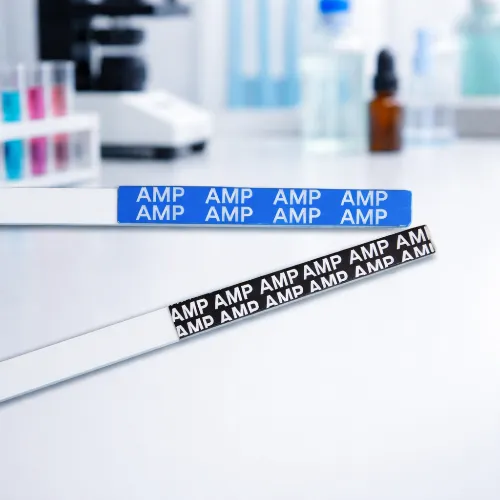
AMP is a short, easy to remember abbreviation for amphetamine. The acronym AMP stands for the three letters of “amphetamine”, which are the first letters of the word. There are various types of drug test kits that will screen for AMP.
When you see “AMP” on a drug test panel, it refers to the specific test strip or section that detects amphetamines in a biological sample. This is standard across workplace drug testing programmes, clinical settings, and home testing kits.
What is Amphetamine (AMP)?
Amphetamine is a stimulant drug that is used to treat attention deficit hyperactivity disorder (ADHD) and narcolepsy. It is also used as a performance-enhancing drug by athletes.
Amphetamine was first synthesised in 1887 by the Romanian chemist Lazăr Edeleanu, who named it phenylisopropylamine. In 1919, amphetamine was first synthesised in Germany by the pharmaceutical company Oskar von Miller.
Amphetamine is classified as a Schedule II controlled substance in the United States and a Class B drug in the United Kingdom. According to UK government legislation, possession of Class B drugs can result in up to 5 years in prison, whilst supply can lead to up to 14 years imprisonment.
Medical amphetamines prescribed for ADHD or narcolepsy are legal when used as directed. However, recreational use, sharing prescriptions, or purchasing amphetamines without a prescription is illegal in the UK. The United Nations Office on Drugs and Crime reports that amphetamine-type stimulants remain amongst the most widely used illicit substances globally.
How Long Does AMP Stay in Your System?
AMP detection times vary based on the test type and usage patterns. In urine tests, amphetamines typically show up for 1-3 days after last use. However, heavy users may test positive for up to a week. Saliva tests can detect AMP for 1-2 days, while hair tests have the longest window at up to 90 days. Factors like body weight, metabolism, and hydration levels affect these timeframes. Understanding detection windows helps employers set fair testing policies and helps individuals know when substances might appear in their system.
Several factors influence how long amphetamines remain detectable:
- Frequency of use: Regular users retain amphetamines longer than occasional users
- Dosage: Higher doses take longer to clear from the system
- Body composition: Metabolism and body fat percentage play a role
- Age and health: Kidney and liver function affect elimination rates
- Hydration: Proper hydration can influence detection times in urine tests
It’s important to note that prescription amphetamines for ADHD will also test positive on AMP screens. Individuals with valid prescriptions should inform their employer or testing facility before testing to avoid misunderstandings.
Take Action: Need a comprehensive workplace drug test that screens for AMP and 11 other substances? Our 12-panel workplace drug screen meets UK testing standards and delivers fast, accurate results.

AMP Cut-off Levels in Drug Tests
Cut-off levels determine whether a drug test shows positive or negative results. For AMP, the standard cut-off level in urine tests is 1000 ng/ml for initial screening. Saliva tests typically use 50 ng/ml as the cut-off point. These levels help avoid false positives from trace amounts or passive exposure. Different testing facilities may use slightly different cut-offs, but these standards ensure accurate results. Understanding cut-off levels helps explain why someone might pass one test but fail another from a different lab or testing method.
The screening cut-off level of 1000 ng/ml is an industry standard recommended by the Substance Abuse and Mental Health Services Administration (SAMHSA) in the United States and widely adopted in the UK. This threshold strikes a balance between sensitivity and specificity, reducing false positives whilst maintaining detection accuracy.
When a screening test shows a positive result, workplace testing programmes typically follow up with a confirmation test using gas chromatography-mass spectrometry (GC-MS) or liquid chromatography-tandem mass spectrometry (LC-MS/MS). The confirmation cut-off is usually lower at 500 ng/ml, providing more precise quantification. According to ACAS guidance on workplace drug testing, employers should ensure testing procedures are fair, transparent, and conducted by competent professionals.
Why Test for AMP?
Testing for amphetamines serves several important purposes across different settings:
Workplace Safety
Amphetamines can impair judgement, coordination, and reaction times, making them particularly dangerous in safety-sensitive roles. Many UK employers implement workplace drug testing programmes to maintain safe working environments, especially in industries like transport, construction, and manufacturing.
Medical Monitoring
Healthcare providers may test for amphetamines to monitor prescription compliance, ensure patients aren’t abusing their ADHD medications, or verify that individuals in recovery programmes remain substance-free.
Personal and Family Use
Parents sometimes use home drug tests to monitor teenagers they suspect may be experimenting with stimulants. Personal testing can also help individuals verify they’re clear before workplace or pre-employment screening.
Legal and Compliance Requirements
Certain professions require regular drug testing as part of licensing or regulatory compliance. Athletes may be subject to amphetamine testing to detect performance-enhancing drug use.
Understanding Your Test Results
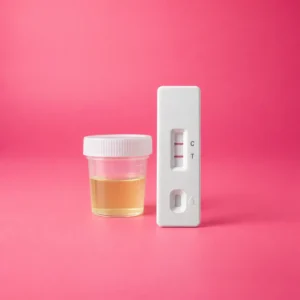
Reading an AMP drug test correctly is essential for accurate interpretation. Most rapid drug tests use a lateral flow immunoassay format with two key areas to examine:
Reading Your AMP Test Strip
- Control Line (C): This line must always appear for the test to be valid. If no control line appears, the test is invalid and should be repeated.
- Test Line (T): The presence or absence of this line indicates the result. ANY line, even if faint, means a negative result. No line means a positive result.
Negative Result: Two lines appear (C and T). The test line may be faint, but any visible line indicates the drug concentration is below the cut-off level. A faint line does not mean a “weak negative” or that the person barely passed. Line intensity varies and has no bearing on how much drug is present.
Positive Result: Only the control line appears. No test line means the amphetamine concentration exceeds the cut-off level. This indicates a presumptive positive that should be confirmed with laboratory testing for workplace or legal purposes.
Invalid Result: No control line appears, or the test appears blank. The test is faulty and must be repeated with a new kit. Do not interpret results without a visible control line.
For more information on interpreting drug tests, see our guide on the 5 common ways to test for drugs and alcohol.
Types of AMP Drug Tests
Single Dip Tests for AMP
Single dip tests are a quick, accurate, and easy way to test for drug levels in urine.
This is a very popular test that can be used to detect the presence of drugs in urine. It is often used by employers when they have concerns about employees’ drug use. This test can also be used by patients who want to monitor their drug intake or keep track of their progress during treatment.
Single Cassette Tests for AMP
Single Urine Cassette Tests are commonly used in hospitals, clinics and other healthcare settings where they are needed to quickly and quantitatively measure the presence of a specific drug in urine. The drug test cassette is a popular choice for employers because it’s fast, accurate and economical. It can be used to detect the presence of just one type of drug at a time.
Zoom Testing is a leading UK supplier of single cassette tests for AMP.
Multi Drug Dip Cards for AMP
Multi-drug dip cards are an economical and precise means of detecting multiple common illegal substances. These cards are primarily used in the workplace to test for drugs and alcohol.
Multi Drug Dip Cards are a quick and easy way to screen for drugs in urine. They are available in a range of combinations, from three to ten different drugs. AMP is found on many of these types of test, starting with the basic 3 panel drug test kit and including the popular workplace standard 10 panel drug test.
For comprehensive workplace screening, our 12 panel urine drug test provides thorough detection of amphetamines alongside other common substances of abuse.
Drug Cup Tests for AMP
Drug Cup Tests are a popular type of drug test that can detect the presence of drugs in urine. These types of tests have an integrated cup that can be used to collect urine samples, screening for 5 to 18 drugs from one urine sample. Drug Cup Tests are designed for use by healthcare professionals and law enforcement agencies, but they have also been found useful for employers who want to screen their employees for drug use. AMP is often found on popular urine drug tests cups such as the 18 panel drug test cup.
Saliva Drug Test Kits for AMP
A saliva drug test is a convenient way to detect drugs in the body. It is easy to use and can be used by anyone. AMP is often found on saliva drug test kits such as the 10 panel saliva drug test kit.
Saliva tests offer the advantage of observed collection, making them harder to adulterate. They’re particularly useful for detecting recent drug use within the past 24-48 hours, making them ideal for post-incident testing or reasonable suspicion scenarios in the workplace.
What Customers Say
Our customers have used Zoom Testing drug test kits in various situations. Here’s what some of them have shared:
Sarah W. – 5 Stars
“Fast, accurate and great service”
Kayleigh R. – 5 Stars
“I bought these to test my PCV Drivers and they worked very good. Delivery was very fast and they were very quick at replying to any queries when e-mailed. Will be using them again in the future if needed and are highly recommended.”
Glynis – 5 Stars
“Top quality kits delivered in a timely manner. Also upgraded my order from 7 panel to 10 panel at no extra cost. Highly recommended very professional company.”
Need Help Choosing the Right Test?
Our team has nearly 20 years of experience helping UK customers select the right drug testing solutions. Whether you’re testing for workplace compliance, personal use, or medical monitoring, we can guide you to the most appropriate option.
Photo by Zoom Testing
Zoom Testing is a leading UK drug testing company and a supplier of Drug Test Kits.
About the Author
Anthony Cunningham – Drug Testing Expert & Editor
Anthony Cunningham, BA (Hons), MA, is a UK-based drug testing expert and editor with over 20 years’ experience running Zoom Testing, a trusted source for accurate drug testing kits and testing guidance. He creates clear, evidence-based articles using UK legislation, workplace compliance standards, and harm reduction best practices. Where possible, content is reviewed by testing specialists and compliance professionals to enhance accuracy and reliability, helping readers make informed testing decisions.