About This Article
Zoom Testing has over 20 years’ experience supplying drug testing kits and providing clear testing information. This article explains what poppers are, their effects and health risks, and the complexities of their legal status in the UK.
Published: 4 December 2014 | Last Updated: 12 October 2026 | By: Anthony Cunningham
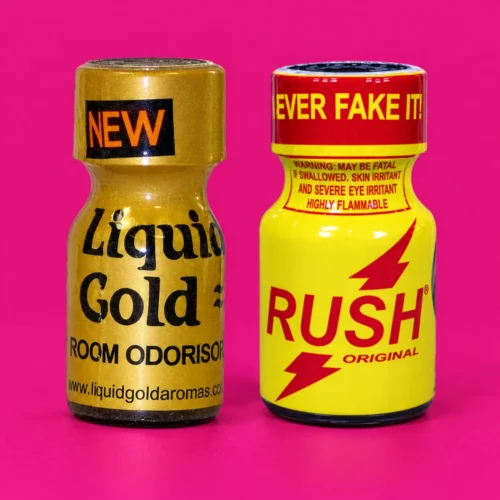
Poppers are made from a set of chemicals called alkyl nitrites, examples of which are amyl nitrite, butyl nitrite, isobutyl nitrite and isopropyl nitrite. Poppers are normally supplied in small bottles as liquid chemicals.
The poppers ‘high’ is associated with blood vessels becoming dilated and a rapid change in blood pressure.
The key effects of poppers can include:
- A ‘high’ that can best be described as a sharp, quick head rush.
- Heightened sexual experiences.
- Chemical burns, normally of the face and nose, and/or a rash.
- Irritation of the throat and nose.
- Feelings of faintness and, possibly, sickness.
- When used by those with heart problems they can prove fatal.
What Do Poppers Look Like?
The small bottles that poppers are supplied in usually have names such as TNT, Liquid Gold, Rock Hard, Thrust and Ram.
The name poppers comes from the historic use of the chemicals to treat angina. In the past, amyl nitrite was used to reduce chest pain by dilating blood vessels. The nitrites were supplied in small, glass capsules that would be “popped” open and sniffed.
When sold in sex shops, nightclubs or online they are often described as deodorisers or room aromas.
How Are Poppers Used?
Poppers are usually used by inhaling vapour from the liquid. Contact with the liquid can cause chemical burns, and swallowing it can cause life-threatening poisoning.
The effects of poppers are almost instantaneous but they quickly fade after just a few minutes.
Because poppers are highly flammable, there have been cases where people have burnt themselves badly whilst using them around lit cigarettes. Keep them away from cigarettes, flames and other sources of ignition.
What Are the Effects of Poppers?
There are a number of effects associated with poppers:
- There is a distinctive head rush that lasts for a few minutes.
- A variety of effects on sexual performance have been observed. Men often feel that the chemicals make an orgasm last longer or an erection seem harder. However, poppers have also caused men to be unable to gain an erection.
- The sphincter muscles can become relaxed, making it easier to have anal sex.
- Poor coordination, sickness and a feeling of weakness are effects reported by users of poppers.
History of Poppers
Amyl nitrite was first synthesised in 1844 by French chemist Antoine Jérôme Balard.
In 1867, Scottish physician Sir Thomas Lauder Brunton used amyl nitrite to treat angina. Angina is chest pain caused by reduced blood flow to the heart. Brunton found that amyl nitrite helped dilate blood vessels. This quickly relieved the chest pain of his angina patients.
The glass capsules or “pearls” containing amyl nitrite were nicknamed “poppers” because they made a popping sound when crushed. For several decades, amyl nitrite pearls continued to be used for heart conditions like angina.
In the 1960s, amyl nitrite began to be used recreationally as a “club drug” and aphrodisiac. New alkyl nitrite formulas emerged, such as isobutyl nitrite and cyclohexyl nitrite.
Poppers grew in popularity in the 1970s disco and club scene. Use was prevalent among gay men in particular. Some medical studies suggested poppers helped relax anal sphincter muscles and increased sexual pleasure.
Poppers can contain different alkyl nitrites, and the contents do not always match the label. They are often marketed as room deodorisers, leather cleaners or nail polish removers rather than for human consumption.
Health Effects
Inhaling poppers does not typically lead to addiction. However, there are short-term effects and risks to consider:
- Head rush: Users report feeling euphoric, warm, dizzy or disoriented for 1-2 minutes after inhalation. Some also feel heightened sensory perception.
- Drop in blood pressure: Poppers enlarge blood vessels, causing a temporary drop in blood pressure. This can lead to rapid or irregular heart rhythms.
- Reduced blood oxygen: Alkyl nitrites can cause methaemoglobinaemia, a condition that reduces the blood’s ability to carry oxygen. Severe cases can result in unconsciousness, coma or death.
- Chemical burns: Spilled poppers can burn skin, eyes and other mucous membranes. Burns around the nose and mouth can occur if the liquid touches the skin.
- Vision problems: Use is linked to temporary or permanent changes in vision, like blurriness or spots. A condition called “poppers maculopathy” can damage the retina.
- Erectile dysfunction: Some men report losing their erection after using poppers.
For further information about the evidence on health risks, see the Advisory Council on the Misuse of Drugs assessment of alkyl nitrites.
What Risks Are Associated With Poppers?
For those who suffer from heart problems, anaemia or glaucoma, taking poppers can be very dangerous. Some of the risks include:
- Your blood pressure can drop to dangerously low levels. Do not combine poppers with sildenafil (Viagra), tadalafil (Cialis) or similar erectile dysfunction medicines. People with blood pressure problems or taking blood pressure medication should also avoid them.
- Reduced oxygen supply to vital organs can cause death.
- You can lose consciousness and may die from choking on your own vomit. Using poppers with alcohol can increase this risk.
- Because they are highly flammable, you run the risk of burns when using them. They can also burn your skin and could kill you if you swallow them.
- Cases of ‘sudden sniffing death syndrome’ have been reported, caused by abnormal rhythms of the heart.
- Temporary or permanent loss of vision can also be caused when sniffing the chemicals. ‘Poppers maculopathy’ is a recognised concern. Anybody who develops vision problems after using poppers should seek prompt medical advice.
If someone swallows poppers, collapses, has difficulty breathing or develops blue or grey lips or skin, call 999 immediately and tell the ambulance crew what they have taken.
The Law and Poppers
- Alkyl nitrites are not controlled under the Misuse of Drugs Act 1971. However, this does not mean that their sale or supply for human consumption is unrestricted.
- The legal position on supply is complex. In its 2024 report, the ACMD explained that supply for psychoactive effects could fall within the Psychoactive Substances Act 2016 and recommended an explicit exemption. A recommendation does not itself change the law.
- Ordinary personal possession outside custodial premises is not an offence under the Psychoactive Substances Act. Selling or sharing poppers can raise different legal issues, and product safety and chemical regulations also apply.
For the detailed assessment, see the ACMD report on alkyl nitrites and exemption consideration. Businesses should obtain current legal advice rather than relying on product labels such as “room aroma” as proof that supply is lawful.
Photo by DEA
About the Author
Anthony Cunningham, BA (Hons), MA, is a UK-based drug testing expert and editor with over 20 years’ experience running Zoom Testing, a trusted source for accurate drug testing kits and testing guidance. He creates clear, evidence-based articles using UK legislation, workplace compliance standards, and harm reduction best practices. Where possible, content is reviewed by testing specialists and compliance professionals to enhance accuracy and reliability, helping readers make informed testing decisions.
Health and Legal Information Disclaimer
This article is for general information only and is not a substitute for professional medical or legal advice. If you have concerns about your health or symptoms after using poppers, seek medical advice. In an emergency, call 999. The legal position on sale and supply is complex, so obtain current professional advice before making business or legal decisions.